
A glossy brochure sitting untouched in a doctor’s waiting room represents one of the most persistent and costly disconnects in modern marketing. While nearly every other industry has embraced data-driven strategies to measure consumer engagement and return on investment, the point-of-care environment has remained a frustratingly analog black box. Brands in the lucrative cash-pay healthcare sector spend fortunes to place materials in front of a captive audience, yet have no real way of knowing if a single patient ever acts on them. This gap between expenditure and insight has created a massive marketing blind spot, forcing billion-dollar decisions to be based on little more than intuition.
This long-standing challenge is now facing a technological reckoning. The emergence of sophisticated AI-powered platforms is promising to illuminate this dark spot, transforming the passive clinical setting into a dynamic, measurable, and highly effective sales channel. By digitizing the entire in-practice journey, from the waiting room to the consultation chair, this new wave of technology offers the ability to not only engage patients at the most critical moments but also to finally connect marketing exposure to verified treatment outcomes. The question is no longer about whether in-practice marketing works, but about how technology can make it work smarter.
When the Doctor’s Office Brochure Fails What Comes Next?
For decades, the standard approach to marketing within a medical practice has relied on a static and uninspired toolkit. Posters, pamphlets, and countertop displays serve as silent salespeople, offering information to patients who may or may not be receptive. This methodology is fundamentally passive; it waits for the patient to initiate engagement and offers no mechanism for follow-up or measurement. The journey of that marketing material ends the moment it is printed, leaving brands completely in the dark about its real-world impact.
The failure of this traditional model is rooted in its inability to adapt to the modern consumer’s expectations. Today’s patients are accustomed to personalized, interactive digital experiences in every other aspect of their lives. A static brochure competes poorly for attention against the smartphone in a patient’s hand. Consequently, the transition to a dynamic digital ecosystem is not just an upgrade but a necessary evolution. The next phase of in-practice marketing must be active, engaging, and intelligent, moving beyond paper to deliver targeted content on screens that can capture attention and provide actionable data.
The Billion-Dollar Guess: Unpacking Healthcare’s In-Practice Marketing Problem
The core issue is a decades-old disconnect between marketing efforts and measurable results in a digital world. While brands have sophisticated tools to track online ad clicks, social media engagement, and email open rates, the moment their marketing enters the physical space of a clinic, all visibility is lost. This creates an environment where significant budget allocations are made based on assumptions rather than evidence. Brands distribute materials hoping they will influence patient decisions, but they cannot definitively prove a connection between a patient seeing a poster and ultimately choosing a specific procedure. This has cultivated a “massive blind spot” where millions are spent without a clear understanding of the return.
This challenge is particularly acute in the elective healthcare sector, which is ground zero for this marketing dilemma. Fields like medical aesthetics, ophthalmology, and cosmetic dentistry are consumer-driven, with patients often paying out-of-pocket for treatments. In these settings, effective marketing can directly influence high-value decisions. The waiting room and consultation office are prime opportunities to educate patients about new services or premium products. However, without a way to track interest and link it to sales, brands are unable to optimize their messaging, identify cross-selling opportunities, or justify their marketing spend with concrete data, leaving a significant revenue potential untapped.
The Anatomy of a Solution: How AI Is Closing the Loop
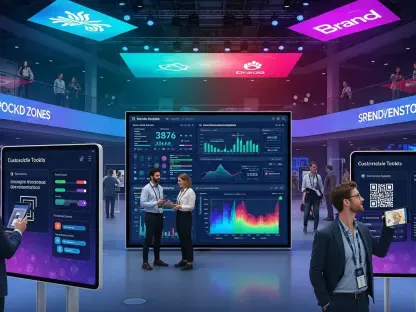
The solution to this long-standing problem lies in transforming the clinic into a dynamic digital ecosystem. Forward-thinking technology platforms are now replacing outdated paper materials with a network of synchronized digital touchpoints. This begins with high-impact content on large screens in the lobby, continues with interactive tablets in the consultation room, and extends beyond the visit with digital information packets sent directly to a patient’s mobile device. This “always-on” approach ensures the brand message is consistently reinforced throughout the patient’s journey, capturing attention at multiple key stages of the decision-making process.
The true innovation, however, is the ability to move from passive exposure to verified outcomes through integration with Electronic Medical Records (EMR) systems. This crucial link allows the platform to correlate a patient’s interaction with specific digital content to the actual treatment they receive, as recorded in their medical chart. For the first time, a brand can see a direct, causal link between its marketing efforts and a verified sale. This closes the loop on ROI, providing the clear, data-backed evidence that has been missing from in-practice marketing for years.
This intelligent ecosystem is powered by AI that delivers the right message at the precise moment of influence. Machine-learning algorithms analyze real-time engagement signals—such as which videos a patient watches or which services they explore on a tablet—and cross-reference them with EMR data, like treatment history. This enables the system to intelligently predict patient interest and serve the most relevant content. For example, a patient who has previously received Botox may be shown content about complementary dermal fillers, creating a highly effective and personalized upsell opportunity that feels informative rather than intrusive.
Voices from the Vanguard: The Experts Weigh In
Industry leaders emphasize that timing and context are everything. Vojin Kos, a key executive in the point-of-care technology space, argues that traditional marketing often fails because it cannot seize the “precise moment of influence.” He notes that a patient is most receptive to learning about a new treatment or product when they are already in a clinical mindset, sitting in the doctor’s office. “The entire in-practice experience has been an untapped data opportunity,” Kos states, highlighting that the mission is to digitize this journey to provide brands with the actionable insights they need to engage patients when it matters most.
Building on this, technology experts with experience at companies like Google and Amazon are focused on creating the underlying systems that make this vision a reality. Joe Schooler, a chief product officer in this field, describes the work as building the “infrastructure that makes cross-selling actually work.” The goal is not just to display ads but to create a seamless, intelligent platform that connects marketing exposure to patient behavior in a verifiable way. According to Schooler, this direct link between engagement and EMR-verified outcomes is the “unlock for repeatable revenue growth,” giving brands a powerful tool to strategically expand their market share.
Blueprint for a Smarter Strategy: From Market Validation to Future Growth
For any new technology to succeed in the healthcare space, it must offer frictionless deployment. The logistical challenges of rolling out traditional marketing campaigns across a national network of clinics are immense. Modern digital platforms overcome this by using native Smart TV and tablet applications, allowing new campaigns to be activated across hundreds of locations in minutes. This agility is proving the model’s viability, with early paid brand pilots and successful campaigns signaling strong market validation and adoption from key industry players.
With this foundation, the roadmap to repeatable revenue growth becomes clear. By providing a reliable way to measure ROI, these platforms empower brands to optimize their in-practice marketing strategies continuously. They can test different messages, promotions, and creative approaches, using real-time data to refine their tactics and maximize their budget’s effectiveness. This data-driven cycle of deployment, measurement, and optimization establishes a predictable path to increasing sales and market penetration.
Beyond its immediate applications in healthcare, this technology also opens a new frontier for non-endemic advertising. Elective medical clinics attract a highly sought-after, high-household-income demographic. This presents a unique opportunity for brands in luxury goods, financial services, or premium travel to reach affluent consumers in a focused, clutter-free environment. The strategic expansion into this adjacent market underscored the platform’s potential to evolve into a premier advertising channel, tapping into a broader affluent consumer base. The aformentioned advancements established a new paradigm in point-of-care marketing, effectively solving a decades-old problem and unlocking significant growth opportunities for both healthcare and consumer brands.