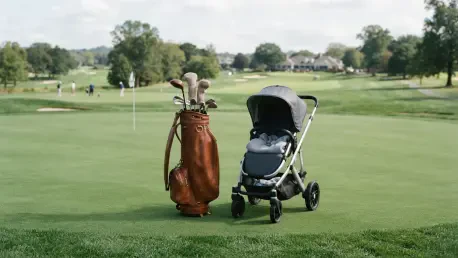

The typical landscape of sports media rarely intersects with the domestic realities of infant care, creating a distinct separation between professional leisure and household responsibilities. For decades, the advertising industry has operated under the assumption that mothers are the primary decision-makers for household purchases, leaving fathers largely sidelined in the marketing of essential baby products. However, a high-end baby-care brand is now disrupting this long-standing status quo by placing a public service announcement-style campaign within the pages of Golf Digest. Featuring six-time PGA Tour winner Max Homa, the advertisement is a stark, text-only call to action that challenges men to move beyond passive parenting roles. This strategic move aims to address the invisibility of parenting brands in male-dominated spaces, signaling a significant shift in how companies perceive the modern father’s role in the family unit. By leveraging Homa’s influence, the campaign seeks to normalize the active participation of men in daily caregiving tasks.
Rebalancing the Mental Load: Strategic Media Placement
Currently, approximately 90% of the digital audience and subscriber base for premium baby brands consists of women, a statistic that underscores the persistent imbalance in domestic cognitive labor. This mental load—the invisible work required to manage a household—has traditionally fallen on mothers, partly because marketing efforts consistently reinforce the idea that parenting products are exclusively a female concern. By intentionally disrupting the algorithm that keeps baby products within female-centric digital bubbles, brand strategists are attempting to foster a more equitable conversation about parenting duties. The decision to target golf enthusiasts stems from research indicating that the Golf Digest readership significantly overindexes for parents with young children. This demographic represents a fertile ground for engagement that the baby-care industry has historically ignored. By appearing in a space where fathers are already present, the campaign forces a collision between their recreational interests and their domestic identities.
Golf has long been considered the quintessential “dad sport,” providing a unique cultural platform where traditional masculine identities are celebrated and reinforced. While the golf industry has recently faced challenges regarding inclusivity and the treatment of female creators, this pivot toward active fatherhood offers a path toward a more modern and responsible brand image. The campaign was not designed as a direct reaction to specific industry controversies but rather as a proactive effort to support women by directly engaging men in the domestic sphere. When fathers are encouraged to take a lead role in mundane tasks like changing diapers, the overall burden on mothers is reduced, leading to more functional family dynamics. This approach acknowledges that inclusivity in sports is not just about who plays on the course, but how the audience is addressed off of it. By using a minimalist, text-heavy design, the ad bypasses the flashiness of typical sports marketing to deliver a message of accountability and partnership.
Driving Long-Term Engagement: The Impact of Athletic Partnerships
The partnership with Max Homa is particularly effective because it relies on organic brand usage rather than a forced celebrity endorsement. Homa, a recognizable figure on the PGA Tour, was already an advocate for high-quality baby products, making his voice a credible bridge between the professional sports world and the nursery. This authenticity is crucial in an era where consumers are increasingly skeptical of paid influencers who do not actually use the products they promote. By focusing on a PSA-style delivery, the campaign avoids high-pressure sales tactics, instead opting to frame fatherhood as a vital aspect of a man’s identity. This strategy has already yielded impressive results, with reports showing a 300% spike in engagement during the first month following the launch. The overwhelmingly positive sentiment suggests that men are ready for a different kind of conversation—one that respects their intelligence and acknowledges their growing desire to be present and active parents in the modern household.
The integration of baby-care marketing into the world of professional golf signaled a fundamental change in how the industry approached gender roles within the domestic sphere. By challenging the traditional boundaries of sports advertising, the campaign successfully initiated a dialogue about the distribution of parenting responsibilities that resonated far beyond the golf course. It established a blueprint for future brand engagements by demonstrating that men were receptive to messages that promoted active participation over passive observation. This strategy ultimately provided a more comprehensive understanding of the modern consumer, as companies recognized that supporting mothers meant directly involving fathers in the conversation. Stakeholders looked toward even more integrated approaches that utilized technology and personal narratives to solidify these cultural shifts. The success of this initiative proved that when a brand dared to speak to men about the realities of parenting, it did not just sell a product; it contributed to a more equitable society.