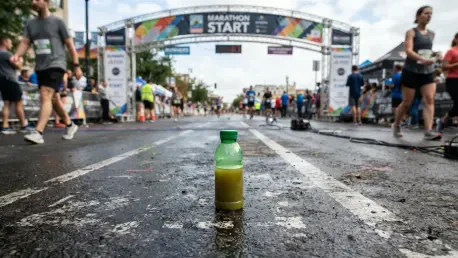

Finding a plastic bottle of salty pickle juice at a marathon start line might seem like a prank, but for thousands of endurance athletes, it represents a calculated strategy to combat the physiological toll of long-distance running. This initiative, launched by a global fast-food leader, represents a daring foray into the specialized world of endurance sports. By isolating a specific ingredient from its core product line—the pickle brine used in its burgers—the company transformed a byproduct into a high-utility performance aid. This unconventional move illustrates how a brand can move beyond traditional fast-food tropes to engage with a community centered on physical excellence through a product-led approach.
The shift in sports marketing strategies reflects a broader industry trend toward high-utility brand activations in the current 2026 market. In the past, legacy brands were content with purchasing logo placement on jerseys or stadium signage. However, the focus has shifted to product-centric experiences that offer tangible value to consumers during moments of high physiological need. McDonald’s is leading this transition by proving that a brand does not need to reinvent its catalog to be relevant in a fitness context; it simply needs to find the functional potential within its existing assets.
Brand identity and cultural relevance are bolstered when a company leverages iconic menu components to build a unique narrative within the global fitness community. The pickle has long been a polarizing yet beloved part of the fast-food experience. By leaning into this specific ingredient, the brand builds a bridge to athletes through a shared understanding of common performance hacks. This strategy humanizes the corporate giant, making it feel like an insider in the running world rather than an outsider trying to force a connection through empty slogans.
Strategic global scaling has been a hallmark of this campaign’s journey from its initial phases to its current widespread adoption. What began as a localized collaboration with Auckland FC quickly expanded to the streets of major metropolitan areas like Chicago and New York City. This expansion demonstrates that the core concept—providing a functional solution to a common athletic problem—resonates across different geographic boundaries and sporting disciplines. The ability to take a single menu element and scale its relevance internationally highlights the power of creative, product-led marketing in a globalized economy.
The Intersection of Fast-Food Innovation and High-Performance Athletics
The Pickle Boost initiative serves as a primary example of how fast-food innovation can intersect with high-performance athletics in unexpected ways. By distributing a component typically associated with indulgence at the start line of grueling physical events, the brand creates a memorable connection. This activation disrupts the traditional perception of fast food, positioning the company as a participant in the athlete’s journey rather than just a post-race reward. It requires a deep understanding of the runner’s mindset to offer something so specific yet so functional.
Traditional logo-based sponsorships are increasingly being replaced by high-utility brand activations that prioritize the consumer experience. When a runner receives a bottle of brine that helps prevent cramps, the brand becomes a helpful partner in their success. This transition moves the needle from passive brand awareness to active brand gratitude. Moreover, it allows the company to showcase its ingredients in a new light, proving that even the smallest part of a burger can have a massive impact on performance.
Leveraging iconic menu components allows the brand to build a unique narrative that resonates with the global fitness community. The pickle brine is not just a liquid; it is a recognizable part of the brand’s heritage that has been repurposed for a new audience. This narrative consistency ensures that the campaign feels authentic to the brand’s identity while still exploring new territory. By focusing on utility and humor, the brand successfully navigates the complex cultural landscape of modern fitness and wellness.
Trends and Data Driving the Pickle Juice Phenomenon
Emerging Behaviors and the Rise of Niche Performance Aids
The insider runner subculture has long whispered about the benefits of pickle brine as a natural remedy for muscle cramps and dehydration. While many outside the community might find the idea unappealing, runners often prioritize physiological results over flavor profiles. McDonald’s recognized this existing behavior and stepped in to legitimize it through its own professional supply chain. This alignment with established consumer beliefs allows the brand to bypass the friction typically associated with introducing a new performance product.
The transition from junk food to functional fuel is a significant trend in the modern athletic market. Consumers are increasingly adept at identifying specific nutrients or ingredients that serve a physiological purpose, even within traditionally processed food categories. By rebranding a simple brine as a performance hack, the company capitalizes on the evolving perception of what constitutes a health-conscious choice. This move suggests that the line between indulgence and performance is becoming increasingly blurred as consumers seek out efficacy.
Technological and creative synergy played a vital role in amplifying this unconventional marketing stunt through various digital channels. The campaign relied heavily on contextual outdoor advertising and social media to spread the word about the pickle giveaway in real time. These physical and digital touchpoints worked in tandem to ensure that the campaign felt like a live event rather than a static advertisement. The viral nature of the concept ensured that even those not participating in the race were exposed to the brand’s innovative approach.
Market Reach and the Performance Indicators of Experiential Campaigns
Measuring engagement beyond the burger requires a look at the success of physical activations at high-profile events. The distribution of portable Pickle Boost bottles provided a direct, high-impact touchpoint with thousands of participants. These bottles were designed to be functional, fitting easily into running belts, which ensured the brand remained with the athlete for the duration of the race. This level of physical integration is far more valuable than a fleeting digital impression or a standard billboard.
Geographic expansion and scalability have proven that the campaign can adapt to various sporting disciplines and international markets with ease. By reviewing performance across different cities, it is clear that the underlying appeal of the Pickle Boost is nearly universal. Whether in the Southern Hemisphere or the urban centers of the United States, the campaign’s ability to fit into different cultural sporting contexts is a testament to its flexible design. This adaptability is crucial for maintaining a global brand presence in a fragmented market.
The value of earned media in this scenario cannot be overstated, as the impact of viral marketing often outweighs traditional paid advertising spend. The sheer novelty of a fast-food company handing out pickle juice at a marathon generated significant organic conversation across news platforms. This type of coverage provides a level of third-party validation that money cannot buy, reinforcing the brand’s position as an innovative player. It proves that a well-executed stunt can achieve more visibility than a multimillion-dollar television campaign.
Navigating the Obstacles of Fast-Food Athletics
The credibility gap remains a significant challenge for any fast-food brand attempting to enter the wellness and high-performance space. There is a natural dissonance between high-calorie, processed menu items and the rigorous health requirements of elite performance. Critics might argue that a brand primarily known for burgers has no place at the start line of a major marathon. To overcome this, the brand must ensure that its involvement feels authentic and that it is not overstepping its boundaries by claiming to be a health food company.
Scientific ambiguity poses another hurdle when marketing functional benefits to a highly informed athletic audience. While many athletes swear by pickle juice, the physiological mechanism behind its effectiveness is still a subject of debate among sports scientists. The brand must navigate this carefully, leveraging anecdotal benefits without crossing into unregulated medical territory. By positioning the brine as a boost rather than a medical cure, the brand maintains a playful tone that avoids the scrutiny of strict pharmaceutical regulations.
Logistical hurdles in mass events are a reality that brand managers must face when executing physical distributions. Managing the distribution of thousands of small bottles and ensuring a consistent brand-owned experience within a chaotic marathon environment is a complex task. From coordinating with race organizers to managing the supply chain for specific venues, the operational complexity is immense. Success in these environments requires meticulous planning and a deep understanding of the runner’s journey from the starting gun to the finish line.
Strategic pivots have become necessary as the brand moves away from massive, multi-year platforms like international soccer tournaments. Maintaining global visibility without these rented audiences requires more creative effort and a willingness to experiment with smaller, localized activations. The Pickle Boost represents this shift toward a more agile marketing model. Instead of paying for a general association with a sport, the brand is creating specific moments that it can own and control entirely within its own narrative.
Regulatory Standards and the Ethics of “Performance” Marketing
Advertising compliance and health claims are strictly monitored in the sports nutrition sector to protect consumers from misleading information. Positioning a food byproduct as a physiological boost requires a delicate balance of language and marketing intent. The brand must be careful not to imply that its product replaces professional medical advice or scientifically tested supplements. Legal boundaries dictate how these products are marketed, and any misstep could lead to significant regulatory backlash or long-term damage to the brand’s reputation.
Consumer transparency and ingredient safety are paramount, especially in non-traditional distribution settings where athletes are under physical stress. When runners are handed a bottle at a race, they need to know exactly what they are consuming. Clear labeling and adherence to food safety standards are essential to maintain trust and ensure the safety of all participants. Since the brine is a byproduct of the food service process, ensuring consistency and safety across different locations is a primary operational priority.
Security and branding integrity must be protected during high-stakes public events where performance is the primary focus of the attendees. Any issue with the product—whether it be a packaging failure or a perceived lack of quality—could have a negative impact on the brand’s overall standing. Participating in these events puts the brand under a microscope, making it essential that the physical execution is flawless. Protecting the brand’s reputation means ensuring that the experience remains positive for every participant who interacts with the activation.
The Future Landscape of Brand-Owned Sports Experiences
Disrupting traditional sponsorship models is becoming the new standard for legacy brands looking to remain relevant in a changing market. Localized, owned events are increasingly seen as a more effective way to reach consumers than expensive, third-party rented attention. By creating their own activations, brands can ensure that their message is not lost in a sea of other corporate logos. This move toward independence allows for greater creative freedom and a more direct, meaningful connection with the target demographic.
Predicting the next functional food trend involves looking at common pantry items through a new lens of athletic utility. Other ingredients, such as honey, beets, or even specific spices, could be repurposed for the wellness and athletic markets by other creative brands. The success of the pickle brine initiative suggests that consumers are open to functional uses of familiar foods. Brands that can identify these hidden gems within their existing supply chains will have a significant advantage in the competitive health and wellness sector.
Hyper-personalization in sports marketing will likely involve using data and localized context to create meaningful physical connections with runners. Imagine a scenario where a brand can provide a specific nutritional boost based on a runner’s real-time performance data or local weather conditions. While the industry is still evolving, the trend toward localized, context-aware activations points to a future where marketing is not just seen but felt. This supportive role helps brands integrate more deeply into the daily lives and challenges of their customers.
Synthesizing the Impact of the Pickle Boost Campaign
The campaign successfully demonstrated that humor and utility can bridge the gap between a fast-food giant and a specialized community of endurance athletes. By focusing on a recognized truth—the use of brine for muscle cramps—the brand avoided appearing out of touch and instead integrated itself into the runner’s ritual. This initiative proved that even the most established legacy brands can find new life by looking at their core products through an unconventional lens. The project showed that a simple menu item could be rebranded as a high-performance tool without losing its original identity.
Strategic recommendations for future brand integration involve looking for similar niche behaviors within other specific consumer segments. Legacy brands should analyze their own product components to see if any can serve a functional purpose in a different lifestyle context. The key to success is not in creating a brand-new product but in repurposing an existing one to solve a specific problem. This approach reduces research and development costs while maximizing the cultural impact of the campaign across multiple international markets.
The long-term outlook for such tactical stunts suggests that they are most effective when they are part of a larger, coherent brand narrative rather than isolated events. While the Pickle Boost was a clever short-term execution, its lasting value is found in its ability to redefine the brand’s relationship with the health-conscious consumer. Moving forward, the success of this initiative will serve as a blueprint for other global corporations looking to find utility in the unexpected.