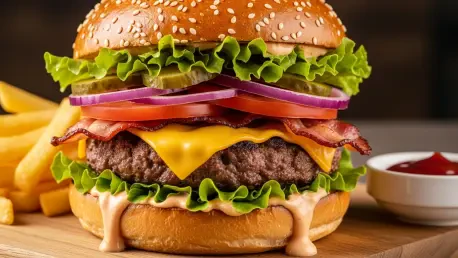

The modern diner no longer views a twenty-dollar burger as a simple indulgence but rather as a strategic financial commitment that demands a guaranteed return on satisfaction. As household budgets tighten across the globe, the fast-casual sector finds itself at a crossroads where the definition of value is shifting away from the lowest price toward the highest degree of reliability. This shift has forced major players to reevaluate how they communicate quality to a public that is increasingly wary of the gamble associated with quick-service meals.
Navigating the Competitive Landscape of the Modern Fast-Casual Market
The global burger sector currently operates under a cloud of tension between traditional value-driven models and the burgeoning premium segment. While legacy brands attempt to lure customers with deep discounts and revamped core menus, high-end competitors are doubling down on the promise of superior ingredients and transparent preparation. Technological shifts, particularly the rise of sophisticated mobile ordering and third-party logistics, have leveled the playing field, making accessibility a baseline expectation rather than a competitive advantage.
In this environment, brand reliability has emerged as the ultimate currency for survival. When discretionary spending is under heavy scrutiny, consumers gravitate toward names that offer a predictable experience. The ability to deliver a consistent product across thousands of locations allows a brand to move beyond the noise of promotional pricing. By establishing a reputation for being a sure bet, certain establishments are successfully insulating themselves against the volatility that often plagues the broader hospitality industry.
Shifting Consumer Habits and the Economics of the Burger Industry
From Value Menus to Satisfaction Guaranteed: Evolving Patron Expectations
Patrons have largely abandoned the budget-first mindset of previous years in favor of a philosophy that seeks to avoid dining disappointment at all costs. This evolution suggests that a failed meal at a low price point is now perceived as a greater loss than a successful meal at a premium price. Modern marketing campaigns, such as the Your Burger Guy initiative, tap into this psychological shift by emphasizing the ritual of the meal and the artisanal craft behind every order, positioning the brand as a dependable partner in the consumer’s daily life.
Furthermore, the diversity of social and digital channels has fundamentally altered how brand loyalty is cultivated. It is no longer enough to run a television spot; brands must now engage in a continuous dialogue across multiple platforms to maintain relevance. By leveraging narrative-driven content that highlights portion sizes and fresh preparation, companies are able to build a community of followers who value the transparency of the process as much as the final product on the tray.
Analyzing Performance Indicators Amidst Soaring Operational Costs
The economic reality of the industry is currently defined by a staggering 32% increase in beef production costs, which has placed immense pressure on menu pricing. While many establishments have responded by shrinking portions or substituting ingredients, premium fast-casual leaders are taking the opposite approach. They are betting that consumers will accept higher prices if they perceive a proportional increase in value, specifically through generous serving sizes and a commitment to never using frozen products.
Evaluating the financial implications of large-scale media expenditures reveals a calculated risk aimed at long-term market share. By launching the most ambitious marketing push in its history, Five Guys is attempting to justify its premium position during a period of high inflation. The projected return on this investment is not just measured in immediate sales but in the reinforcement of a brand identity that resists the downward pressure of the value-meal wars currently dominating the market.
Overcoming Economic Volatility and Premium Pricing Perceptions
Justifying a higher price point is a formidable challenge when major competitors like McDonald’s and Burger King are aggressively promoting value campaigns. To counter this, premium brands must shift the conversation from the cost of the transaction to the quality of the outcome. Strategies for mitigating rising raw material costs involve a refusal to compromise on freshness, which builds a level of trust that discount-oriented rivals struggle to replicate. This creates a defensive moat that protects the brand from being viewed as an overpriced commodity.
Moreover, resolving operational hurdles remains a critical component of maintaining a premium image. Past experiences with product shortages have taught the industry that a stabilized supply chain is the backbone of brand promise. By forming strategic partnerships and streamlining logistics, companies can ensure that the artisanal experience remains consistent, even during global economic fluctuations. This operational integrity serves as a silent marketing tool that reinforces the narrative of reliability.
Maintaining Quality Standards and Operational Integrity in a Global Market
Rigorous food safety and freshness standards are the foundation of the Satisfaction Perfected creative platform. In a global market, maintaining these benchmarks requires more than just good intentions; it demands a self-imposed regulatory framework that respects a multi-decade legacy. The artisanal preparation of every burger and fry serves as a recurring proof point for the customer, turning a simple kitchen operation into a powerful statement of brand values that resonates across different cultures and demographics.
Navigating the complexities of third-party delivery and large-scale catering has also become a priority for high-end chains. Integrations with professional platforms like ezCater allow brands to expand their reach without diluting the quality of the off-site dining experience. By applying the same strict standards to delivery as they do to in-store service, these companies are able to capture new revenue streams while upholding the integrity of their core product in a highly saturated and competitive environment.
The Path Forward for Premium Fast-Casual Resilience
The future of the burger industry will likely be shaped by the success of integrated marketing in capturing the attention of a fragmented audience. As the market reaches a saturation point, the ability to stand out through a human-centric expertise model may prove more effective than the adoption of automated kitchen technology. While robotics offer efficiency, they often lack the emotional connection and perceived craft that drive premium pricing. The path forward involves balancing modern convenience with the traditional touch of a skilled preparer.
Scalability in international markets remains a significant opportunity, provided the sure bet narrative can be adapted to local inflationary pressures. Consumers worldwide are facing similar economic stresses, and the desire for a guaranteed quality meal is a universal sentiment. If a brand can successfully export its reputation for consistency and generosity, it stands to gain a foothold in emerging markets where the demand for authentic American-style dining continues to grow despite broader financial challenges.
Final Verdict on Five Guys’ Strategy for Long-Term Market Dominance
The Your Burger Guy initiative successfully repositioned the brand as a vital sanctuary of consistency within an unpredictable economy. By prioritizing artisanal reliability over aggressive price slashing, the strategy addressed the core anxieties of the modern consumer who fears wasting money on a mediocre experience. Investors observed that the brand’s refusal to participate in the race to the bottom protected its margins while strengthening its identity as a premium staple. The commitment to fresh ingredients and human expertise provided a clear alternative to the increasingly automated and value-stripped offerings of major competitors. Moving forward, the industry should look toward hyper-local supply chain stabilization and the further integration of catering services to sustain growth. Future strategies will likely necessitate a deeper dive into personalized digital loyalty programs that reward the sure bet mindset without relying on traditional discounting. Ultimately, the focus transitioned from defending high prices to proving that quality remains the most resilient asset in a cautious dining market.