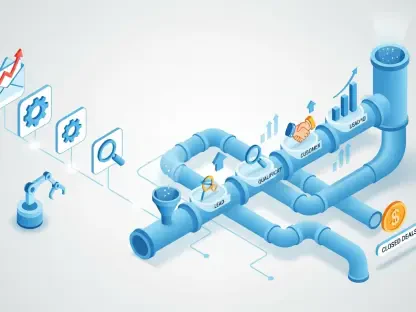
Most software companies treat a free trial sign-up as a finish line when it is actually the beginning of a high-stakes race against user indifference. Statistics reveal a staggering reality where over half of all new trialists log in exactly once, encounter a blank dashboard, and never return. This guide provides a comprehensive roadmap for deploying a Retargeting Matrix, a sophisticated system designed to eliminate user abandonment and turn casual explorers into committed subscribers. By following these steps, organizations can synchronize behavioral data with targeted advertising to bridge the value gap and ensure no lead is lost to the digital void.
From Sign-up to Subscription: Bridging the “Value Gap” with a Retargeting Matrix
The journey from initial interest to a recurring payment is paved with psychological hurdles and distractions. A sign-up indicates a moment of intent, but it rarely guarantees the sustained engagement necessary for a conversion. When a user fails to see immediate results, they fall into the value gap—the space between their expectations and the actual utility they derive from the software. A Retargeting Matrix serves as a bridge over this gap by keeping the product front and center in the user’s digital life, providing the necessary context to move them forward.
Instead of relying on generic reminders, this framework uses specific data points to dictate the marketing message. This approach moves the conversation away from passive observation toward active intervention. When a company uses a matrix, it creates a cohesive ecosystem where the product experience and the marketing narrative are perfectly aligned. This synchronization ensures that users are not just reminded that the software exists, but are shown exactly why it remains the best solution for their specific problems.
Why the “Empty State” and the Dark Funnel Are Killing Your SaaS Growth
The most dangerous moment in the trial lifecycle is the first login, often characterized by the daunting Empty State. This occurs when a user is greeted by a sterile, data-free dashboard that requires significant effort to populate. Without a clear path to success, the cognitive load becomes too high, and the user retreats. This abandonment feeds the Dark Funnel, a silent graveyard of potential customers who are technically in the trial period but have mentally checked out due to perceived complexity or simple forgetfulness.
Traditional email marketing often struggles to penetrate this fog because modern inboxes are overwhelmed and easily ignored. When a user stops opening emails, they become invisible to standard nurturing sequences, yet they continue to browse the web and engage with social media. Retargeting acts as an external nudge, meeting these distracted individuals in environments where they are more likely to consume information. By shifting the focus to these external touchpoints, a SaaS brand can reclaim attention that would otherwise be lost to the noise of the daily grind.
Building Your Retargeting Matrix: A Step-by-Step Tactical Framework
Constructing an effective matrix requires a fundamental shift in how marketing and product teams interact. It is no longer enough to operate in silos; instead, the two departments must merge their insights to create a unified revenue engine.
1. Synchronizing Product-Led Growth (PLG) with Paid Media
Success in modern software sales depends on how well a company can translate in-app actions into advertising signals. This synchronization allows the marketing team to act as an extension of the product itself.
Leverage First-Party CRM Data for Precision
In an era of increasing privacy restrictions, the data held within a Customer Relationship Management system is a primary competitive advantage. By uploading encrypted lists of trial users to platforms like Google Customer Match, companies can bypass the limitations of third-party cookies. This ensures that the ads are served to actual users rather than anonymous browsers, allowing for a level of precision that traditional targeting cannot match.
Train Algorithms on the “Aha!” Moment
Marketing efficiency improves when advertising platforms understand what a successful user looks like. By tagging specific milestones—such as the completion of an integration or the first report generation—marketers can train ad algorithms to find lookalike audiences who exhibit similar behaviors. This creates a feedback loop where the system identifies high-quality leads who are statistically more likely to reach the point where the product’s value becomes indispensable.
2. Segmenting Audiences Based on Behavioral Triggers
A one-size-fits-all ad campaign is an expensive mistake in the SaaS world. A robust matrix must categorize trialists based on their specific level of activity and engagement.
Re-activating the Inactive User
Users who have signed up but failed to return for several days require a specialized approach. The goal here is not to sell a subscription but to reduce the friction of the second login. Creative assets for this segment should focus on low-barrier educational content, such as sixty-second “Getting Started” videos or quick-win tutorials. By lowering the perceived effort required to use the tool, the matrix effectively pulls the user back into the active funnel.
Bridging the “Power User” Gap
Some trialists are highly active but only utilize a fraction of the software’s capabilities. These users are at risk of churning because they may eventually decide the tool is too expensive for the limited way they use it. Retargeting ads for this group should highlight the benefits of sticky, high-value features they have yet to explore. Demonstrating the time-saving capabilities of underutilized tools increases the product’s perceived necessity and long-term retention potential.
Deploying the Threshold Trigger
Usage limits provide a natural opportunity for a conversion nudge. When a user approaches a seat limit or a storage cap, the matrix should automatically trigger messaging that emphasizes a seamless transition to a paid tier. This prevents the frustration of a service interruption and frames the upgrade as a logical step in the user’s growth rather than a sales pitch. This timely intervention captures revenue at the exact moment the need for more capacity arises.
3. Executing the 30-Day Lifecycle Ad Strategy
The tone and objective of the retargeting efforts must evolve as the trial progresses. A user on day twenty-five has very different needs and concerns than a user on day two.
Days 1–7: The Activation Phase
The first week is entirely about momentum and friction reduction. Ads during this phase should celebrate early successes and guide the user toward their first meaningful result. The focus is on showing, not just telling, how easy it is to set up a project or invite a team member. By facilitating these early wins, the brand builds the confidence necessary for the user to continue exploring more complex features later in the month.
Days 8–14: The Engagement Phase
Once the initial setup is complete, the narrative must shift toward the long-term impact of the software. This is the time to introduce social proof, such as case studies or testimonials from similar companies. Seeing how peers achieved a high return on investment validates the user’s decision to spend time with the tool. These ads serve to reinforce the product’s authority and demonstrate its ability to solve real-world business challenges at scale.
Days 15–30: The Conversion Phase
As the trial reaches its conclusion, the messaging must adopt a sense of urgency. Psychological principles like loss aversion become highly effective here; users should be reminded of the data, custom configurations, or progress they stand to lose if their account expires. Highlighting the cost of inaction helps push hesitant users over the finish line. Final offers or limited-time incentives can be used here to secure the commitment before the trial period officially ends.
Key Takeaways for Implementing a High-Conversion Matrix
- Identify Friction: Target the Empty State specifically to prevent users from abandoning the dashboard during their first session.
- Behavioral Segmentation: Tailor creative messaging so that inactive users receive education while power users see expansion opportunities.
- Lifecycle Alignment: Ensure that ad content matures over the thirty-day trial period to match the user’s growing familiarity with the tool.
- Data-Driven Optimization: Use first-party CRM data to bypass cookie limitations and improve the quality of the leads being targeted.
- Beyond the Inbox: Use retargeting as a persistent external nudge to reach users who have stopped engaging with traditional email sequences.
The Future of SaaS Retargeting and the Rise of Intent-Based Marketing
The landscape of software marketing is rapidly shifting toward a model where product usage data is the most valuable asset a team possesses. As privacy regulations continue to tighten, the ability to leverage first-party intent will separate market leaders from those who struggle to maintain a presence. Future advancements will likely involve real-time integration between product analytics and automated ad bidding, allowing systems to predict churn before it happens. This predictive capability will enable companies to serve save-back ads with surgical precision, offering help or incentives at the exact moment a user begins to drift away.
Turning Trial Momentum into Sustainable Revenue
The deployment of a Retargeting Matrix transformed the trial period from a passive waiting game into an active, guided journey. By aligning creative messaging with the specific stages of the user lifecycle, organizations managed to eliminate the dead air that typically kills sales momentum. The integration of product data into the marketing stack allowed for a level of personalization that traditional methods could not achieve. Ultimately, the focus on behavioral triggers and intent-based communication moved users through the funnel with greater efficiency. Companies that adopted these strategies found themselves better equipped to handle the complexities of the modern digital marketplace. Moving forward, the emphasis on first-party data will continue to be the primary driver for lowering customer acquisition costs and increasing overall lifetime value.