
Successful brand activations now often include a tangible reward, such as free merchandise or service discounts, in exchange for consumer time and attention. This evolution marks a significant departure from the era of passive digital advertisements, shifting the focus toward immersive, sensory-rich environments that transform everyday consumers into active participants. In the landscape of 2026, the strategy centers on anchoring brand identity in the real world through physical installations and mobile tours that bridge the gap between street-level engagement and digital reach. These highly shareable moments are no longer just about aesthetics; they are designed to provide immediate utility and emotional resonance. By creating a Third Space between home and work, companies are successfully capturing attention in an increasingly fragmented market. This approach ensures that the brand functions as a host or educator rather than a vendor, establishing a lasting connection that persists well after the physical event has ended.
Immersive Strategies: Contemporary Brand Engagement
Visual Spectacles: Retail Traffic Integration
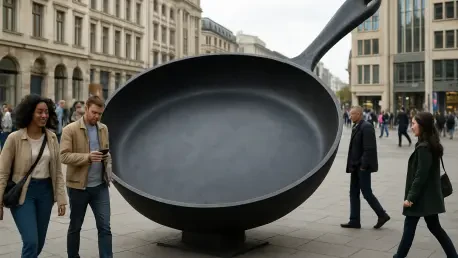
Utilizing massive physical spectacles has become a cornerstone of modern experiential strategy, particularly for brands looking to communicate value propositions in a visually arresting manner. HomeGoods recently demonstrated this through its Real Big Deal campaign, which featured oversized household items—such as an 800-pound frying pan and a towering cocktail shaker—in high-traffic urban centers like Chicago’s Pioneer Court. These installations were designed to supersize the mundane, turning everyday products into monumental art pieces that demand immediate attention from passersby. This tactical use of scale serves as a silent narrator for the brand’s identity, reinforcing the idea that high-quality items are available at significant savings. By transforming a public square into a gallery of giant home goods, the brand effectively moved beyond the limitations of traditional billboards. This strategy successfully humanized the retail experience, making the abstract concept of value a tangible reality that consumers could interact with.
Beyond the initial visual impact, these oversized installations integrated digital utility to create a seamless funnel from public curiosity to direct retail foot traffic. By placing QR codes on giant price tags, the brand provided immediate rewards, including rideshare coupons that transported consumers directly to the nearest store location. This fusion of physical wonder and digital convenience addresses the modern challenge of converting brand awareness into measurable sales. Rather than relying on a consumer’s memory of a social media post, the activation incentivized immediate action by providing a frictionless path to the point of purchase. This approach recognizes that while a giant spectacle might capture the eye, it is the tangible benefit that drives the body toward a storefront. Such initiatives set a high standard for how physical marketing can function as a direct extension of a retail strategy, ensuring that every interaction has a clear purpose and a measurable outcome for the organization.
Educational Outreach: Scientific Transparency
In the pharmaceutical and science sectors, experiential marketing is increasingly being used as a tool to combat public skepticism and health misinformation through direct community engagement. Bayer’s multi-year Science Delivers mobile tour serves as a primary example, functioning as a mobile laboratory and forum that brings evidence-based discussions to diverse demographics across the country. Instead of relying on traditional corporate messaging, the tour humanizes complex scientific data by inviting farmers, students, and families into a collaborative environment. This strategy positions the brand as an educational partner rather than an aloof authority, acknowledging the stress that misinformation causes in modern society. By providing a physical space for dialogue, the brand builds a level of trust that digital channels often struggle to replicate. This move toward transparency reflects a broader industry trend where brands take on the responsibility of social educators, ensuring that scientific progress is seen as a community-led endeavor.
The success of these educational tours is often anchored in the creation of interactive narratives where participants can see their own experiences reflected in the brand’s mission. Attendees are invited to contribute to growing galleries of science postcards, documenting how technological and medical advancements have personally improved their quality of life. This collective storytelling turns a one-way corporate presentation into a multi-dimensional conversation, allowing the brand to gather valuable insights while empowering the consumer. By giving the audience a platform to share their own stories, the activation creates a sense of shared ownership over the future of health and agriculture. This strategy effectively bypasses skepticism by making the consumer a central character in the brand narrative. It proves that when individuals are given the tools to engage with complex information on their own terms, they are far more likely to become long-term advocates for the brand in an era of digital noise.
Cultural Integration: Localized Community Impact
Adopting micro-theming allows lifestyle brands to create cohesive, nostalgic worlds that resonate deeply with specific urban cultures and subcultures. The Temptations Cat Bodega pop-up successfully utilized this trend by recreating the detailed aesthetic of a classic New York City neighborhood store, complete with cat-themed arcade games and secret hideaways. This level of granular immersion provided a highly photogenic backdrop that encouraged organic social media sharing among cat owners and professional content creators. By leaning into a recognizable cultural icon like the bodega, the brand established an authentic connection with its audience that felt more like a community tribute than a sales pitch. The physical space served as a playground where the brand’s personality was expressed through every sign, inviting visitors to spend significant time exploring the environment. This strategy recognizes that in a digital-first era, physical spaces must offer something unique and discoverable to merit a consumer’s attention.
For entertainment properties, hyper-local partnerships have become a vital method for celebrating the cultural heritage and creative energy of the communities depicted in their content. To promote The Drop, FX focused on authentic immersion in South Los Angeles, collaborating with local Black-owned businesses and community staples like Randy’s Donuts. These neighborhood sessions moved beyond simple promotion to become genuine celebrations of local history and early nineties West Coast culture. By involving established local partners, the network built significant brand equity and demonstrated a sincere investment in the demographics that inspire its storytelling. This approach avoids the perceived insincerity of traditional marketing by leveraging the existing trust and history of the community itself. It transforms a television premiere into a meaningful local event, fostering a sense of pride and connection among residents. This strategy highlights the shift toward localized contextualization for more profound impact.
The most effective experiential campaigns of the past cycle proved that organizations must prioritize active participation and tangible value to remain relevant in a crowded market. Brands that successfully merged physical spectacles with digital utility saw a marked increase in both consumer trust and retail conversion. It was observed that localized storytelling and elevated sponsorships at major international festivals allowed legacy companies to weave themselves into the cultural fabric of their audience’s lives. Looking ahead, marketers were encouraged to focus on creating Third Spaces where the brand acted as a helpful host rather than a commercial vendor. The transition toward educational transparency and community-focused celebrations provided a clear blueprint for building lasting brand affinity. By rewarding consumer attention with meaningful rewards and highly shareable moments, companies established a sustainable model for future growth. These examples demonstrated that in a virtual world, the power of physical experience remained unrivaled.