
When a disembodied hand covered in neon-orange dust began appearing across major metropolitan centers, it signaled a shift in how snack brands navigate the complex world of streaming television. While most brands are content to simply slap a famous face on their packaging, Cheetos recently proved that the most effective collaborations happen when a brand stops acting like a sponsor and starts acting like an author. By weaving itself into the fabric of Netflix’s Wednesday, Cheetos didn’t just ride the coattails of a hit show; it hijacked a cultural moment to reinforce its own quirky legacy. The campaign turned a messy product byproduct into a high-stakes narrative device, demonstrating how a snack food can maintain its relevance in an increasingly crowded digital landscape. This was not a simple transaction of logos but a sophisticated integration that redefined the boundaries between snack culture and cinematic storytelling.
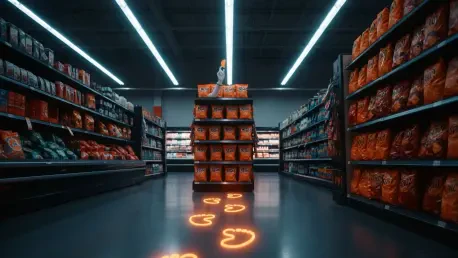
The genius of the activation lay in its refusal to be subtle. In a world where viewers are trained to skip ads or ignore product placement, Cheetos chose to become an unavoidable part of the visual language of the show’s universe. By leaning into the “Cheetle” phenomenon—the trademarked name for that stubborn orange residue—the brand found a way to make its presence felt even when the bag wasn’t on screen. This approach recognized that the modern consumer values consistency and creativity over brute-force advertising. Rather than disrupting the viewer’s experience, the brand enhanced it by adding a layer of meta-humor that resonated with the show’s irreverent spirit.
The Orange Fingerprint on Pop Culture’s Spookiest Phenomenon
The partnership arrived at a time when the “goth-core” aesthetic was peaking, driven largely by the massive success of the Wednesday series. Cheetos recognized that while its own brand identity is traditionally bright and energetic, there was a shared subversive streak between the two properties. The resulting campaign was a masterclass in tone management. By injecting the playful chaos of Chester Cheetah into the shadow-drenched world of Nevermore Academy, the brand created a visual contrast that was both jarring and delightful. It allowed Cheetos to participate in the conversation without feeling like an uninvited guest at a gothic party.
This specific collaboration moved beyond the shelf and into the digital consciousness of a generation that prizes “easter eggs” and hidden details. Every orange smudge left on a character’s desk or a mysterious fingerprint on a trailer served as a breadcrumb for fans to follow. It transformed the act of snack consumption into a participatory detective game. This strategy ensured that the brand remained top-of-mind throughout the viewing experience, creating a lasting mental association between the show’s dark humor and the bold, spicy profile of the snack. It was a narrative heist that turned a disembodied hand into the brand’s most effective brand ambassador to date.
Why Brand-Owned Moments Outperform Passive Sponsorship
In an era defined by “collab fatigue,” where consumers are frequently bombarded by meaningless brand pairings, the Cheetos and Wednesday partnership stood out as a study in strategic alignment. Traditional licensing often results in brand dilution, where the entertainment property completely overshadows the advertiser, leaving the brand as little more than a footnote. However, Cheetos addressed a critical marketing challenge: how to stay top-of-mind for Gen Z and younger demographics without losing the core identity that has sustained it for decades. By connecting with the gothic, irreverent aesthetic of the Wednesday universe, Cheetos tapped into a massive fan base while solving the problem of how to make a legacy snack feel modern and “discoverable.”
Passive sponsorship often fails because it lacks a functional connection between the product and the story. If a character simply holds a bag of chips, the audience registers the placement as an intrusion. In contrast, by creating a “brand-owned moment,” Cheetos ensured that the product was the catalyst for the action. This shift from being a spectator to being a participant allowed the brand to command more attention and command a higher level of engagement. Marketing data from the mid-2020s suggests that campaigns which integrate products as essential plot elements see significantly higher recall rates than those relying on traditional thirty-second spots or static banners.
Furthermore, this strategy allowed the brand to maintain its premium positioning. When a snack brand successfully integrates with a high-budget, critically acclaimed production, it elevates the perception of the product from a mere commodity to a cultural artifact. The collaboration served as a bridge between different demographics, appealing to the nostalgia of older fans who grew up with Chester Cheetah and the modern sensibilities of younger viewers who are drawn to the “Wednesday Addams” archetype. This multi-generational reach is the hallmark of a successful brand-owned moment, ensuring that the marketing spend delivers value far beyond the initial broadcast window.
Deconstructing the “Spokeshand”: The Power of Cheetle
The success of this campaign relied on a disciplined focus on specific brand assets rather than a broad, unfocused attempt to mimic the show’s entire plot. Instead of trying to recreate the school or focus on the titular character herself, Cheetos chose “Thing”—the disembodied hand—as its primary collaborator. This wasn’t a random choice; it was a functional one that aligned perfectly with the physical reality of the product. As a brand that centers its marketing on the tactile, often messy experience of eating, hiring a character that is literally just a hand provided a perfect creative shortcut. Thing became the ultimate “spokeshand,” personifying the messiness that defines the Cheetos experience.
Cheetos utilized “Cheetle” as the “creative glue” for the entire activation. Rather than just showing the product bag in every frame, the campaign used orange fingerprints as a visual trail that suggested a story. This transformed a physical mess—something that might traditionally be seen as a negative—into a powerful storytelling tool. It allowed the brand to signal its presence even when the actual snack wasn’t front and center. By focusing on the residue left behind, the brand emphasized the “afterglow” of the eating experience, reinforcing the idea that Cheetos are so flavorful they leave a mark on the world around you.
The execution of this theme moved beyond traditional media to create physical “moments” designed specifically for social media amplification. A massive 3D LED billboard in Times Square featured Thing “breaking out” of the digital frame and defacing the surrounding city architecture with orange dust. This “creative sabotage” encouraged passersby to film the chaos, turning a physical advertisement into a viral content engine that lived far beyond the streets of New York. This type of engineered discovery is essential in a 2026 landscape where organic reach is increasingly difficult to achieve. By creating a spectacle that felt “real” and “unscripted,” Cheetos successfully bypassed the consumer skepticism that often plagues high-production commercials.
Expert Insights: Functional Partnerships and Authentic Tone
Marketing analysts point to this collaboration as a prime example of a “functional partnership,” where a character is chosen specifically because they can perform a physical task that reinforces the brand’s existing message. In the case of Thing, the hand’s ability to interact with the environment mirrored the consumer’s interaction with the snack. Experts note that this functional fit is often more important than the raw popularity of the intellectual property. If a brand chooses a partner based solely on follower counts or box office numbers, the result often feels forced. However, when the partnership is built on shared physical or behavioral traits, it feels like a natural extension of the brand’s story.
A common pitfall in major collaborations is the “brand chameleon” effect, where a company changes its voice or aesthetic too drastically to match its partner. Cheetos avoided this by bringing Thing into the bright, chaotic, and irreverent world of Chester Cheetah rather than going “fully gothic.” This refusal to compromise on brand DNA maintained authenticity, ensuring that the partnership felt like an evolution rather than a forced gimmick. Industry analysts have observed that brands which stay true to their core personality while exploring new environments tend to build stronger long-term loyalty. The orange-tinted world of Cheetos remained the dominant framework, allowing the Wednesday elements to add flavor rather than rewrite the recipe.
The campaign also demonstrated a sophisticated understanding of the modern consumer journey and the interdependence of different marketing channels. Physical stunts provided the raw material for user-generated content, which in turn drove traffic to retail locations. By ensuring that no single element of the campaign worked in isolation, Cheetos created a cohesive loop that maintained engagement from the first discovery of a digital fingerprint to the final point of purchase at a grocery store. This holistic approach is becoming the gold standard for integrated marketing, moving away from fragmented “siloed” campaigns toward a more unified, narrative-driven strategy that treats every touchpoint as part of a larger story.
Strategies for Integrating Intellectual Property: A Brand Identity Roadmap
For brands looking to replicate this success, the Cheetos and Wednesday framework offers several practical strategies for high-impact collaborations. The first step is to select intellectual property based on asset amplification. When choosing a partner, look for characters or elements that naturally highlight what your brand already does best. If your brand is defined by a specific physical action, like crunching, dipping, or staining, find an intellectual property that mirrors that functionality. This creates a seamless “fit” that feels logical to the consumer. The goal is to find a partner that makes your brand’s existing message louder, not one that requires you to create a new message entirely.
Another critical strategy is to design for “social discovery” and shareability. This involves moving away from polished, high-production commercials and toward “accidental” or “found footage” styles. Creating moments that feel unscripted—like finding mysterious orange fingerprints in an office or seeing a disembodied hand messing with a street sign—bypasses consumer skepticism and encourages organic sharing on platforms like TikTok and Instagram. In the current media environment, a grainy video of a “real” event often has more impact than a multi-million-dollar television spot. Brands must learn to embrace a bit of chaos and imperfection to capture the attention of an audience that is increasingly cynical toward traditional advertising.
Finally, brands should position their products as narrative clues rather than just sales pitches. In the Cheetos campaign, the limited-edition “Flamin’ Hot Fiery Skulls” acted as a “souvenir” or a reward for fans who had followed the digital trail. This made the purchase feel like a part of the overall experience rather than just a transaction. By turning the product into a tangible piece of the story, brands can drive higher levels of retail engagement. The product becomes the final chapter of the narrative, providing a satisfying conclusion to the consumer’s journey. This approach ensures that the marketing doesn’t just build brand awareness but also directly impacts the bottom line by creating a “must-have” item for dedicated fans.
The collaboration between Cheetos and Wednesday successfully navigated the treacherous waters of modern brand partnerships by prioritizing creative integrity and functional alignment over simple visibility. By focusing on the “Cheetle” asset and casting Thing as a “spokeshand,” the brand created a campaign that was both memorable and effective. It demonstrated that even a decades-old snack can remain culturally relevant by finding new ways to tell its story through the lens of popular entertainment. This project moved beyond the traditional boundaries of advertising, proving that when a brand is willing to be a little messy, it can leave a permanent mark on the cultural landscape.
The legacy of this campaign was cemented through its ability to bridge the gap between physical experience and digital storytelling. It showed that the most powerful brand assets are often the most tangible ones—the things consumers can see, touch, and even feel on their fingertips. As brands looked toward the future of advertising in late 2026 and 2027, the “orange fingerprint” served as a reminder that authenticity is found in the details. The marketing world learned that a well-placed smudge of cheese dust could be more persuasive than a thousand celebrity endorsements if it was delivered with the right amount of wit and narrative purpose. Cheetos didn’t just borrow a character; it built a world where the mess was the message, and in doing so, it secured its place as a leader in the next generation of experiential branding. Managers across various industries took note of how the snack giant turned a perceived product flaw—the staining of fingers—into a celebrated badge of honor. This shift in perspective allowed the brand to connect with its audience on a deeper, more visceral level. By the end of the campaign cycle, the “Cheetle” had evolved from a byproduct of eating into a symbol of bold, unapologetic living, proving that strategic creativity is the ultimate tool for brand longevity.