
Milena Traikovich stands at the intersection of rigorous data analytics and high-octane brand storytelling, a position that has made her a pivotal figure in the world of demand generation. With a career defined by her ability to transform stagnant corporate identities into vibrant, lead-generating ecosystems, she has mastered the art of “entertainment-first” marketing. In an era where traditional advertising often falls on deaf ears, Traikovich specializes in performance optimization that doesn’t just track clicks, but cultivates genuine community and cultural relevance. Her insights into how modern organizations must restructure to keep pace with the hyper-speed of social media have become a blueprint for brands looking to capture the elusive attention of Generation Z.
In this conversation, we explore the shift from formal product-led communication to character-driven narratives, the critical role of lean organizational structures in achieving viral success, and the specific metrics that bridge the gap between social media impressions and bottom-line revenue.
Traditional marketing often requires multiple layers of creative approval. How does a flat organizational structure accelerate a brand’s ability to participate in cultural moments, and what does this look like within a high-performing team?
The traditional “approval graveyard” is where good ideas go to die because, by the time a legal team or a C-suite executive signs off, the cultural conversation has already moved on. In a fast-moving environment, speed is actually a form of competitive currency. When you look at an organization like Duolingo, they’ve managed to maintain a marketing department of just 51 people, which is remarkably lean for a company of their scale. This structure allows for an incredibly tight feedback loop where the core social media team, which includes only four people, can operate with almost total autonomy.
The real magic happens when you look at their “high-risk” content protocols—they’ve built a system where legal and PR functions return feedback within approximately five minutes. This isn’t just about being fast; it’s about having a shared risk appetite that allows a brand to be reactive in real-time. When a trend hits TikTok, you don’t have weeks; you have hours, sometimes minutes, to join the fray before you look like a late-arriving corporate entity. By removing those layers of middle management, the creative team can focus on the “social brief”—the actual comments and reactions from the audience—rather than internal politics. This agility is exactly how they’ve managed to triple their TikTok following to 16.8 million, proving that a flat structure isn’t just a management preference, it’s a growth engine.
Moving from a “corporate” voice to an “entertainment” persona is a significant risk for most brands. What are the specific components of a successful mascot-led strategy that prevents the character from becoming a mere gimmick?
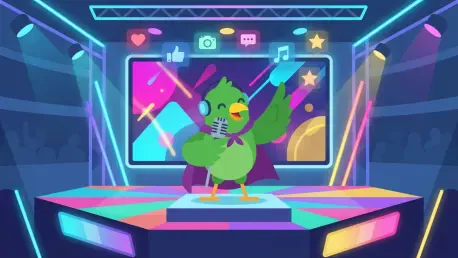
The transition from a static logo to a living, breathing persona requires a level of psychological depth that most brands are too afraid to explore. Before 2021, the social presence we’re discussing was largely dormant, functioning as a conventional, formal account that failed to resonate because it lacked a soul. The shift occurred when the mascot was given a distinct personality—described as “sweet with a diva streak”—which allowed it to exist as an entertainment property in its own right. This wasn’t just about being funny; it was about creating a recurring character with an evolving storyline that users wanted to follow.
Take, for example, the “Living With Lily” series on YouTube Shorts. By leaning into an “emo” iteration of the character, the brand recorded 10.5 million views and gained 100,000 new followers in its first run alone. This works because the product—the language learning app—is the resolution to the character’s drama, not the primary focus of the content. When people are watching a mascot engage in a “funeral” livestream that draws 66 million viewers, they aren’t looking for a sales pitch. They are looking for a narrative. This entertainment-first approach is what drove the year-over-year viewership growth of 430% on YouTube Shorts, transforming the brand from a utility into a cultural icon.
The “death” of a brand mascot in early 2025 was a bold move that some might call reckless. How does such a high-stakes stunt contribute to long-term user retention and community building?
While it might seem reckless on the surface, the “death” of the mascot was a masterclass in cross-platform cultural participation that deeply reinforced user habits. This stunt, which involved the character being struck by a Cybertruck, wasn’t just a video; it was an integrated event where the CEO read a eulogy on YouTube and global organizations like the World Health Organization and Netflix sent their condolences. This level of engagement creates a “gravity” around the brand that is impossible to replicate with traditional paid ads.
What really matters, however, is the “resurrection” mechanic. The campaign invited users to complete language lessons to bring the character back to life, directly linking the social drama to the core product usage. This turned a viral moment into a massive retention driver, with a public leaderboard ranking countries by experience points earned—where the United States, Germany, and Brazil fought for the top spots. By making the user the hero who “saves” the mascot through their own learning progress, the brand successfully converted passive entertainment into active app engagement. This is the ultimate goal of demand generation: creating a scenario where the customer feels personally invested in the product’s ecosystem.
Many skeptics argue that viral social media success doesn’t always translate to financial performance. How do you bridge the gap between “likes” and the record-breaking billings seen in recent reports?
The skepticism surrounding social media attribution is often rooted in an outdated understanding of the customer journey. When you see monthly active users grow from 40.5 million back in 2021 to a staggering 116.7 million today, it’s impossible to ignore the correlation with the brand’s social-first strategy. In the most recent quarter, the company reported billings of $192.6 million, which is a 40% increase year over year. These aren’t just vanity metrics; they are the result of a deliberate choice to use organic reach as the primary acquisition lever instead of heavy paid media spending.
By achieving 51% year-over-year growth in daily active users and surpassing the 40 million DAU mark, the brand has proven that cultural relevance is a precursor to financial scale. They track this not just through general impressions, but through self-reported “how did you hear about us” surveys and tight integration between content and app behavior. For instance, during the 2024 Super Bowl, 99% of eligible app users received a push notification within 5.7 seconds of the five-second “Buttception” ad airing. That level of synchronization ensures that every ounce of brand awareness is immediately channeled into a measurable action within the app.
Physical pop-up activations and branded merchandise seem like a departure for a digital-native app. What is the strategic value of extending a digital character into real-world retail formats?
The move into physical retail, like the August 2024 pop-up in New York City, is about reinforcing the “reality” of the brand’s persona. When a character moves from a phone screen into a physical space where fans can buy branded merchandise, it solidifies the emotional bond between the user and the brand. It’s a transition from being a piece of software to being a lifestyle choice. For Gen Z, the line between digital and physical is increasingly blurred, and they value “phygital” experiences that allow them to interact with their favorite digital personalities in the real world.
These activations also serve as massive content generators. A single pop-up in a major city like New York creates thousands of pieces of user-generated content, which further feeds the organic social engine. This creates a virtuous cycle where the digital presence drives real-world traffic, and that real-world traffic, in turn, amplifies the digital reach. It’s about being omnipresent in the user’s life—not just when they want to study a language, but when they are scrolling TikTok, watching a Super Bowl ad, or walking down a street in Manhattan. This 360-degree approach is why the brand’s following has more than tripled since these experiments began.
What is your forecast for the future of brand storytelling in an increasingly fragmented digital landscape?
I believe we are entering an era of “The Participatory Narrative,” where the audience will no longer just consume a brand’s story but will actively dictate its direction in real-time. We’ve already seen the beginnings of this with the “social brief” concept, where comment sections act as the primary scriptwriters for a mascot’s adventures. In the coming years, the brands that win will be those that treat their identity as an open-source platform, allowing users to influence product features, marketing stunts, and even the “life or death” of brand characters through their collective actions.
We will see a total collapse of the wall between “brand” and “creator,” with companies functioning more like media houses that happen to sell a product. The focus will shift entirely from one-way broadcasting to building complex, reactive worlds that reward user loyalty with narrative progression. If you aren’t prepared to let your audience “resurrect” your brand through their engagement, you’ll likely find yourself relegated to the dormant, formal accounts of the past. Success in the next decade will be measured by how well a brand can survive the chaos of cultural participation while keeping its bottom-line growth, much like the 40% billings growth we’ve seen from those who have already mastered this art.