
While the company reports a global workforce of 450 employees across eight countries, the success of its 10x growth strategy depends on the reliable automation of complex visual effects. The impending merger between Rembrand and Whisper World, set to conclude in early 2027, marks a pivotal moment for the media landscape as these two entities unite under the banner of WRLabs. This new parent organization is positioned to redefine how advertisers view the relationship between content and commerce, moving away from traditional commercials toward a more integrated, “in-content” model. By leveraging advanced generative technologies, WRLabs seeks to solve the long-standing friction between creative storytelling and brand placement, which has historically required months of negotiation and physical logistics on a film set. This consolidation reflects a broader industry push toward modernization, ensuring that the integration of a brand’s product into a streaming series or a blockbuster film is no longer a luxury but a scalable digital asset that can be managed across diverse global markets.
The Architecture: Building a Unified Advertising Ecosystem
WRLabs is structured to function as a vertically integrated solution rather than a mere service provider, offering a comprehensive suite of tools that manage the entire lifecycle of a digital advertisement. At the foundation of this ecosystem are four distinct business units: Whisper World, Rembrand, Spaceback, and MRFactory. Each unit provides a specialized function that, when combined, covers everything from international distribution to high-fidelity virtual production. Whisper World brings a massive global footprint with deep-rooted connections in Europe, Asia, and the Middle East, while Rembrand provides the core artificial intelligence that powers the virtual insertions. Spaceback complements these efforts by converting social media posts into programmatic advertising, and MRFactory ensures that the final visual quality meets the rigorous standards of professional filmmaking. This multi-layered approach allows WRLabs to offer a one-stop-shop for brands wanting global reach.
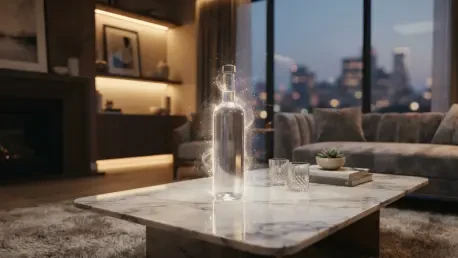
The specific technological breakthrough driving this merger is the virtualization of the advertising supply chain, a process that separates the filming of a scene from the placement of a product. In the traditional media model, a product placement was permanent; if a beverage was on a table during a 2026 shoot, it remained there forever. Rembrand’s AI changes this dynamic by identifying “eligible spaces” within high-definition footage where products or signs can be digitally inserted during post-production. This capability ensures that content remains evergreen, allowing media owners to monetize the same episode differently in 2027 or 2028 by swapping brands based on current marketing deals. Furthermore, it enables regional customization, where a viewer in London might see a specific local snack on the counter while a viewer in Tokyo sees a different brand entirely. This level of flexibility is expected to unlock billions in previously untapped revenue for major content creators.
Operational Expansion: Enhancing Efficiency Through Automation
A central component of the company’s path toward 2027 involves the deployment of VFXAgent, an innovative natural-language tool designed to bridge the gap between creative vision and technical execution. Visual effects have long been the domain of specialized artists working with complex software suites, but VFXAgent allows users to implement sophisticated changes using simple text commands. This democratization of high-end editing means that marketing teams or content editors can request the insertion of a specific brand asset or the modification of a background element without requiring weeks of manual labor. By simplifying these workflows, WRLabs aims to transition product placement from an artisanal craft into a high-volume marketplace. This technological shift is not just about saving time; it is about providing a level of agility that allows brands to react to market trends in real-time, placing their products in trending shows within days rather than the months typically required.
The scale at which WRLabs intends to operate is reflected in its current metrics and ambitious growth targets. With a reported monthly reach of over two billion viewers and a network encompassing 3,000 advertisers, the company is already a significant force in the industry. However, the true test lies in its ability to scale its current volume of 30,000 annual insertions to a projected 300,000 or more. Achieving this tenfold increase requires a seamless synchronization between the AI’s capability to detect scenes and the distribution network’s ability to sell those slots. While the technology promises high efficiency, brand managers remain focused on the actual effectiveness of these virtual placements. Skeptics argue that while the volume is impressive, the industry still needs standardized metrics to prove that a digitally inserted bottle of water drives the same consumer engagement as a physical one. Consequently, WRLabs is heavily investing in data analytics to provide clear ROI for its partners.
Industry Integration: Navigating the Media Buying Workflow
To secure a dominant position in the evolving advertising landscape, WRLabs is prioritizing the integration of its tools into the established workflows of global media buying agencies. A key example of this strategy is the partnership with Omnicom Media, which allows the company’s virtual placement technology to be accessed directly by planners and buyers. Historically, product placement was treated as a separate, unconventional marketing expense, often managed by specialized teams outside the main media budget. By making these placements a standard line item alongside traditional 30-second television spots, WRLabs is removing the friction that has prevented the widespread adoption of in-content advertising. This integration is crucial because it aligns with how modern marketing departments allocate their spending, allowing for more cohesive campaigns that span across digital, social, and television platforms. This systemic alignment ensures that virtual placements are no longer an afterthought.
While WRLabs pursues an aggressive expansion, it must navigate a competitive field populated by other innovative firms like Ryff and Mirriad, who are also developing sophisticated insertion technologies. The primary challenge for all players in this space is maintaining creative control while pursuing high-volume automation. Filmmakers and content creators are often protective of their visual aesthetic, and any digital insertion that feels forced or intrusive could damage the artistic integrity of the work. To address these concerns, WRLabs emphasizes a “collaborative” AI model where content owners retain the final say on where and how a brand appears. This balance is essential for maintaining viewer trust and ensuring that the audience is not alienated by a perceived over-commercialization of their favorite shows. The future of the industry will likely be defined by which company can provide the most seamless, non-disruptive experience that satisfies both the artist and the corporate sponsor.
Strategic Evolution: Navigating the Future of Brand Integration
The evolution of WRLabs provided a blueprint for how artificial intelligence successfully transitioned from a conceptual novelty into a fundamental utility for the global advertising industry. Stakeholders who observed this transition noted that the blurring of lines between content and advertising necessitated a new set of ethical and operational standards. For brands moving forward, the primary recommendation involved adopting a data-first approach to virtual placements, ensuring that every digital insertion was backed by real-time audience analytics and demographic relevance. Marketing leaders found that the most successful campaigns were those that respected the narrative flow of the media while utilizing the flexibility of “evergreen” assets to reach specific regional populations. As the landscape became more saturated, the value of high-fidelity, non-intrusive visuals grew, proving that technical quality was just as important as reach. Ultimately, the industry learned that the true power of AI lay in its ability to enhance the creative connection.