
Milena Traikovich is a prominent figure in the evolving landscape of omnichannel retail, specializing in the intersection of demand generation and physical commerce. With a deep background in analytics and performance optimization, she has spent years helping brands navigate the complexities of modern lead nurturing and customer retention. Her expertise lies in harmonizing digital data with human-centric physical experiences to create a single, fluid journey for the shopper. As businesses increasingly struggle to connect their online presence with their brick-and-mortar storefronts, Traikovich provides the strategic blueprint necessary to ensure that technology serves as a bridge rather than a barrier to high-quality customer relationships.
In this discussion, we explore the tactical shifts required to master the online-to-offline handoff, the technical infrastructure behind real-time inventory, and the operational strategies for turning potential frictions—like returns—into growth opportunities.
In-store discovery relies on merchandising and staff, whereas online discovery happens via search. When a customer enters a store after seeing a product online, what specific steps should staff take to bridge this handoff, and how does this impact the customer’s final decision-making process?
The moment a customer walks in and says, “I saw this online,” the associate needs to move from a generic greeting to a specialized consultation immediately. The first step is for the staff to use mobile tools to confirm the exact product details the customer was viewing, which prevents the frustration of the customer having to repeat themselves. Since 67% of shoppers “webroom”—researching online before buying in-store—the staff’s role is to provide the sensory validation that the screen cannot, such as letting the customer touch the fabric or test the luggage’s durability. By bridging this gap with immediate inventory confirmation and expert product knowledge, the retailer validates the customer’s digital research, which significantly speeds up the final decision-making process. When an associate can say, “I see you were looking at the blue version; let me show you how it handles in person,” it transforms a transactional search into a high-trust human connection.
Many shoppers now use smartphones to compare products while standing in a physical aisle. What are the technical requirements for maintaining real-time inventory transparency across channels, and what specific operational risks do retailers face if their digital “in-stock” status proves inaccurate upon a customer’s arrival?
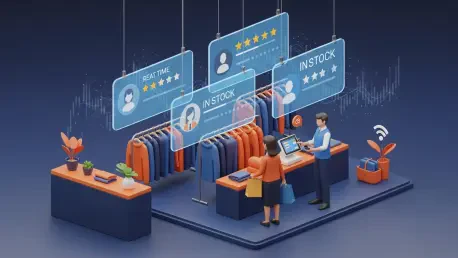
Maintaining real-time transparency requires a unified commerce platform where the online store and the physical point-of-sale share a single source of truth for every SKU. This means that if the last item is sold in-store, the website must update instantly to prevent a digital shopper from driving to a location for a phantom product. The operational risks of a mismatch are severe; if a customer checks their phone, sees an item is in stock, and arrives to find an empty shelf, you haven’t just lost a sale—you’ve broken their trust. This is particularly critical given that 30% of shoppers are making smartphone purchases while literally standing in your aisles. Inaccuracy leads to immediate channel migration, where the frustrated customer will likely pull up a competitor’s app on the spot to find the item elsewhere.
Customer interest in store pickup now officially outpaces home delivery in many sectors. How should a brand design the physical handoff for curbside or in-store pickup to ensure speed, and what metrics are most effective for measuring the reliability and success of these alternative fulfillment methods?
Designing a successful physical handoff starts with hyper-clear communication, providing a specific pickup date and clear signage so the customer never feels lost when they arrive at the curb. According to recent surveys, 46% of consumers now prefer store pickup over the 38% who prefer home delivery, so the fulfillment area must be optimized for “line-busting” where staff can use mobile POS tools to complete the handoff anywhere in the store. To measure success, brands should look at “Time to Fulfill” and the “Order Ready” accuracy rate, ensuring the customer isn’t waiting in their car for an item that hasn’t been picked yet. We also look closely at the “Add-on Rate” during pickup; a successful in-store pickup design often encourages the customer to stay and browse, turning a quick handoff into a larger basket size. For example, brands like Parachute saw massive success by unifying these channels, processing over 1,300 BOPIS orders in a single quarter because the handoff felt effortless.
Online returns often result in dead stock and high shipping costs, while in-store returns offer a chance to save the sale. What specific training should floor associates receive to turn a return into a retention opportunity, and how can return policies remain consistent across different platforms?
Floor associates should be trained in “active resolution,” which involves diagnosing why a product didn’t work rather than just processing a refund. Since 82% of shoppers check return policies before buying, the staff needs to be empowered to offer an immediate exchange or a personalized recommendation based on the customer’s unified profile. If an associate can see the customer’s purchase history, they can suggest a different size or a complementary product that better fits their style, effectively “saving the sale” right at the register. Consistency is maintained by ensuring that the return rules—whether it’s a 30-day window or a tag-on requirement—are identical on the website and the store’s printed receipts. This transparency reduces customer anxiety and reinforces the idea that the brand is one single entity, regardless of where the transaction occurred.
Equipping staff with mobile tools allows them to access customer order history and loyalty status instantly. How does having this specific context change the way an associate interacts with a shopper, and how can brands provide personalized service without it feeling intrusive or overwhelming?
Having instant access to context allows the associate to act as a personal shopper who already knows the customer’s preferences, sizes, and past frustrations. Instead of asking “Can I help you find something?”, they can say, “I see you bought the cotton blazer last month; we just got a new shirt that matches that specific shade of blue.” This shift makes the interaction feel helpful rather than prying because it’s based on a pre-existing relationship that the customer has already established with the brand. To avoid feeling intrusive, the staff should wait for a natural opening or a specific question before citing past data, ensuring the technology supports the conversation rather than leading it. When done correctly, this level of service feels like a premium “VIP” experience, which is why brands like Monos have seen 40% year-over-year revenue growth by empowering their teams with these unified profiles.
Social media is a primary discovery tool, yet many users will switch to a competitor if a brand fails to respond quickly. What strategies successfully turn digital followers into physical foot traffic, and how should user-generated content be integrated to build trust before a customer visits?
To turn digital followers into foot traffic, brands should use social platforms to promote exclusive in-person experiences like pop-ups, workshops, or “VIP nights” that can’t be replicated online. Since 73% of users will abandon a brand if they are ignored on social media, response speed is the first hurdle; you must treat a DM with the same urgency as a customer standing at your counter. Integrating user-generated content (UGC) is the next step, as shoppers trust the photos and unboxing videos of their peers far more than polished corporate marketing. By featuring real customers using the products in the local community, you create a “social proof” loop that makes the physical store feel like a welcoming, real-world extension of the digital community. This strategy closes the gap between scrolling and walking through the door, providing a concrete reason for the customer to take that final step.
Evaluating success in a vacuum can lead to channels competing for attention rather than collaborating. How can retailers accurately measure total sales lift versus simple channel migration, and what role does cohort analysis play in determining if an omnichannel strategy is actually driving long-term loyalty?
Retailers must stop looking at store sales and web sales as two different buckets and instead look at “Total Sales Lift” across a specific geography where both channels are active. If your store sales rise while your online sales remain steady or also grow, you are seeing true brand expansion rather than just customers switching where they spend their money. Cohort analysis is the “secret sauce” here; it allows you to group customers by the date of their first purchase and track their behavior over six or twelve months across all platforms. If a cohort that engages with both your app and your physical store has a 20% higher lifetime value than a single-channel cohort, you have definitive proof that omnichannel is driving loyalty. This shift in perspective prevents internal teams from competing for credit and focuses everyone on the only metric that matters: the total health of the customer relationship.
What is your forecast for omnichannel retail?
My forecast for 2026 and beyond is that the distinction between “online” and “offline” shoppers will disappear entirely, as every transaction will become a hybrid event. We are moving toward a “frictionless floor” where AI-enabled tools will allow associates to predict customer needs before they even ask, with 81% of consumers already expecting representatives to pick up exactly where a digital chat left off. Expect to see the physical store evolve into a high-tech fulfillment and service hub, where “Ship from Store” and instant curbside exchanges become the standard, not the exception. For the reader, my advice is to stop obsessing over which channel gets the “win” and start obsessing over the handoff moments, because that is where today’s empowered customer is either won or lost.