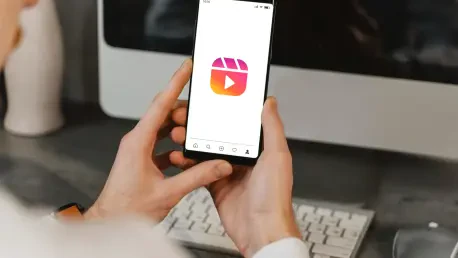

For billions of users, the familiar layout of Instagram’s navigation bar has become muscle memory—a predictable map for creating, connecting, and consuming content. That digital map, however, is being redrawn in a bold experiment that signals a fundamental reorientation of the platform’s priorities. A select group of users is now experiencing a redesigned interface that places short-form video and private messaging at the very heart of the application, moving the iconic “Create” button from its central throne. This is not merely a cosmetic update; it is a calculated response to a seismic shift in user behavior, revealing Instagram’s strategic vision for its next chapter as a multifaceted hub for entertainment and personal connection. The change underscores a critical question for creators and users alike: what does it mean when the platform you know is being rebuilt around what you watch and who you message, rather than what you post?
Is Your Instagram Feed About to Disappear? How One Small Change Signals a Giant Leap
The change being tested, while subtle at first glance, represents a significant philosophical leap for the social media giant. The main navigation bar at the bottom of the screen is undergoing a complete reorganization. This UI test demotes the act of public creation, long symbolized by the centrally located plus icon, in favor of elevating the features that now drive the platform’s growth. For the end user, this translates into an experience architected around passive consumption and private interaction.
This experimental layout effectively redefines the app’s core functions. The home feed, once the undisputed center of the Instagram experience, now shares the spotlight with Reels and Direct Messages (DMs). This shift from a public square to a hybrid model of a movie theater and a private lounge reflects a deeper understanding of modern digital habits. The platform is betting that by reducing friction to its most engaging features, it can capture more user attention in an increasingly competitive landscape, fundamentally altering the way content is both discovered and shared.
From Photo Album to Entertainment Hub: The Evolution Driving the Redesign
Instagram’s journey began over a decade ago as a simple, elegant digital photo album—a place for static, filtered images that captured moments in time. That origin story, however, bears little resemblance to the dynamic, video-first platform it has become. The evolution has been driven by the twin forces reshaping the entire social media landscape: the insatiable user appetite for short-form video and a marked pivot toward private sharing over public broadcasting.
The platform is no longer just competing with other photo-sharing apps; its primary rival is the short-form video behemoth TikTok, a reality that has forced a dramatic strategic realignment. Concurrently, user behavior has evolved. The pressure to maintain a perfectly curated public feed has given way to a preference for sharing content more selectively and intimately. People are now more likely to send a compelling Reel to a few friends via DM than to post a static image for all their followers to see. This new reality, where entertainment is consumed and connections are fostered in more private spaces, is the explicit motivation behind the new design.
Deconstructing the New Layout: A Guided Tour of the Experimental Interface
The experimental interface introduces a significant rearrangement of the navigation bar’s core components. The “Create” button, the long-standing centerpiece, has been relocated to a less prominent position in the top-left corner of the screen. In its place, the Direct Messages icon is being elevated to the prime central spot, making private communication the most accessible function. The “Reels” tab now occupies the position immediately to the right of the “Home” feed, while the “Search” and “Profile” icons are shifted to the far right, completing the new five-tab layout.
This reorganization is laden with symbolic weight, clearly signaling a strategic demotion of public posting and a promotion of private connection. By moving the “Create” button away from the most valuable real estate on the screen, Instagram is acknowledging that for many, the platform is now less about broadcasting their own lives and more about consuming content and sharing it with smaller, trusted circles. Elevating DMs to the center suggests that private messaging is no longer an ancillary feature but a primary pillar of the Instagram experience, serving as the main conduit for user interaction.
To unify these prioritized functions, the new layout introduces a fluid horizontal swipe gesture. This mechanic allows users to navigate seamlessly between the Home feed, the Reels tab, and their Direct Messages without needing to tap the bottom navigation icons. This design choice aims to create a more integrated and cohesive experience, blurring the lines between content discovery and personal communication. It encourages a continuous flow of engagement, where a user can watch a Reel, swipe to share it with a friend, and then swipe back to their feed, all within a single, uninterrupted motion.
Following the Eyeballs: The Data and Strategy Behind the Pivot
This pivot is not based on intuition but is a direct response to clear and compelling user data. Instagram CEO Adam Mosseri has publicly stated that the redesign is an effort to align the app’s structure with how people are actually using it. The platform is essentially “following the eyeballs,” reconfiguring its interface to match the behaviors that are driving its growth and engagement in the current digital ecosystem.
The numbers supporting this shift are powerful. According to internal metrics from Meta’s Q3 2025 earnings report, Reels now account for approximately half of all time spent by users on Instagram. This statistic single-handedly justifies the decision to make short-form video a cornerstone of the new interface. The explosive growth of this format has reshaped engagement patterns, making it the primary engine of content consumption on the platform.
Alongside the dominance of video, another critical data point has informed this strategy: the rise of the “private sharer.” Analysis of user activity reveals that Direct Messages have become the dominant method for sharing content. Instead of reposting to their Stories or public feeds, users are increasingly curating content for specific individuals or small groups. This trend highlights a fundamental shift toward more intimate and intentional forms of digital communication, validating the decision to place the DMs function at the center of the user experience.
The Bigger Picture: What This Test Reveals About Instagram’s Future and Meta’s Vision
By prioritizing Reels, Instagram is intensifying its strategic battle with TikTok for dominance in the short-form video arena. The new UI, which in some test markets opens directly to the Reels feed, is a clear statement of intent. The platform is no longer treating Reels as a feature within a larger app but is rebuilding the entire user experience around it. This aggressive, video-first approach is essential for retaining user attention and competing effectively for the next generation of social media users.
These changes on Instagram are not happening in a vacuum; they are a microcosm of the parent company Meta’s broader corporate strategy. Meta is reorienting its entire family of applications—including Facebook and WhatsApp—around three core pillars: entertainment, messaging, and AI-driven content discovery. The Instagram redesign perfectly embodies this vision, creating a lean, dynamic interface built around algorithmic content recommendations and seamless private communication, moving away from a rigid, chronologically driven social graph.
The decision to launch this test in specific, controlled markets like India and South Korea is a calculated one. These regions represent two of Instagram’s largest and most rapidly expanding markets for video content consumption. By gathering data and feedback from these key growth areas, the company can refine the interface before considering a potential global rollout. This controlled approach, which builds on similar video-first designs recently seen in the new iPad application, indicates a methodical and deliberate push toward a future where video is not just a feature but the very foundation of the Instagram experience.
The experimental redesign of Instagram’s user interface was more than a simple test; it was a definitive acknowledgment of a new digital reality. It revealed a platform willing to move beyond its legacy as a photo-sharing application to fully embrace the behaviors that now define online interaction. The data-driven decision to prioritize algorithmic video discovery and private messaging reflected a pragmatic adaptation to a landscape where user attention is the ultimate currency. This strategic pivot confirmed that the future of social connection was seen not in public squares but in the dynamic interplay between immersive entertainment and intimate conversation.