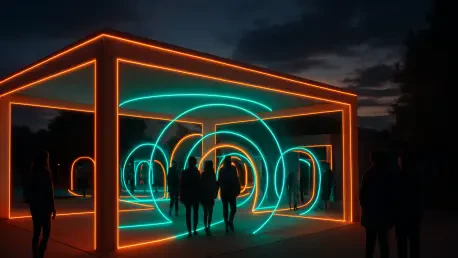

The sheer velocity at which physical brand activations have reclaimed the urban landscape reveals a desperate corporate hunger to bypass digital fatigue and forge visceral human connections. In the current landscape, the resurgence of face-to-face marketing has created a competitive environment where traditional sampling and pop-up retail coexist with high-tech immersive installations. Consumers now demand authentic interactions, pushing major industry players to move away from static displays. However, this evolution is strictly moderated by global data privacy regulations and stringent physical safety standards that dictate how these modern activations are staged and managed in public spaces.
The Current Landscape: Physical Brand Engagement
Brands are no longer satisfied with simple visibility; they are striving for deep integration into the consumer’s physical world. The shift in expectations has moved toward a model where every interaction must feel earned and uniquely personal rather than mass-produced. While large-scale events generate headlines, the most effective players in the market are those focusing on the nuance of the physical presence. Consequently, the industry is seeing a delicate balance between the excitement of high-footfall activations and the heavy responsibility of ensuring consumer safety and ethical data handling.
The Evolution of Trends: The Trap of Predictability
Emerging Technologies: The Illusion of Innovation
Modern marketing often treats augmented reality and artificial intelligence as checkbox items to be ticked off during the creative phase. This reliance on high-tech gimmicks frequently occurs at the expense of a strategic foundation, resulting in experiences that feel disjointed and purely aesthetic. The current trend toward “Instagrammable” design often prioritizes social media shareability over the actual quality of the interaction. Brands that successfully avoided this trap focused on human-centric design, using technology to solve specific consumer pain points rather than simply providing a digital distraction.
Industry Performance Indicators: Growth Forecasts
Global spending patterns indicate that the most significant investments are flowing from the automotive, luxury, and technology sectors. From 2026 to 2029, the industry is expected to see a significant rise in hybrid events that bridge the gap between physical touchpoints and digital amplification. However, a noticeable gap remains between rising production budgets and the actual return on investment for formulaic activations. Market expansion into emerging economies suggests a new frontier where brands can experiment with localized strategies that prioritize community impact over sheer volume.
Structural Challenges: The Perils of Bigger Is Better
An obsession with massive physical scale often overshadows the strategic clarity necessary to influence long-term consumer behavior. When the construction of a pavilion becomes more important than the brand message, the resulting experience gap leads to high footfall but remarkably low brand sentiment. Organizational structures often favor repeatable, safe formulas because they minimize the perceived risk for stakeholders. To overcome this, agencies must refocus on the fundamental reason for an activation, ensuring that every design choice serves a specific strategic objective rather than just filling space.
The Regulatory Framework: The Ethics of Engagement
Navigating the complexities of data consent has become a primary hurdle for live activations, requiring a high degree of transparency in how information is collected. Local zoning laws and environmental sustainability standards are now central to the planning process, forcing a more disciplined approach to event production. Large-scale public events are increasingly used as platforms for corporate social responsibility, aligning brand values with community needs. These stricter compliance measures have pushed the industry toward a model of accountability, where brand safety is inseparable from the quality of the physical engagement.
The Future of Experiential Marketing: Beyond the Checklist
The industry is poised to shift its focus from simple activity metrics, such as sample counts and footfall, toward behavioral metrics that measure emotional loyalty. Hyper-localized, intimate experiences are gaining ground as an effective way to disrupt the saturation of mass-scale installations. Sustainable production and the principles of the circular economy are becoming mandatory elements of future event design. Furthermore, innovations in neuroscience and biometric feedback are providing the tools necessary to measure the true emotional impact of an experience, offering a level of precision that traditional surveys never achieved.
Redefining Best Practices: Meaningful Impact
The most successful marketing teams recognized that strategic bravery was required to move beyond the safety of a checklist. They prioritized a deep understanding of what the consumer should think and feel, ensuring that every touchpoint contributed to a cohesive brand story. By decoupling execution from formulaic thinking, brands managed to create authentic connections that resulted in measurable behavioral changes. These efforts confirmed that the industry’s future lay in the rejection of one-size-fits-all solutions and a renewed focus on genuine human engagement.