
The landscape of B2B sales has fundamentally shifted, leaving many organizations struggling with slowing growth despite their marketing efforts. The root of this challenge often lies in an over-reliance on outdated tactics, where generic messaging and surface-level metrics fail to penetrate the intricate decision-making structures of modern enterprises. The era of a single, identifiable decision-maker has given way to a more complex reality: the multi-stakeholder buying committee. These groups, often comprising individuals from marketing, finance, IT, operations, and security, bring a diverse set of priorities, pain points, and expectations to the table. An account-based marketing (ABM) strategy that treats an account as a monolith is destined to fail, as it cannot address the nuanced needs of each member. The key to unlocking growth is evolving ABM from a broad-casting tool into a precision instrument capable of engaging the right individuals within an ideal customer profile (ICP) long before they ever make direct contact with a sales team.
Shifting from Volume to Verified Engagement
A successful modern ABM strategy pivots from a focus on lead quantity to an emphasis on the quality of engagement. The core of this evolution involves leveraging a sophisticated blend of first-party intelligence and deep behavioral insights to identify prospects who are not just passive recipients of information but are actively researching solutions. This proactive approach enables brands to intercept potential buyers during their critical, early-stage discovery phase. Instead of waiting for a form submission, marketers can initiate meaningful, personalized outreach that speaks directly to the challenges observed through data analysis. This methodology requires a commitment to privacy-compliant, first-party data, which builds trust and ensures that marketing efforts are based on genuine interest rather than assumptions. By validating prospect intent through verifiable actions, such as direct interaction with brand-owned content, companies can ensure their sales teams are engaging with highly qualified and genuinely interested individuals, dramatically improving efficiency and conversion rates.
Personalizing the Committee-Wide Conversation
To truly resonate with a buying committee, personalization must extend beyond simply using a prospect’s name or company. It requires a deep understanding of the distinct roles and responsibilities within the group. The concerns of a CFO are fundamentally different from those of an IT director or a head of operations. An effective ABM program addresses this by delivering tailored messages and content that align with each stakeholder’s specific pain points and industry language. This can be achieved through targeted display advertising solutions that present the right message at the optimal moment, ensuring relevance and impact. Furthermore, specialized event registration platforms can drive high-quality attendance from key accounts, creating opportunities for more productive and context-aware follow-up conversations. The ultimate goal is to make the entire ABM process feel less like a marketing campaign and more like a helpful, consultative dialogue that demonstrates a brand’s expertise and genuine interest in solving the customer’s unique problems.
A Blueprint for Redefined Demand Generation
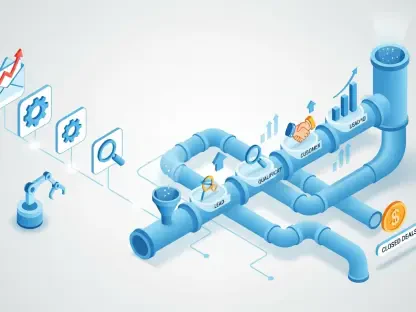
The strategic recalibration of ABM toward committee-centric engagement effectively reshaped the demand generation funnel. This advanced approach focused on building awareness and credibility during the earliest, most influential stages of the buyer’s journey. By concentrating on validated content engagement, where leads were qualified only after demonstrating active interest, organizations fostered higher levels of trust between their brand and potential buyers. This focus on real people and their specific needs, rather than abstract account-level metrics, facilitated better internal alignment between sales and marketing teams, providing clearer insights and a unified strategy. Ultimately, this evolution proved that the most effective path to growth was not through wider nets or louder messages, but through improved timing, superior accuracy, and authentic engagement that addressed the complex dynamics of the modern buying committee.