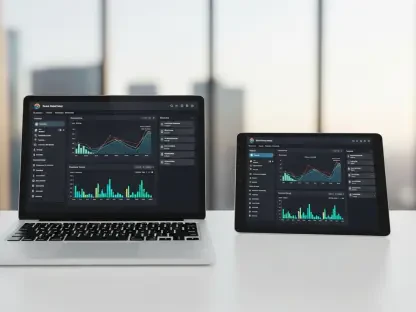

In the high-stakes world of modern event marketing, where every dollar of the budget is scrutinized, the pressure to demonstrate tangible return on investment has never been more intense, forcing organizers to question every tool in their arsenal. Amidst a sea of shimmering screens and digital displays, the social wall stands as a common fixture, yet its true purpose is often lost. This raises a critical question for every event professional: is that expensive screen an active catalyst for community or just costly digital wallpaper?
Beyond Digital Wallpaper: Rethinking Audience Interaction at Events
Modern event marketers face the immense challenge of cutting through the noise in a technology market saturated with promises of engagement. Proving that a tool actively contributes to the attendee experience and delivers on strategic goals is paramount. The success of an event is no longer measured by attendance figures alone but by the depth and quality of audience interaction, a metric that can be frustratingly difficult to capture.
The social wall, therefore, finds itself at a crossroads. For years, it has served as a passive backdrop, a rolling feed of hashtags that attendees might glance at between sessions. However, in an industry demanding more, this passive function is no longer sufficient. The pivotal question has shifted from “Are people posting?” to “Are people connecting, participating, and feeling like part of a community?” This distinction separates a simple display from a powerful engagement platform.
This evolution in thinking is driven by a critical need for data-backed evidence. To justify investments and demonstrate success to stakeholders, event organizers require more than anecdotal feedback. They need concrete analytics that illustrate how technology fosters interaction, enhances sentiment, and amplifies the event’s message. Without this proof, the social wall risks being dismissed as a superficial addition rather than a strategic asset.
From Content Aggregator to Engagement Engine: The Social Wall’s Evolution
The social wall began its life as a straightforward tool, primarily designed to aggregate and display social media posts that included a specific event hashtag. In its early days, this was a novel way to bring online conversations into the physical event space, creating a visual mosaic of attendee thoughts from platforms like Twitter and Instagram. Its function was simple: to collect and show.
However, the limitations of this passive model quickly became apparent. A simple content feed does not inherently encourage interaction; it merely reflects it. This approach offered little in the way of measurable impact, leaving organizers unable to prove whether the wall was genuinely driving engagement or just occupying screen space. The industry began to demand solutions that could do more than just display content—they needed tools that could actively create it.
This demand for more interactive and measurable solutions spurred an evolution in the technology. Platforms like Walls.io began to pioneer a new approach, reframing the social wall not as a content aggregator but as a “full-funnel activation” engine. This new model focuses on transforming passive viewers into active participants by integrating features that prompt interaction and build community throughout the entire event lifecycle.
The Anatomy of a Full-Funnel Activation Strategy
A modern social wall platform can transform the attendee journey by creating touchpoints for engagement before, during, and after the event. This full-funnel strategy ensures that the wall is a central part of the event experience, not just an afterthought, continuously building and sustaining a sense of community.
Building Pre-Event Momentum and Community
A successful event begins long before the doors open, and generating early buzz is critical. An activation-focused social wall provides the tools to build this momentum from the moment registration opens. It becomes a central hub where the initial community can form, sharing excitement and creating a foundation of user-generated content.
This is where features like Walls.io’s “Echo” come into play. This tool encourages confirmed speakers, sponsors, and early registrants to contribute content in the weeks leading up to the event. By amplifying these initial posts, Echo helps generate pre-event awareness and creates a repository of content that sets a vibrant, participatory tone before the event even begins.
Igniting Participation During the Event
During the live event, the goal is to convert passive consumption into active creation. An advanced social wall moves beyond a simple feed by offering interactive elements that draw attendees in and give them compelling reasons to contribute. The screen becomes a dynamic canvas for the shared experience, not just a static display.
Features such as live polls and real-time reactions turn the social wall into a two-way communication channel, allowing organizers to gather feedback and attendees to voice their opinions instantly. Furthermore, tools like the “Walls.io Lens,” a digital photo booth, empower attendees to become content creators on the spot. Seeing their own photos and posts appear on the big screen provides a powerful incentive for participation, fostering a lively and interactive atmosphere.
Delivering Quantifiable Proof of Engagement
Ultimately, every engagement strategy must be accountable. The most significant advantage of an activation-focused platform is its ability to deliver the concrete data that event marketers need to prove their success. This moves the conversation from vague impressions to tangible, measurable results.
Comprehensive analytics dashboards provide a clear picture of the event’s digital pulse. Marketers can track key metrics, including the total number of posts, unique authors, interactions like likes and comments, overall reach, and even audience sentiment. This quantifiable proof of engagement allows them to demonstrate clear ROI and refine their strategies for future events.
The Differentiator: Moving from Passive Viewing to Active Participation
The core distinction between a traditional social wall and an activation-focused platform lies in its fundamental purpose. While the former merely aggregates existing content, the latter is engineered to inspire new content and foster genuine interaction. This strategic shift turns the audience from passive observers into the primary drivers of the event’s narrative.
The unique value of this model is not found in a long list of disparate features, but in how those features work together to create a cohesive engagement strategy. The objective is to convert audience participation from a fleeting moment into a measurable asset. By providing a platform for connection and creation, the wall helps build a vibrant community that extends far beyond the confines of the event itself.
A Case Study in Action: The “Festival of Eventing”
The “Festival of Eventing,” a new industry event, faced the common challenge of launching without an established community. To overcome this, organizers leveraged Walls.io to generate pre-event awareness and cultivate a sense of belonging from the outset. The strategy was to build a community digitally before bringing it together physically.
By using the platform’s activation tools, the festival successfully created a groundswell of energy. The social wall became a focal point on-site, with attendees eagerly posting content to see themselves featured on the live display. This transformed the screen from a simple information board into a dynamic, interactive centerpiece that reflected the collective energy of the participants.
The results provided clear, quantifiable evidence of the strategy’s success. The event generated 680 posts and 3,300 visits to the wall, resulting in 436 direct interactions and an overwhelmingly positive sentiment score of 95 percent. These metrics did more than just prove engagement; they demonstrated the creation of an emotional impact and a shared sense of community at an event that was, until then, entirely new.
Reflection and Broader Impacts
Reflection
The strengths of an activation-focused social wall are clear. Its versatility makes it an effective tool for in-person, virtual, and hybrid events, adapting to different formats while consistently delivering value. Most importantly, its ability to provide clear, data-driven ROI gives event marketers the proof they need to justify their investment and demonstrate strategic success.
However, these platforms are not without their challenges. Maximizing audience participation requires more than just deploying the technology; it demands strategic implementation and active promotion by event organizers. The tool is only as powerful as the strategy behind it, and success depends on encouraging and guiding attendees to engage.
Broader Impact
The shift toward activation-focused tools reflects a larger trend within the event technology industry. There is a growing preference for solutions that provide demonstrable, data-backed value rather than those that simply offer a long list of features. Event professionals are increasingly sophisticated in their tech choices, prioritizing platforms that solve specific strategic problems.
This model also addresses the increasing demand for technologies that foster genuine human connection. In an era of digital saturation, attendees crave shared experiences that feel authentic and participatory. Tools that facilitate this connection by turning passive events into active, collaborative gatherings are becoming indispensable for creating memorable and impactful experiences.
Transform Your Wall into a Strategic Asset
The ultimate takeaway is that a social wall’s true value lies not in its presence, but in its purpose. Its ability to actively engage audiences and provide the data to prove it is what transforms it from a decorative element into a strategic powerhouse. The technology now exists to move far beyond passive displays and create dynamic hubs for community and interaction.
This evolution presents a clear call to action for event professionals. It is time to re-evaluate the role of every tool in the event tech stack and demand solutions that deliver measurable strategic outcomes. By choosing platforms that are designed for activation, organizers can ensure their social walls are not just seen, but are truly felt, creating experiences that resonate long after the event has concluded.