
The traditional burden of maintaining a digital presence has long been the “silent killer” of small business productivity, often requiring more effort to manage than to create. Kite AI, developed by Appsmith, enters this space not merely as another design tool but as a fundamental shift toward autonomous web operations. By prioritizing long-term stability over initial aesthetics, it addresses the industry-wide problem of “website drift”—the slow degradation of links, SEO, and functionality that occurs when a site is left unattended. This review examines how Kite utilizes agentic workflows to redefine the relationship between owners and their digital assets.
Understanding Kite AI and the Evolution of Web Development
Modern web development has transitioned from static code to complex content management systems, yet the underlying requirement for human oversight remained constant. Kite AI marks a departure from this manual era by introducing the concept of the autonomous site. Unlike platforms that simply provide a canvas, this technology integrates the builder and the webmaster into a single, cohesive intelligence. This evolution signifies a move away from reactive fixes toward a proactive environment where the software understands its own architecture and purpose.
The significance of this shift lies in how it democratizes high-level technical management. In the past, only enterprises with dedicated IT departments could ensure 99.9% uptime and perfectly optimized SEO. Kite levels this landscape by embedding these professional standards directly into the platform’s core principles. It recognizes that in the current market, a website is a living entity that must adapt to changing search algorithms and browser standards without constant human intervention.
Core Features and Technical Infrastructure
Conversational Design: Guided Site Generation
The user interface of Kite AI replaces the intimidating blank canvas with a sophisticated guided dialogue. Instead of dragging elements onto a grid, users engage in a focused exchange about their business goals, target audience, and aesthetic preferences. The AI interprets these qualitative inputs to generate structured, high-performance layouts. This method eliminates the “paradox of choice” that often slows down development, offering curated options that are already optimized for conversion and accessibility.
Digital Workforce: Autonomous Maintenance Agents
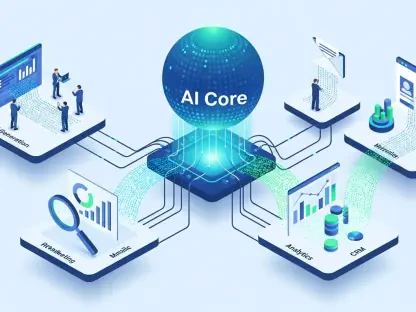
What truly sets this infrastructure apart is its “digital workforce” of self-healing agents. These background processes act as a persistent monitoring layer, identifying broken contact forms or dead internal links before a visitor ever encounters them. This is not just a basic alert system; the agents are designed to implement technical fixes and update SEO metadata autonomously. This technical resilience ensures that the site remains as functional on day five hundred as it was on day one.
The Shift Toward Proactive Automation and Reducing Website Drift
Website drift is the invisible tax on digital growth, manifesting as outdated content and broken plugins. The current trend in AI-driven development, spearheaded by Kite, focuses on solving this post-launch degradation. By employing agentic AI, the system replaces manual webmaster tasks with a continuous optimization loop. This transition moves the industry standard from “build and host” to “deploy and evolve,” ensuring that the site stays relevant to search engines and users alike.
Real-World Applications for Freelancers and Small Businesses
For freelancers, Kite AI acts as a force multiplier, allowing them to scale their service delivery without a linear increase in maintenance hours. They can hand over a project with the confidence that the platform will handle the technical upkeep, effectively providing their clients with a managed service without the overhead cost. This capability transforms the freelance business model from one-time project delivery to a more stable, value-driven partnership.
Small business owners benefit by reclaiming the time previously spent on technical troubleshooting. A local service provider can focus entirely on operations while Kite handles the complexities of digital marketing integrations and site health. The platform ensures a professional digital presence is maintained even when the owner lacks the time or expertise to check for errors, making it an essential tool for those who prioritize efficiency over manual control.
Addressing Technical Hurdles and Market Obstacles
Despite its innovative approach, Kite faces significant challenges in competing with established giants like WordPress or Webflow. These legacy platforms offer deep ecosystems of third-party plugins and a level of granular design control that power users may find lacking in an AI-first environment. Highly bespoke creative requests still require a human touch that autonomous agents cannot yet fully replicate. There is an inherent trade-off between the ease of automation and the freedom of manual customization.
Furthermore, navigating regulatory data standards and ensuring AI-generated content remains compliant with evolving privacy laws is a complex hurdle. While the system is robust, the lack of a massive plugin marketplace means users are dependent on the internal development of the Kite team for new features. Balancing the simplicity of the AI interface with the need for professional-grade flexibility remains a primary focus for ongoing development efforts.
The Future Outlook for AI-Powered Web Ecosystems
The trajectory of this technology suggests a future where websites are no longer static pages but active participants in business workflows. We are likely to see the integration of more sophisticated agents capable of handling complex marketing funnels, automated lead nurturing, and real-time content updates based on market trends. This move toward generative design and autonomous marketing could eventually make manual site editing a niche activity reserved for high-end artistic projects.
As Kite continues to refine its agents, the global web services sector will likely see a decline in the demand for basic technical maintenance. This shift will force agencies to move up the value chain, focusing on strategy and brand identity rather than routine updates. The long-term impact of Kite may well be the complete decoupling of “having a website” from “managing a website,” turning digital infrastructure into a true utility.
Final Assessment of Kite AI’s Current State and Potential
The review of Kite AI revealed a platform that successfully transitioned the focus of web development from the act of building to the necessity of long-term management. By automating the technical minutiae of site health and SEO, the technology provided a compelling solution to the persistent issue of digital decay. The cost-effectiveness of an autonomous digital workforce made it a disruptive force for both freelancers and small businesses. While limitations in hyper-specific design customization remained, the platform’s ability to maintain a high standard of functionality without human oversight was a significant milestone. Ultimately, the shift toward proactive, agent-driven ecosystems suggested that the era of manual webmastering was nearing its conclusion, favoring a more streamlined and resilient digital future.