


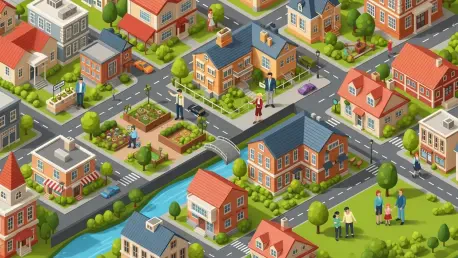

The illusion of digital influence often crumbles when real estate professionals realize that millions of views from distant spectators do not translate into signed listing agreements or closed escrow files within their own zip codes. As the industry moves deeper into 2026, a fundamental shift has occurred where the high-gloss “influencer” persona is being discarded in favor of a practical “practitioner” model. This evolution demands that agents pivot away from chasing massive follower counts and hollow vanity metrics that look impressive on a screen but fail to impact the bottom line. Instead, the focus has moved toward hyper-local relevance and community utility, ensuring that every piece of digital content serves a specific purpose for a specific neighbor. By adopting this pragmatic mindset, professionals are discovering that a small, highly engaged local audience is infinitely more valuable than a global reach of disinterested viewers who will never buy or sell a home in their territory.
Establishing Local Dominance and Personal Connections
Market Specialization: Dominating through Neighborhood Expertise
Successful agents are currently positioning themselves as neighborhood specialists by creating evergreen content that focuses on specific local enclaves rather than broad metropolitan areas. By highlighting new local business openings, upcoming community events, and neighborhood-specific market trends, these professionals ensure they are the first face a potential buyer or seller encounters when researching a particular street or subdivision. This strategy effectively transforms the agent from a generic salesperson into a vital community advocate and a top-of-mind resource for anyone living within a five-mile radius. When an agent consistently provides updates on the best coffee shops or the construction progress of a new community center, they become an integral part of the local fabric. This hyper-local approach works because it speaks directly to the immediate environment of the homeowner, establishing a level of authority that no distant big-box real estate portal can ever hope to match.
This level of neighborhood-focused dominance is effective because it provides direct answers to the granular questions potential clients are actually asking about their specific schools, parks, and commutes. Modern buyers in 2026 are less interested in generic market reports and more concerned with how a new zoning law might affect their property value or which local elementary school is seeing the most improvement. Being a consistent local resource creates a long-term digital presence that precedes a client’s actual need for professional real estate services by months or even years. When the time finally arrives for a homeowner to list their property, the agent who has been documenting the neighborhood’s growth has already proven their deep understanding of the area’s unique value proposition. This makes them the natural, logical choice for the job, as the homeowner perceives them as someone who truly lives and breathes the local market rather than someone just looking for a quick commission check.
Radical Authenticity: Building Emotional Bonds with Clients
Agents are increasingly leveraging their personal lives to build deep, emotional connections with their target audience, recognizing that the human element is the ultimate differentiator in a crowded market. By sharing genuine vulnerabilities and personal milestones, such as the daily challenges of motherhood or the unique lifestyle of a military spouse, they move far beyond transactional interactions. This human-centric approach fosters a sense of community and trust, allowing potential clients to connect with the actual person behind the professional real estate license. When a prospect sees an agent navigating the same local challenges they face, it breaks down the traditional barriers between salesperson and client. This radical authenticity creates a platform where people feel like they know the agent before they ever pick up the phone to schedule a consultation. In a world where digital interactions can often feel sterile, these personal glimpses offer a refreshing sense of reality that resonates deeply with local residents.
Authenticity currently serves as a powerful competitive advantage because it is fundamentally impossible to replicate with artificial intelligence or generic marketing templates. While automated systems can generate market data and property descriptions, they cannot share a heartfelt story about a favorite local charity or the joy of seeing a neighbor’s child succeed in a local sports league. People instinctively connect with stories and shared values long before they engage with technical property listings or financial data. By being “real” on social media platforms, agents attract a specific, loyal demographic that feels a personal bond with them, ensuring that the resulting business relationship is based on more than just a fee. This strategy allows agents to build a “tribe” of followers who are not just clients, but advocates for their business. This organic growth model is significantly more sustainable than paying for leads, as it relies on the undeniable power of human connection and mutual respect within the local community.
Leading with Information and Authentic Documentation
Information Authority: Adopting the Local Journalist Model
Many top-performing agents in 2026 are becoming the unofficial “journalists” of their respective markets by reporting on significant infrastructure improvements, business announcements, and local economic growth. Using creative formats such as green-screen reporting over local news articles or on-site interest stories, they establish themselves as experts who are deeply plugged into the area’s culture and future. This model ensures that the agent controls the narrative regarding local developments, positioning them as the ultimate authority on the community’s way of life. When a new tech hub or a major transportation project is announced, the community looks to these agents for an interpretation of how it will affect their daily lives and home values. By providing this information freely and consistently, the agent becomes a necessary part of the resident’s information ecosystem. They are no longer just selling houses; they are reporting on the evolution of the neighborhood, which creates a high level of professional prestige.
To maintain this position of authority, agents have adopted a rigorous three-part framework consisting of utility, personality, and proof of work. They provide clear answers to common market questions, share the underlying “why” behind their specific business practices, and consistently showcase their actual professional activity through video and photography. This balanced content mix proves competence while remaining engaging and relatable to a local audience that increasingly values transparency and expert insight over flashy advertisements. By providing utility, they solve problems; by showing personality, they build rapport; and by offering proof of work, they validate their expertise in real-time. This holistic strategy prevents the agent’s feed from becoming a boring stream of “Just Listed” posts, which most users tend to ignore. Instead, it creates a dynamic destination where locals can go to find out what is actually happening in their town, cementing the agent’s role as an indispensable local leader and trusted advisor.
Professional Documentation: Showcasing Daily Market Activity
The strategic focus for successful real estate marketing has shifted from “creating” perfect, scripted content to “documenting” the actual, messy journey of being a high-volume agent. By sharing behind-the-scenes looks at client appreciation events, home inspections, and the myriad of daily tasks required to close a deal, professionals build trust through total transparency. This style of content significantly reduces the pressure of maintaining a perfect image and instead invites the audience to see exactly what it is like to work with the agent on a professional level. When a client sees the agent at a 7:00 AM inspection or dealing with a difficult negotiation, they gain an appreciation for the work ethic and dedication required to succeed in today’s market. Documenting the process humanizes the industry and demystifies the real estate transaction for the consumer. It provides a “fly on the wall” perspective that is both educational and entertaining, making the agent feel more accessible and reliable to those watching.
Documenting professional relationships and market activity in real-time also serves as a constant, subtle reminder of an agent’s productivity and local success. When an agent posts a quick video from a closing or a photo with a happy new homeowner, it provides social proof that is far more convincing than a traditional testimonial. These snippets of daily life highlight the agent’s professional network, from local contractors to mortgage brokers, showcasing their ability to manage a complex ecosystem of vendors for their clients’ benefit. This transparency builds a layer of trust that is difficult to erode, as the audience has witnessed the agent’s hard work and commitment over time. By consistently showing up and documenting the small wins and the daily grind, professionals create a narrative of reliability. This approach ensures that when a potential seller is ready to make a move, they do not have to wonder if the agent is active or capable; they have already seen the proof of their labor and their results day after day.
The Strategic Shift: Why Hyper-Local Presence Defined Success
The transition toward hyper-local content and radical transparency redefined how successful agents communicated with their communities throughout 2026. By prioritizing utility and genuine connection over the pursuit of viral fame, professionals were able to build more resilient businesses that relied on deep-rooted local trust rather than fickle algorithms. The primary lesson learned was that being a useful neighbor is more profitable than being a distant celebrity. To maintain this momentum, real estate professionals focused on diversifying their local reporting and deepening their community involvement through consistent digital documentation. They moved away from static, one-way advertising and toward dynamic, two-way conversations that valued the specific needs of the local homeowner. Future success in this arena required a commitment to being the most informed and most human person in the market. Those who embraced the role of the community journalist and authentic practitioner found that their influence grew naturally, resulting in a steady stream of referrals and a dominant position within their chosen territory.


