



A single second can stretch into an eternity when a shopper hovers at the buy button and wonders whether the sneakers, serum, or supplement on-screen is the real thing, because doubt does not just delay a sale—it quietly redirects money, trust, and loyalty to wherever certainty feels easier to find.
That hesitation shows up everywhere: at a streetwear drop, in a beauty aisle, on a marketplace page for a refurbished watch. The question is oddly simple—“Is this real?”—yet the answer typically demands time, research, or blind faith. Brands try to fill the gap with seals, holograms, and trust badges. Counterfeiters try harder. The stakes are not abstract, especially when safety, efficacy, and premium pricing rest on proof.
The tension has pushed a once-niche idea into the spotlight: using blockchain to confirm authenticity without dragging shoppers into crypto. The most persuasive versions make no new demands on consumers. They turn blockchain into quiet infrastructure behind a familiar scan-and-confirm routine, restoring confidence in seconds rather than screens.
Why This Story Matters
Counterfeiting is not a backroom problem; it is a line-item in global trade. OECD and EUIPO estimates pegged fake goods at up to USD 467 billion in 2021—about 2.3% of world trade—and as much as 4.7% of EU imports. In the United States, U.S. Customs and Border Protection reported seizing more than 32 million counterfeit items in FY2024, valued at over USD 5 billion. That scale bleeds into everyday shopping, where price, promise, and product rarely resolve into a clean yes.
As fakes circulate, consumer confidence wobbles. Search costs rise, purchase friction builds, and the brand’s story starts to lose altitude. The lesson for any authenticity solution is brutally clear: reduce doubt quickly or risk abandonment. The winning experience mirrors familiar habits—scan, verify, move on—without new accounts, wallets, or tokens getting in the way.
The opportunity is not to teach shoppers about blockchain; it is to make blockchain invisible. Treated as a tamper-resistant record layer, it can thread together manufacturing, distribution, sale, and service into a continuous, checkable history that strengthens truth claims while letting brands control the front end.
A Fast, High-Stakes Question at the Checkout
At checkout, speed beats sophistication. Features and jargon rarely overcome the pause that creeps in when a deal seems too good or a supply path feels fuzzy. In fast-moving categories—sneakers, supplements, beauty, luxury—the window to reassure is short. If proof arrives late, the buyer’s mind wanders. If proof arrives heavy—with new tools, passwords, or crypto steps—the buyer’s patience frays.
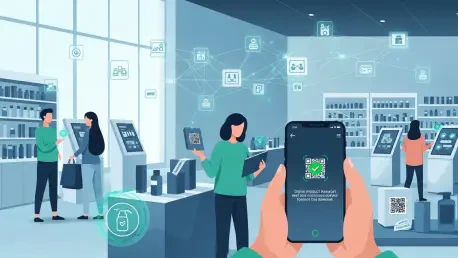
The better path respects the moment. A shopper scans a QR code on packaging or a listing, lands on a brand-hosted page, and sees a serial auto-detected or entered. In a breath, a plain-language status appears: genuine or not, last known channel, warranty standing, and a nudge for the next best action. No wallets, no tokens, no new accounts. It feels like tracking a parcel, not learning a new technology.
This is where blockchain’s promise is on trial. Can it harden proof without forcing education? Used as back-end record infrastructure, it can. Each handoff—factory, distributor, retailer, service center—writes to a shared ledger that resists tampering. Multiple parties hold each other accountable, creating a chain of custody that does not disappear into a single siloed database.
Records, Not Coins: How Proof Fits Real Life
Reframed as a record system, blockchain stops being a speculative asset and starts being connective tissue. It links serial numbers to product histories that many authorized stakeholders can read and, under permission, update. The European Blockchain Observatory has championed digital product passports for precisely this reason: verifiable traceability for origin, sustainability, and claims across the lifecycle.
For brands, the passport model cuts through uncertainty. A watch serviced by an authorized repair shop, a serum sourced from verified suppliers, a sneaker released through approved channels—all leave breadcrumbs that add up to credibility. When a customer checks an item, the result draws on a cumulative ledger, not on a single vendor’s database that could be outdated or quietly edited.
Crucially, design carries the day. The shopper experience must stay familiar. A QR scan leads to a clear status and, when relevant, an ownership or service timeline. Marketing copy becomes secondary to records that can be independently verified. Proof of product and proof of claims travel together, reducing the burden on trust and shifting it to evidence.
Evidence and Expert Signals
Market and enforcement data have kept urgency front and center. The OECD/EUIPO figures and CBP seizures point to a counterfeit problem that no amount of policing can fully solve at the point of purchase. Enforcement can blunt supply, but the decisive moment still happens in a browser, a store aisle, or a resale meet-up, where real-time verification matters more than later penalties.
Industry signals also suggest the underlying blockchain environment is maturing. Research associated with Binance noted sharp declines in sanctions-related exposure from early 2024 into 2025, highlighting tighter controls and stronger monitoring. Leadership commentary from Richard Teng emphasized that compliance, risk management, and institutional readiness now serve as foundations, not afterthoughts—a posture that supports dependable consumer applications.
Adoption patterns tell a related story. Familiar interfaces win. Reported crypto card usage rose roughly fivefold in 2025, with January 2026 volumes around USD 115 million, reinforcing the idea that mainstream use accelerates when complexity stays hidden. In parallel, litigation leadership such as Dugan Bliss underscored the importance of countering misinformation, a reminder that product proof and claim proof must travel together to resist rumor, spoofing, and gray-market ambiguity.
Making It Work: A Playbook for Brands
Turning the concept into practice starts at the source. Secure serialization at manufacturing—with controlled custody logs—creates dependable inputs. Each partner is onboarded with role-based write permissions so the ledger reflects reality rather than “garbage in, garbage out.” Without disciplined data entry, even the strongest ledger becomes a beautifully locked box of errors.
Spoofing defenses earn equal attention. Static labels are easy targets, so dynamic QR codes, cryptographic signatures, or NFC elements deter cloning. Tamper-evident packaging and rotation of verification artifacts raise the cost of forgery and buy the brand precious time to adapt tactics as counterfeiters evolve.
Interoperability keeps momentum. Open schemas for digital product passports let suppliers, retailers, marketplaces, and resale platforms read from the same playbook. Privacy by design ensures only necessary fields appear to shoppers, protecting sensitive batch and supplier details. Offline and returns workflows matter too: escrowed proofs for returns, store associate tools for quick checks, and SMS or toll-free options for low-connectivity scenarios keep verification usable in the real world.
Measurement closes the loop. Track doubt-to-trust time in seconds, verification completion rates, conversion lift where scans occur, and reductions in counterfeit-related tickets and return fraud. Incentives then align: fewer chargebacks, faster returns processing, and clear KPIs give operations, logistics, and retail partners a reason to keep the records clean and the experience immediate.
The Takeaway
The path forward rested on a simple principle: proof needed to arrive faster than doubt. Brands that treated blockchain as record infrastructure—and not as a new customer chore—found a practical balance between rigor and ease. By anchoring digital product passports in secure serialization, shared custody logs, and anti-spoofing labels, they translated abstract trust into concrete evidence at the exact moment it was needed.
Next steps were straightforward. Start with a pilot in a high-risk category, measure seconds-to-verified status, and refine the scan-to-answer flow until completion rates climbed. Bring key distributors into permissioned writes, then extend to resale partners to keep ownership histories intact. Prioritize open data schemas to avoid lock-in, and expose only the fields shoppers needed to decide. With compliance discipline rising across the blockchain sector and consumer interfaces proving that familiarity accelerates adoption, the ground had been set for authenticity checks to feel as routine as tracking a package—quietly powered by a ledger most people never had to see.


