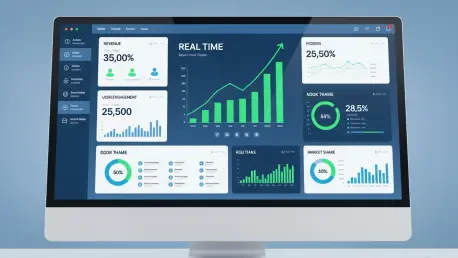

Most marketing dashboards are data graveyards, static repositories of charts and numbers that are reviewed once a month, filed away, and promptly forgotten, telling a story of what happened last week but rarely providing a clear path forward. This passive approach to analytics leaves teams swimming in data but starved for actionable insight, a relic of a simpler time that is fundamentally holding back growth potential. There exists a different reality, however, one where a dashboard is not a static report card but a dynamic, living operating system for the entire marketing team. In this paradigm, it becomes the central hub where strategy is formed, decisions are made, and momentum is built in real time. This is the transformative potential of a truly unified dashboard—to evolve from a simple reporting tool into the very engine that powers a company’s growth by deconstructing the journey from fragmented reporting to a consolidated command center that integrates SEO, paid advertising, and social media data into a single, cohesive narrative.
The Problem with Silos Why Your Current Dashboard Fails You
A Fragmented View of the Customer
The fundamental flaw in most marketing analytics is the siloed nature of reporting, where the SEO team operates within one tool, the paid media team in another, and the social media team in yet a third. Each channel tells its own isolated story, often using different metrics, timelines, and definitions of success, a structure that inherently fails to reflect the complex reality of modern marketing. This fragmentation creates a disjointed and incomplete picture of the customer journey. Today’s consumers do not exist within a single channel; they might discover a brand through an organic search, see a retargeting advertisement on a social media platform, and ultimately convert after clicking a paid search link. When dashboards treat these touchpoints as three separate, disconnected events, the cohesive narrative is lost, and the organization fails to understand the crucial synergistic effects of how its channels work in concert to guide a prospect from awareness to conversion. This lack of a unified perspective prevents marketers from seeing the whole story, leading to misinformed strategies and missed opportunities.
This fragmented view is not merely a reporting inconvenience; it is a significant strategic liability that obscures the true impact of marketing efforts and inhibits growth. When channels are measured in isolation, it becomes nearly impossible to identify and leverage cross-channel synergies. For instance, a successful social media campaign might drive a substantial increase in branded organic search queries, an effect that would be completely missed if the social and SEO teams are only looking at their own platform-specific data. Consequently, the social team’s contribution to organic traffic goes uncredited, and the SEO team might misinterpret the source of the traffic surge. This blindness to interconnected performance means that budget allocation decisions are often based on incomplete or misleading data, potentially leading to underinvestment in high-impact, top-of-funnel activities. Without a holistic view that traces the customer’s non-linear path, marketing teams are essentially flying blind, making tactical adjustments without a full understanding of their downstream consequences across the entire ecosystem.
The Data Debate and Wasted Energy
The most immediate and damaging consequence of siloed data is the endless internal friction it creates within an organization. Marketing meetings frequently devolve into unproductive debates over attribution, with different teams championing their channel’s contribution and arguing over which dataset represents the “right” version of the truth. This “data debate” is a colossal waste of valuable time, intellectual energy, and resources that could be far better spent on developing creative campaigns, analyzing market trends, and executing growth-driving initiatives. Instead of collaborating to solve strategic challenges, team members are pitted against each other, forced to defend their data and justify their channel’s existence. This internal conflict erodes morale and undermines the collaborative culture necessary for a high-performing marketing organization. The focus shifts from achieving collective business goals to winning internal arguments, a zero-sum game that ultimately benefits no one and stifles innovation.
This operational inefficiency is more than just an internal annoyance; it represents a critical strategic liability in a competitive marketplace that demands speed and agility. A team that is perpetually bogged down by internal disagreements over data integrity and attribution cannot respond effectively to new opportunities or emerging threats. The lack of a single, trusted source of truth prevents organizational alignment, making it nearly impossible to make swift, unified decisions. When a competitor launches a new product or a new marketing channel gains traction, an agile organization can pivot its strategy in days. However, an organization mired in data debates will waste precious time arguing about the validity of the incoming signals before it can even begin to formulate a response. This inherent sluggishness transforms cross-functional collaboration from a powerful competitive advantage into a source of friction and delay, ceding ground to more nimble and data-aligned competitors in the market.
The Dashboard as a Growth Operating System
Building the Foundation Data Governance and a Single Source of Truth
To successfully transform a dashboard from a passive report into an active operating system, the initial focus must be on building a stable and trustworthy foundation. This foundation is not constructed with flashy visualizations or complex machine learning models; it is built with the unglamorous but essential discipline of rigorous data governance. Without a shared, enforced set of rules for how data is collected, structured, and defined across all channels, any attempt at a unified dashboard will inevitably become a “garbage in, garbage out” system. This erodes trust among stakeholders and renders the entire initiative useless. In practice, this requires establishing and meticulously enforcing strict operational protocols, such as standardized UTM tagging for all campaigns, consistent naming conventions across every platform, and comprehensive data normalization to ensure metrics are truly comparable. Normalization is particularly critical, as it guarantees that a core metric like a “conversion” or a “video view” signifies the exact same user action, whether it originates from a social platform, a search advertisement, or an email campaign.
The meticulous work of establishing strong data governance culminates in the creation of a “single source of truth,” a universally trusted data repository that becomes the bedrock of all strategic conversations. When everyone in the organization, from a channel specialist to the CMO, is looking at the same numbers derived from the same definitions, the dynamic of internal discussions shifts dramatically. Teams are liberated from the need to constantly defend the integrity of their data and can instead focus their collective energy on collaborative problem-solving and strategy development. This shared understanding builds organizational trust and empowers teams to move beyond turf wars. A single source of truth aligns the entire marketing department around common objectives and a shared reality, fostering a culture where data is not a weapon for internal battles but a tool for collective success. It is only from this position of trust and alignment that a dashboard can truly begin to function as the central operating system for growth.
Focusing on What Matters Actionable vs Vanity Metrics
A powerful growth dashboard is not a data dump; it is a carefully curated collection of key performance indicators designed to steer specific, impactful decisions. A common mistake is to populate dashboards with every available metric, creating a visually overwhelming and analytically useless wall of noise that obscures the critical signals. The key to building an effective tool is the relentless prioritization of actionable metrics over vanity metrics—those numbers that may look impressive on the surface, such as social media likes or raw impression counts, but do not correlate directly with tangible business results. These vanity metrics can be dangerously misleading, encouraging teams to optimize for activities that do not contribute to the bottom line and creating a false sense of progress. A truly effective dashboard cuts through this clutter, focusing the team’s attention exclusively on the data points that matter most for driving sustainable growth.
To achieve this clarity and focus, an effective structure is to organize the dashboard around two distinct but interconnected types of metrics: “Outcomes” and “Drivers.” Outcomes represent the high-level business results that executive leadership and the broader organization care about, such as total Revenue, Customer Acquisition Cost (CAC), and Return on Ad Spend (ROAS). These are the ultimate measures of marketing success. Drivers, in contrast, are the tactical, channel-specific levers that the marketing team can directly influence on a daily or weekly basis. These include metrics like Click-Through Rate (CTR) on an ad, organic keyword rankings, or the engagement rate of a social media post. A true growth-oriented dashboard does more than just display these two categories of metrics; it explicitly visualizes the causal relationship between them. It allows a marketer to see, for example, how an improvement in CTR for a specific campaign (a driver) directly contributes to a lower CAC (an outcome). This direct line of sight empowers teams by demonstrating how their day-to-day tactical adjustments tangibly impact the company’s most important goals.
Architecting Your Growth Engine
Integrating the Full Picture
To function as a true command center for marketing, a dashboard must pull in data from every critical touchpoint along the entire customer journey, creating a holistic and multi-dimensional view of performance. This integration strategy extends far beyond the conventional trio of SEO, paid media, and social channels. A comprehensive architecture must incorporate data from web analytics platforms like Google Analytics to understand on-site behavior, the Customer Relationship Management (CRM) system to connect marketing activities directly to the sales pipeline and revenue, email and SMS marketing tools to measure lifecycle engagement, and even behavioral analytics platforms. This comprehensive data aggregation is essential for answering the most complex and valuable business questions that cannot be addressed by looking at any single channel in isolation. It provides the context needed to understand the complete customer narrative, from first touch to final sale and beyond.
This holistic, integrated view unlocks a deeper layer of optimization by connecting channel performance with the on-site user experience. For example, by integrating behavioral signals such as heatmaps, session recordings, scroll depth analysis, and form abandonment rates, a team can move beyond simply asking “Which channel drove this lead?” to answering the far more crucial question, “Why didn’t the high-intent traffic from that successful channel convert?” This connection allows marketers to diagnose and resolve friction points on landing pages, in the checkout process, or within the product itself. It might reveal that traffic from a paid search campaign is bouncing because the landing page content does not align with the ad copy, or that users from a social campaign are abandoning a form because it asks for too much information. By surfacing these user experience issues directly within the marketing dashboard, teams can collaborate more effectively with web development and product teams to implement fixes that improve conversion rates across all channels.
Moving Beyond Last Click Attribution
The long-standing and often paralyzing debate over attribution modeling has hampered marketing teams for years, with different stakeholders advocating for the model that best favors their specific channel. A modern, sophisticated growth dashboard resolves this conflict not by attempting to identify one single “perfect” attribution model, but by embracing flexibility and displaying multiple attribution views side-by-side. This approach allows different team members to utilize the model that is most appropriate for their specific role and the type of decision they need to make. It acknowledges that there is no one-size-fits-all solution to the complex challenge of assigning credit in a multi-touchpoint customer journey. By providing this multi-faceted perspective, the dashboard facilitates a more nuanced and intelligent conversation around performance, moving the team away from simplistic arguments and toward strategic consensus.
This multi-model approach enables tailored insights for different strategic needs. For instance, a paid media manager responsible for daily budget pacing and bid optimization might rely heavily on a last-click attribution model for its immediacy and clarity in evaluating direct-response campaign performance. In contrast, a CMO planning the quarterly budget allocation might use a position-based or time-decay model to gain a more strategic understanding of how different channels contribute throughout the entire funnel. Crucially, a well-architected dashboard must also feature a prominent “assisted conversions” view. This particular report is vital for highlighting the often-understated value of upper-funnel activities, such as social media engagement, content marketing, and display advertising. These channels play a critical role in introducing the brand and nurturing prospects long before they perform a final, converting click, and the assisted conversions view ensures their contribution is properly recognized and valued in strategic planning.
Automation and Intelligent Alerting
A dashboard that requires constant manual updates and data pulls is fundamentally a report, not a dynamic operating system. To become an active, integrated part of a team’s daily workflow, it must be powered by automated, real-time data refreshes that ensure the information is always current and reliable. More importantly, a truly advanced dashboard should incorporate a layer of intelligent alerting that proactively notifies the team of critical changes, emerging threats, and new opportunities. These are not simple threshold alerts; they are sophisticated systems that can detect anomalies, identify significant deviations from historical trends, and flag patterns that might otherwise go unnoticed. This automated vigilance transforms the team’s relationship with data, shifting it from a reactive, backward-looking review process to a proactive, forward-looking management discipline.
These intelligent alerts are the mechanism that transforms a team from passive reporters into active, agile managers of performance. Instead of discovering a catastrophic drop in conversion rates days after it occurred during a weekly review, an alert can immediately flag a sharp decrease in organic traffic to a key landing page or a sudden, unexplained spike in cost-per-acquisition for a major campaign. This immediacy enables faster, more effective responses, minimizing potential damage and reducing downtime. On the upside, alerts can also empower teams to seize fleeting opportunities the moment they arise, such as notifying the paid media team of a competitor’s ad going offline or flagging a piece of content that is suddenly gaining viral traction. By serving as an early warning system and an opportunity detector, these automated alerts ensure that the team is always focused on the most pressing and impactful issues, making the dashboard an indispensable partner in driving growth.
Operationalizing Your Dashboard for Continuous Growth
The Weekly Growth Meeting Rhythm
A dashboard, no matter how well-designed or technologically advanced, only realizes its true value when it is deeply and consistently embedded in a team’s operating rhythm. The most effective method for achieving this integration is to make the dashboard the undisputed centerpiece of a structured, weekly growth meeting. This meeting is fundamentally different from a traditional reporting session; it is a tactical, forward-looking huddle designed to drive action. The agenda is not to simply review past performance, but to use the data to make concrete decisions about the week ahead. The dashboard serves as the common ground for discussion, ensuring that all participants are working from the same set of facts and focusing on the same strategic priorities. This disciplined routine transforms the dashboard from a static artifact into the central nervous system of a continuous improvement loop: observe, hypothesize, act, and measure.
During this structured weekly meeting, the team follows a clear and repeatable process anchored by the dashboard. The session begins with a review of the high-level outcomes, assessing progress against the primary business goals like revenue targets or customer acquisition costs. The conversation then moves to diagnosing the underlying drivers of that performance, using the dashboard to drill down into channel-specific metrics to understand what caused the observed results. Was a drop in revenue due to decreased traffic, a lower conversion rate, or a decline in average order value? The dashboard provides the data to answer these questions swiftly. The final and most critical phase of the meeting is action-oriented. Based on the insights gleaned from the data, the team collaboratively identifies key opportunities or challenges and commits to a specific, measurable set of cross-channel experiments to be executed in the upcoming week. This process ensures accountability and maintains forward momentum, turning insight into action on a consistent, cyclical basis.
Making Cross Channel Opportunities Obvious
The ultimate power of a truly unified dashboard lies in its ability to reveal strategic plays and synergistic opportunities that would remain completely invisible in a siloed reporting environment. By visualizing the complex interdependencies between different marketing channels on a single screen, it makes these cross-channel opportunities strikingly obvious. For example, the dashboard might highlight a high-ranking organic blog post that attracts significant traffic but has a disappointingly low conversion rate. This immediately signals a clear opportunity: run targeted paid search or social media ads against that specific topic, but instead of sending traffic to the low-converting blog post, direct it to a dedicated, high-converting landing page with a strong call-to-action. Without a unified view, the SEO team would see high traffic and the paid team would see a potential new keyword, but the critical connection between the two would be missed.
This ability to surface interconnected dynamics allows teams to operate with a level of strategic sophistication that is impossible with fragmented data. The dashboard could clearly show a significant surge in branded search queries that directly correlates with the launch of a new influencer campaign on social media, providing tangible proof of the value of top-of-funnel brand awareness efforts and justifying further investment. It might also reveal that leads generated from a specific paid campaign are churning at a higher rate, prompting an investigation into the email onboarding sequence for that cohort. By making these cause-and-effect relationships visible and measurable, the unified dashboard empowers a marketing team to evolve beyond a collection of siloed channel specialists. It forges them into a single, cohesive growth engine, where every action is informed by a holistic understanding of the entire customer journey and every decision is optimized to drive collective success.