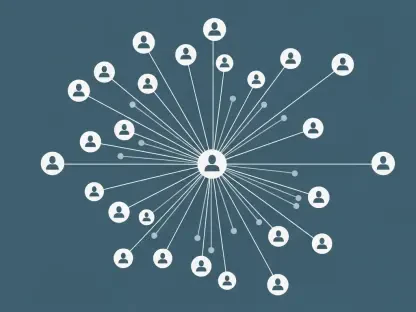

The familiar act of signing up directly for a streaming service is rapidly becoming a relic of the past, replaced by a complex and interconnected marketplace where your next subscription might come from your bank or your phone provider. This transformation marks more than a simple change in sales strategy; it represents a fundamental rewiring of the subscription economy. As consumers grow weary of managing a dozen different services, the industry is responding not with more standalone apps, but with consolidated, high-value packages that prioritize convenience and simplicity. The era of the direct-to-consumer silo is giving way to an age of strategic, multi-party alliances.
From Subscription Fatigue to Strategic Alliances The Industrys Great Reset
The subscription landscape has undergone a seismic shift, moving decisively away from the isolated, direct-to-consumer models that once dominated the market. In their place, a new ecosystem built on interconnected partnerships is emerging. This transition is not accidental but a calculated response to a consumer base overwhelmed by choice and complexity. The industry is in the midst of a great reset, where the path to growth no longer lies in isolated competition but in collaborative value creation.
This new paradigm has redefined the roles of key industry players. Streaming giants are no longer just content creators but also strategic partners, while telecommunications firms have evolved from mere utility providers into powerful content aggregators. Simultaneously, retailers and financial institutions are stepping into the fray, leveraging their vast customer bases to become critical distribution channels for digital services. This power shift is creating a more fluid and dynamic market where alliances are as important as assets.
Underpinning this entire transformation is a sophisticated technological backbone. The rise of these complex, multi-party bundles is made possible only through advanced platform integrations that allow for seamless user authentication, billing, and data sharing between partners. This infrastructure enables a unified customer experience, where a subscription purchased through a mobile carrier feels just as native as one bought directly from the service provider, effectively masking the intricate web of agreements that operates behind the scenes.
Decoding the Drivers of the Bundle Boom
The Rise of the Strategic Consumer Value Over Volume
The modern consumer’s approach to subscriptions has matured significantly. The era of impulsive sign-ups has been replaced by a more deliberate and strategic decision-making process. Today’s subscribers are less interested in accumulating a large volume of services and more focused on the perceived value and convenience offered by a single, consolidated package. This shift in consumer psychology from quantity to quality is the primary catalyst driving the industry toward bundled offerings.
In response to this new, discerning consumer, subscription providers have adopted a two-pronged strategy. To improve retention, companies are introducing more flexible options, such as the ability to pause and resume services, alongside targeted offers designed to prevent cancellations. For acquisition, however, the focus has shifted aggressively toward novel distribution channels, embedding their products into the existing commercial relationships that consumers already have with their banks, retailers, and internet providers.
This strategic pivot has given rise to the phenomenon of “multi-party bundling,” where former competitors now join forces to create a more compelling, unified offer. The recent creation of a streaming bundle featuring Disney, Hulu, and Max is a prime example of this trend, transforming direct rivals into collaborators. This move mirrors internal consolidations like Apple One, reinforcing the market consensus that simplified, high-value packages are the future of subscription sales.
The Numbers Dont Lie Projecting the Growth of Partnership Driven Revenue
The empirical data supporting this shift is compelling. Market research indicates that consumers are not only open to these new models but are actively seeking them out. For instance, a remarkable 48% of young consumers report a willingness to switch banks if it means gaining access to superior subscription bundles. This statistic highlights the immense power of integrated services to influence major consumer financial decisions.
Consequently, growth projections for subscriptions sold through non-traditional channels are exceptionally strong. Forecasters anticipate a significant and sustained increase in the volume of subscriptions sold through partners like telecommunications firms and retailers over the coming years. These channels are no longer considered ancillary but are quickly becoming primary drivers of new customer acquisition across the industry.
From a forward-looking perspective, the super-bundle model appears to possess greater long-term financial viability and a clearer path to market dominance than the traditional standalone subscription. By leveraging the scale and marketing power of distribution partners, service providers can reduce their customer acquisition costs while increasing their market penetration. This synergistic relationship creates a sustainable growth engine that isolated services will find increasingly difficult to compete with.
The Hidden Costs of Convenience Unpacking the Challenges of Bundling
Despite their appeal, super-bundles introduce significant friction into the user experience, particularly around content discovery. When access to services is fragmented across multiple platforms, consumers often struggle to locate the content they want to watch. This can lead to confusion and frustration, as a show available through a bundled service one day may disappear from the partner’s interface the next, degrading the very convenience the bundle was meant to provide.
This fragmentation highlights a fundamental tension over customer ownership. Content providers inherently desire to control their own user interface, manage the customer relationship, and own the resulting data. However, entering into a bundling partnership requires ceding a degree of that control to the distributor, whether it is a telecom company or a smart TV manufacturer. This creates a strategic battle over who truly owns the customer experience.
Furthermore, the super-bundle model faces a potential price ceiling. As more services are added to a package, the cumulative cost to the consumer inevitably rises. There is a risk of reaching an inflection point where the perceived value of the bundle no longer justifies its price, especially if subscribers feel they are paying for a large amount of content they do not use. This raises critical questions about the long-term sustainability of ever-expanding, high-cost bundles and the potential for consumer pushback.
The New Rules of Engagement Navigating Data Competition and Consumer Rights
The consolidation of services into mega-bundles is likely to attract regulatory scrutiny. As major players join forces, concerns around antitrust and fair competition will inevitably arise. Regulators may question whether these large-scale partnerships stifle innovation or unfairly disadvantage smaller, independent services, potentially leading to new rules governing how such bundles can be structured and sold.
The sharing of consumer data across multiple companies within a bundle also introduces significant privacy and security complexities. Protecting sensitive user information as it moves between a streaming provider, a telecom partner, and a hardware manufacturer requires robust security protocols and transparent data-sharing agreements. A failure to adequately protect this data could erode consumer trust and expose all partners to significant legal and financial risk.
To maintain consumer trust, transparency and choice must be paramount. In these complex, multi-service agreements, the terms, conditions, and cancellation policies must be presented with absolute clarity. Consumers need to understand exactly what they are paying for and how to easily opt out if the service no longer meets their needs. The industry must prioritize straightforward policies to avoid accusations of predatory or confusing business practices.
The Next Frontiers of Distribution Where Will You Buy Subscriptions Tomorrow
Telecommunications firms are rapidly positioning themselves as the new central hubs for content. By bundling streaming services with their core internet and mobile plans, carriers increase the “stickiness” of their offerings, making customers less likely to switch providers. This strategy transforms a simple utility into a comprehensive entertainment and connectivity package, creating immense value for both the consumer and the content partner.
The retail and consumer packaged goods (CPG) sectors are also emerging as powerful marketing and sales channels for digital subscriptions. The model is evolving beyond simple loyalty perks, such as Walmart Plus including a Paramount Plus subscription. Future collaborations, like a potential partnership between Netflix and a beverage company like InBev, could see in-store displays for hit shows placed alongside products, turning the grocery aisle into a direct point of sale for streaming services.
Perhaps the most significant untapped potential lies within the FinTech and banking industries. Financial institutions are uniquely positioned to become curated marketplaces for subscriptions, leveraging their deep understanding of consumer spending habits. Digital banks are already integrating subscription offers into premium membership tiers to drive loyalty, and financial management tools that identify recurring charges present a perfect opportunity to recommend new, relevant services to customers.
In contrast to the all-in bundling trend, some major players are pursuing alternative pathways to profit. Sony, for example, has largely opted for a content licensing model, choosing to sell its extensive library of films and shows to other platforms rather than operate a broad direct-to-consumer service. This divergent strategy demonstrates that while bundling is a dominant trend, it is not the only viable path to success in the evolving content landscape.
The Final Takeaway Embracing a Future Built on Unified Value
The industry’s definitive pivot from isolated competition toward a marketplace defined by synergistic partnerships was examined. This analysis revealed that the super-bundle is not a fleeting trend but a fundamental response to evolved consumer demands for simplicity, value, and seamless integration. The fragmented, direct-to-consumer model that characterized the last decade has proven to be unsustainable in the face of widespread subscription fatigue.
What became clear was that consumers are no longer willing to juggle a dozen different apps and bills. They have become strategic purchasers, gravitating toward unified offers that simplify their digital lives and provide clear, consolidated value. The companies that recognized this shift early have positioned themselves at the forefront of the new subscription economy by forging alliances that transcend traditional industry boundaries.
Ultimately, the findings indicated that long-term success in this new era will depend entirely on a company’s ability to build strategic alliances and deliver cohesive, customer-centric value propositions. The future of the subscription economy was not built in silos but through collaboration. The most resilient and profitable services going forward were those that understood that their greatest growth potential lay not in what they could sell alone, but in the combined value they could offer with their partners.