
Milena Traikovich is a seasoned Demand Generation expert who specializes in the intricate dance of lead nurturing and performance optimization. With a deep background in analytics, she has witnessed the shift from the “more is better” philosophy to a sophisticated, intent-driven approach. In this conversation, we explore why traditional funnels are breaking down, the rise of the self-educated buyer, and how businesses can maintain a consistent, trustworthy presence across a fragmented digital landscape. We delve into the necessity of multi-touch sequences and the critical alignment of marketing and sales to ensure that every interaction reinforces a unified brand promise.
Many B2B companies find that high lead volume no longer prevents low conversion rates or stalling sales cycles. How do you identify when a pipeline is bloated with low-quality leads, and what specific metrics should teams track to prioritize buyer intent over sheer quantity?
You can tell a pipeline is struggling when the activity levels are high but the revenue velocity remains stagnant. In today’s market, many businesses are running ads and sending cold emails consistently, yet their sales cycles are getting longer and longer because those leads aren’t actually ready to buy. Instead of focusing on vanity metrics like raw lead count, teams must transition to tracking intent-driven data and behavioral signals that indicate a prospect is actively researching a specific solution. By prioritizing these high-intent leads over a massive database of cold prospects, you ensure that your sales team isn’t wasting time on people who are just browsing. It’s about shifting the focus from being the loudest in the room to being the most relevant to the few who are actually prepared to engage in a meaningful conversation.
Modern buyers often complete their research and form brand opinions long before a formal demo ever occurs. What steps can businesses take to influence this “silent” evaluation phase, and how do you ensure your digital presence builds trust without a direct sales representative’s involvement?
The “silent” evaluation phase is where the modern sale is truly won or lost, as buyers are now spending significant time researching vendors and exploring social proof independently before ever replying to an email. To influence this, a business must treat its website, social presence, and case studies as a primary sales force that works around the clock. You need to provide educational value and a recognizable brand presence across multiple platforms so that by the time a buyer finally books a demo, they have already validated your credibility. If your digital footprint is inconsistent or lacks depth, you lose the opportunity to build that crucial early-stage trust that decision-makers demand before they formally engage. This means your content must be more than just marketing fluff; it needs to be a comprehensive resource that mirrors the expertise and authority of your best sales representatives.
Single-touch outreach rarely converts because prospects now require repeated exposure across LinkedIn, email, and retargeting ads. Can you describe a successful multi-touch sequence you have implemented and explain how visibility across these different channels impacts the final conversion rate?
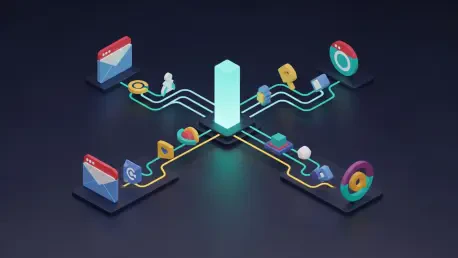
A successful sequence today never relies on a single cold email; instead, it functions as a multi-touch journey where a prospect might see a LinkedIn post today and visit the company website next week. They might notice a retargeting ad later, read a case study afterward, and then finally open a marketing email several days later before they feel comfortable enough to book a meeting. This repeated exposure is essential because visibility has become a massive competitive advantage, allowing your brand to feel familiar and reliable rather than intrusive. Each interaction contributes to a compounding effect of trust that significantly raises the final conversion rate compared to isolated, one-off attempts. By staying visible consistently across these different channels without becoming repetitive, you earn the attention required to move a prospect from initial curiosity to a closed deal.
When marketing channels like SEO and sales outreach operate independently, the brand message often feels disconnected to the buyer. What practical strategies help align these departments into a single ecosystem, and what are the immediate consequences of failing to present a unified value proposition?
When SEO, paid ads, and sales outreach operate in silos, the buyer experiences a jarring disconnect that immediately weakens their confidence in the brand’s professionality. To fix this, businesses must build an integrated marketing ecosystem where every touchpoint—from LinkedIn content to the website messaging—reinforces the exact same positioning and value. If a prospect hears one value proposition from a sales rep but sees a completely different focus on your website, they sense an inconsistency that breeds doubt and causes them to stall their journey. Practical alignment involves ensuring that the messaging used in outbound campaigns matches the educational content being promoted by the marketing team. Consistency creates a sense of security for the buyer, making them much more likely to commit to a long-term partnership because they trust the brand’s unified promise.
With AI-generated marketing flooding inboxes and social platforms, generic messaging is increasingly ignored by decision-makers. How do you refine your positioning to earn attention repeatedly, and can you share an example of a campaign that successfully broke through this noise?
To break through the noise of AI-generated saturation, you have to move away from generic templates and toward hyper-relevant messaging that offers immediate educational value. We’ve seen success in campaigns that skip the aggressive “hard sell” and instead focus on delivering deep insights that address the specific pain points a buyer is currently researching. For instance, a campaign that utilizes intent data to send a personalized resource—like a case study tailored to a prospect’s recent website behavior—stands out because it feels helpful rather than automated. Decision-makers are tired of being treated like a generic number in a volume-based funnel; they respond to brands that demonstrate they have done the work to understand their unique industry challenges. Earning attention repeatedly requires a brand to be recognizable and authoritative, providing a reason for the prospect to stop scrolling every time your name appears in their feed.
Traditional sales-led funnels are being replaced by buyer-led journeys where prospects control the timing and frequency of engagement. How must a company’s infrastructure change to support this lack of control, and what role does discoverability play in this new market dynamic?
The shift to a buyer-led model requires a fundamental change in infrastructure, moving away from rigid, linear funnels toward flexible ecosystems that support the buyer’s desire for independence. Companies must invest heavily in discoverability through SEO, thought leadership, and social visibility to ensure they are present whenever and wherever the buyer decides to conduct their own research. Instead of trying to force a prospect down a pre-defined path, the infrastructure should offer a variety of entry points and content formats that allow the buyer to self-educate at their own pace. This loss of control means that your brand’s reputation and the educational value you provide are now your most important funnel-building mechanisms. The goal is to be the first name that comes to mind when the buyer finally decides they are ready to transition from silent research to an active purchase engagement.
High-intent leads are becoming more valuable than large databases of cold prospects. How can marketing teams better use behavioral signals to trigger outreach, and what are the best ways to personalize that initial contact without appearing intrusive?
Marketing teams can harness behavioral signals by tracking specific actions, such as repeated visits to a pricing page or multiple downloads of high-value white papers, to trigger timely outreach. The key to personalizing this contact without appearing intrusive is to lead with a “value-first” approach that references their interest rather than just their data. For example, instead of saying “I saw you visited our site,” you might reach out with a relevant follow-up insight related to the specific topic they were exploring, making the interaction feel like a natural extension of their research. This strategy focuses on generating meaningful conversations rather than just hitting a daily quota of dials or generic emails. By using intent data to guide the timing and substance of your outreach, you ensure that you are reaching out to the right people at the moment they are most receptive to your expert help.
What is your forecast for B2B marketing funnels?
I forecast that B2B marketing funnels will completely transition from linear, sales-controlled systems to non-linear ecosystems where trust is the primary currency. By the end of 2026, we will see that the most successful companies are not those that spend the most on aggressive outbound tactics, but those that master strategic presence across the entire buyer journey. Every touchpoint will need to be hyper-personalized and data-driven, as buyers will continue to demand more independence and transparency before they ever agree to a sales call. The winners in this new landscape will be the organizations that successfully integrate their marketing and sales efforts into a single, seamless experience that respects the buyer’s pace and rewards their attention with genuine value. Ultimately, the funnel will no longer be about “capturing” leads, but about cultivating a recognizable brand that prospects naturally gravitate toward when their need becomes urgent.