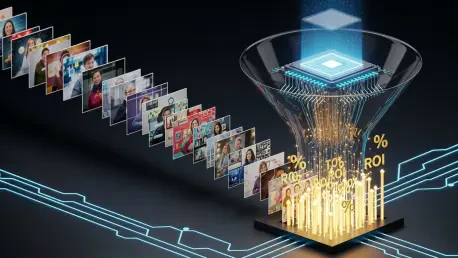

The traditional boundary between a polished television commercial and a person sharing a review from their bedroom has effectively collapsed as global brands pivot their entire digital strategies. In the current landscape of 2026, the dominance of creator-produced content in paid media channels is no longer a peripheral trend but a fundamental shift in how capital is deployed across the internet. Data suggests that nearly half of all creative assets utilized in paid campaigns now originate from independent creators rather than internal brand studios or external agencies. This movement signifies a transition where companies are not merely paying influencers for their organic reach but are instead using the raw and relatable aesthetic of creator content as the primary engine for their high-stakes performance marketing. Platforms like Meta, TikTok, and YouTube have become the central arenas where these assets are refined, tested, and scaled to reach millions of users through sophisticated targeting.
Tracing the Evolution: The Shift to Creator-Led Media
The strategic ascent of this model follows a distinct progression that moved through a chaotic early period of experimentation into a more structured era of professionalization. In the early stages, brands often focused on vanity metrics like follower counts and likes without a clear understanding of how these figures translated into actual sales. However, the global landscape shifted dramatically as traditional production studios faced limitations, forcing marketing departments to look toward creators for high-quality, remotely produced assets. This period proved that creators could deliver the visual variety needed to combat ad fatigue while maintaining a high level of consumer engagement. Now, in 2026, the industry has entered what many experts call the Measurement Infrastructure Era, where the technical foundations are finally in place. Social media platforms have introduced specific advertising formats like Spark Ads and Partnership Ads that allow brands to amplify creator posts with the same granularity.
This historical evolution reached a critical inflection point where over 90% of global marketing leaders reported integrating creator assets into their core paid media budgets. For the first time in the history of digital marketing, capital allocation is shifting so that more money is spent on the distribution and amplification of these ads than on the initial fees paid to the creators for content production. This structural change highlights a move away from simple content acquisition and toward a highly sophisticated media distribution model. In this new paradigm, creator assets serve as the primary creative engine for the entire marketing funnel, from top-level awareness down to final conversion. Brands are realizing that the longevity of a piece of creator content is significantly extended when it is supported by a robust paid media strategy. Rather than letting a high-performing post fade away in a chronological feed, advertisers are using their media budgets to ensure that these valuable assets continue to reach new audiences.
Evaluating the Results: Superior Performance and ROI
A significant reason for the widespread adoption of creator-led creative is the quantifiable performance advantage it holds over traditional, brand-produced advertisements. Internal performance data from various social platforms confirms that campaigns utilizing creator content frequently see a 20% reduction in cost per acquisition compared to standard assets. This efficiency is often attributed to the high level of relatability and social proof inherent in the format, which leads to click-through rates that can be up to 50% higher than traditional banners or video commercials. As modern consumers become more adept at filtering out conventional advertising, the organic and human feel of a creator’s message breaks through the noise more effectively. Most marketers currently report that their return on investment from these campaigns is at least double what they see from traditional digital formats, creating a financial imperative to shift spending. This data-driven realization has transformed the creative process into a performance-oriented strategy.
Sophisticated brands are no longer choosing between traditional creative and creator content, but are instead adopting a blended approach to structure their advertising sequences. This strategy involves using the authentic and human-centric nature of creator content to build initial trust and engagement with a potential customer who may not be familiar with the brand. Once a user has interacted with this relatable content, the brand follows up with more traditional, high-production performance ads that focus on specific product benefits or promotional offers to close the sale. This multi-layered journey creates a seamless experience that leverages the unique strengths of both human storytelling and precise, data-driven retargeting. By sequencing ads in this way, companies can guide a prospect through the entire funnel while maintaining a consistent tone that feels helpful rather than intrusive. The use of creator assets in the initial phase acts as a social endorsement, which significantly lowers the barrier to entry.
Navigating the Barriers: Measurement and Operational Challenges
Despite the clear benefits and high adoption rates, many marketing departments still navigate a complex landscape often referred to as the confidence paradox in measurement. While a large majority of executives believe they can track the revenue generated from their campaigns, many also admit to struggling with isolating the specific impact of creator assets within a multi-channel media mix. This difficulty often stems from a lack of integrated frameworks that can process the diverse data sets generated by various social platforms and attribution models. In many cases, the technology for accurate tracking exists, but the internal expertise required to translate that data into actionable insights is missing or underfunded. This gap creates a situation where brands might be seeing positive results but are unable to precisely identify which specific creators or content styles are driving the highest value. Overcoming this barrier requires a fundamental shift in how organizations approach their data architecture.
Operational friction continues to be another significant hurdle for global brands, particularly concerning the complexities of usage rights and administrative management. Unlike traditional programmatic advertising, which relies on highly automated processes, creator marketing requires human negotiation for likeness, voice, and extended rights to use content in paid media. For large-scale organizations working with thousands of creators across different regions, the logistical burden of managing these contracts can significantly slow down the execution of modern digital campaigns. The legal requirements for using a creator’s image in an ad for six months versus two years vary wildly and can lead to expensive compliance issues if not managed correctly. This administrative bottleneck has created a pressing need for more streamlined legal processes and specialized management software that can handle the volume of modern content production. As the speed of digital media continues to accelerate, the ability to quickly secure rights and launch campaigns.
Integrating Intelligence: The Divide Between Leaders and Laggards
A visible divide has developed between industry leaders who utilize closed-loop systems and laggards who continue to treat creator marketing as an isolated or experimental function. Leaders in this space ensure that the performance data from their paid media campaigns flows directly back into their creator selection and content briefing processes. This feedback loop allows them to use real-world performance data to predict future success, moving away from subjective decisions based on aesthetic preference or personal bias. By analyzing which creator archetypes or narrative structures drive the best results in paid auctions, these companies can refine their creative strategy with scientific precision. Conversely, the organizations falling behind often outsource these functions to multiple disconnected agencies, leading to a loss of valuable data and a lack of integration with the broader media stack. These laggards frequently miss the opportunity to use creator content for more than just brand awareness.
Artificial Intelligence is rapidly becoming the next major driver of efficiency and scale within the realm of creator-led paid media, with many brands already seeing improvements. The current focus is shifting toward predictive performance modeling, which utilizes historical data to forecast how a specific piece of creator content will perform before a single dollar is spent on its distribution. These AI-driven tools can analyze visual elements, speech patterns, and emotional cues to identify the creative components that are most likely to trigger a positive response from a specific audience segment. This level of technical sophistication brings creator marketing much closer to the infrastructure of more mature digital advertising channels like search or display, making it a more predictable part of the overall marketing mix. Furthermore, AI is being used to automate the creative testing process, allowing brands to iterate on thousands of variations of an ad to find the optimal combination of visuals and messaging.
Establishing the Foundation: A Unified Media Strategy
The transition toward a unified model where creator content served as the bedrock of paid media required a significant cultural shift within marketing departments. Successful organizations recognized that the era of siloed influencer campaigns had ended, and they moved quickly to integrate these assets into their broader programmatic stacks. They developed robust frameworks for managing intellectual property and prioritized the use of automated systems to handle the influx of creator data. By treating these individuals as creative partners rather than mere distribution channels, brands unlocked a level of authenticity that traditional commercials could never replicate. In the final analysis, the industry moved away from guessing and toward a scientific application of human storytelling. The brands that thrived were those that aggressively adopted predictive analytics and ensured their media teams worked in lockstep with their creator managers. This alignment allowed for a seamless flow of high-performing creative.