
The digital marketplace in 2026 has evolved into a hyper-competitive landscape where the distance between a brand’s survival and its obsolescence is measured in milliseconds and micro-interactions. Modern consumers no longer follow a linear path toward purchase; instead, they navigate a complex web of social discovery, algorithmically curated feeds, and instant-access marketplaces that demand a seamless user experience. To maintain a competitive edge, businesses must treat their sales funnel not as a rigid structure, but as a fluid journey that requires constant refinement and data-driven adjustments at every intersection. Identifying the friction points within this journey is the primary challenge for digital retailers who seek to convert casual browsers into dedicated advocates. This optimization process involves more than just increasing traffic or tweaking button colors; it necessitates a deep understanding of psychological triggers and technical efficiency. By meticulously analyzing how users interact with each stage of the commerce cycle, brands can build a sustainable model that maximizes lifetime value and minimizes the waste of marketing resources. This sophisticated approach ensures that every touchpoint serves a specific purpose in moving the customer closer to a transaction while reinforcing the brand’s unique value proposition in a crowded market. Successful optimization requires a balance between creative storytelling and rigorous analytical tracking to ensure that no potential customer is lost due to preventable technical errors or a lack of clear information during the decision-making process.
1. Discovery and Evaluation: Engaging the Modern Shopper
The discovery phase represents the first point of contact where a brand must stand out amidst a sea of digital noise. In the current landscape, potential customers encounter products through a variety of high-intent channels, including specialized online marketplaces, social media integration, and the enduring power of peer-to-peer recommendations. For a brand to successfully navigate this stage, it must shift its focus from broad reach to high-quality audience targeting. This involves leveraging advanced data analytics to identify demographic segments that are most likely to convert rather than simply chasing high click volumes that result in low engagement. When marketing efforts are aligned with specific user intents, the discovery process becomes more efficient, reducing the overall cost of acquisition while setting a stronger foundation for the subsequent stages of the funnel. A brand that is visible where its audience already spends time, such as in niche communities or localized search results, will naturally find more success than one relying on outdated, broad-spectrum advertising methods that ignore the nuances of modern consumer behavior.
Once a visitor is aware of a brand, the evaluation phase begins, which is a critical period where trust is either earned or lost. During this stage, shoppers are actively comparing features, checking for social proof, and assessing the perceived value of a product against its competitors. To facilitate this decision-making process, retailers must provide comprehensive product details, high-resolution imagery, and, most importantly, transparent customer reviews that offer a genuine look at the product’s performance. Confidence is further bolstered when a brand is upfront about logistical details such as specific shipping arrival dates and a clear, hassle-free return policy. Implementing interactive elements like product finders or dynamic filters can significantly enhance the user experience by helping shoppers quickly narrow down their options to find the exact solution they need. By removing the guesswork from the shopping experience, a company demonstrates its commitment to customer satisfaction, which serves as a powerful motivator for the user to move deeper into the sales funnel toward an eventual commitment.
2. Commitment and Transaction: Converting Intent into Action
The commitment phase is the bridge between a shopper’s interest and their actual intent to buy, making it a high-stakes moment for any ecommerce platform. At this point, the goal is to encourage the user to add an item to their cart by utilizing persuasive, benefit-driven product descriptions that speak directly to their needs. Strategy here often involves subtle nudges, such as highlighting free-shipping thresholds or offering limited-time bonuses that create a sense of urgency without being intrusive. Personalized suggestions based on a visitor’s previous browsing history can also increase the perceived relevance of the shopping experience, making it more likely that they will finalize their selection. If a user hesitates and leaves the site at this stage, automated follow-up systems like price-drop alerts or personalized re-engagement emails can serve as effective reminders. These tools are designed to pull the customer back into the funnel by addressing their specific interests and offering a renewed value proposition that encourages them to complete the process they previously started.
When a customer finally reaches the transaction stage, the priority shifts entirely to the removal of technical and psychological barriers. This is the moment of peak intent, yet it is also where many potential sales are lost due to overly complex checkout procedures or unexpected costs. To ensure a high success rate, the payment process must be streamlined to include modern options such as digital wallets and one-click payment systems that eliminate the need for manual data entry. Transparency remains paramount; all taxes, shipping fees, and additional charges should be clearly visible before the final confirmation to prevent “sticker shock” that leads to cart abandonment. Allowing for guest checkout is another essential tactic, as many shoppers are deterred by the requirement to create a permanent account just for a single purchase. By simplifying the interface and providing a variety of secure payment methods, a retailer can significantly decrease the friction of the final transaction, ensuring that the customer’s journey concludes with a successful sale rather than a frustrated exit.
3. Retention and Loyalty: Maximizing Long-Term Value
The completion of a sale does not mark the end of the customer journey but rather the beginning of a potentially lucrative long-term relationship. Focus at this stage must shift toward brand loyalty, as the cost of retaining an existing customer is significantly lower than the cost of acquiring a new one. Providing an exceptional post-purchase experience is vital, starting with prompt shipping notifications and ending with the delivery of a high-quality product that meets or exceeds expectations. Excellence in customer service during this period can turn a standard transaction into a memorable brand experience, encouraging the shopper to return for future needs. Loyalty is not just about the product itself but about the feeling of being valued by the brand, which is why personalized follow-up communication is so effective. By sending relevant suggestions based on past purchases or exclusive offers tailored to the user’s preferences, a company can keep its brand top-of-mind and foster a sense of community that transcends the initial transactional nature of the relationship.
Advanced loyalty programs and referral incentives are also powerful tools for encouraging repeat business and turning customers into brand advocates. A well-structured rewards system gives users a tangible reason to choose the same brand over a competitor for their next purchase, effectively increasing their lifetime value to the business. Referral programs leverage the power of word-of-mouth marketing, rewarding current customers for introducing their personal networks to the brand, which often results in high-quality new leads. Beyond these incentives, continuous engagement through educational content or early access to new product launches helps to maintain a dialogue with the audience. When a customer feels that a brand consistently provides value beyond the initial sale, they are far more likely to become a repeat buyer. This cycle of satisfaction and reward creates a sustainable growth model where the most profitable revenue comes from a dedicated base of supporters who are genuinely invested in the brand’s success.
4. Strategic Journey Mapping: Visualizing the Path to Purchase
To optimize a sales funnel effectively, one must first possess a clear and detailed visualization of the customer journey from start to finish. This mapping process involves identifying every possible touchpoint where a stranger might interact with the brand, whether through a social media advertisement, a search engine result, or a recommendation from a friend. By creating a visual representation of these interactions, marketers can better understand the mental state of the shopper at different points in time. This clarity allows for the creation of more targeted content that addresses the specific questions or concerns a user might have during a particular phase of the funnel. A comprehensive map also accounts for the cross-device nature of modern shopping, where a user might discover a product on a mobile device while commuting but wait until they are on a desktop at home to finalize the purchase. Understanding these transitions is essential for maintaining a consistent brand message and ensuring that the user experience is coherent regardless of the platform or device being used.
Setting specific, measurable goals for each individual phase of the funnel is the next logical step after the journey has been mapped. Rather than focusing solely on the final conversion rate, a business should identify one or two key performance indicators for each stage that reflect its specific objectives. For instance, the goal of the discovery phase might be measured by the quality of incoming traffic, while the evaluation phase could focus on the depth of engagement with product pages. By isolating these metrics, it becomes much easier to determine which parts of the funnel are performing well and which require more attention. This granular approach prevents the common mistake of making broad changes that might fix one problem while inadvertently creating another elsewhere in the journey. When goals are clearly defined, every team member understands what success looks like for their specific area of responsibility, leading to a more coordinated and effective optimization strategy that drives incremental improvements across the entire customer lifecycle.
5. Friction Resolution: Addressing Critical Performance Gaps
The systematic identification of drop-off points is a fundamental requirement for any retailer looking to maximize their conversion efficiency. By utilizing data-driven tools such as heatmaps and session recordings, companies can see exactly where users are losing interest or encountering technical difficulties. If a significant percentage of visitors leaves the site on the shipping information page, it likely indicates a problem with the listed costs or the complexity of the forms. These visual tools provide a level of insight that traditional spreadsheets cannot, allowing designers and developers to see the website through the eyes of the customer. Quantifying the impact of these drop-offs helps in prioritizing which issues to fix first based on their potential impact on the bottom line. This approach ensures that resources are allocated toward resolving the most damaging friction points, rather than spending time on minor aesthetic changes that have little effect on the actual purchasing behavior of the users.
Resolving the most urgent points of frustration should always start with the problems that occur closest to the final transaction. A confusing checkout process or hidden fees that only appear at the last second are the primary culprits for lost revenue and should be addressed immediately. Once the bottom of the funnel is stabilized, optimization efforts can move upward to tackle issues in the commitment and evaluation stages. This might involve simplifying navigation menus, improving site speed, or making sure that the search function provides accurate and relevant results. Every small fix contributes to a more fluid experience that keeps the user moving forward rather than looking for an exit. Continuous testing and iteration are key to this process; what works today might not be as effective in six months as consumer expectations continue to rise. By maintaining a proactive stance on friction resolution, a brand can ensure that its digital storefront remains a welcoming and efficient environment that encourages shoppers to complete their journey.
6. Performance Measurement: Tracking Success Through Data
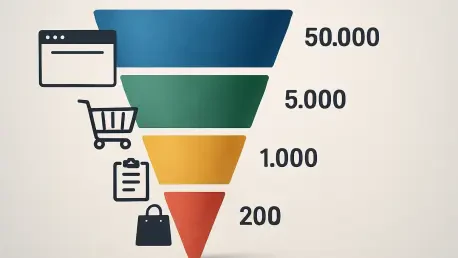
Monitoring the right metrics is the only way to truly understand the health of an ecommerce sales funnel and the effectiveness of optimization efforts. In the discovery phase, metrics like visitor quality and the cost per acquisition provide insight into whether marketing budgets are being spent on the right channels. Moving into the evaluation phase, tracking the time spent on product pages and the frequency of “add to cart” actions reveals how compelling the product presentation is to the target audience. During the commitment and transaction phases, the focus shifts to the cart abandonment rate and the final conversion percentage. These numbers highlight the efficiency of the checkout process and the persuasiveness of the final offer. By analyzing these indicators in tandem, a business can pinpoint exactly where the funnel is leaking and take decisive action to plug those gaps. This data-driven mindset replaces intuition with evidence, allowing for more confident decision-making and a higher return on investment for all marketing and development activities.
The successful implementation of these metrics provided a roadmap for sustainable growth in an increasingly volatile digital economy. Brands that prioritized the alignment of their internal goals with the actual needs of the consumer discovered that loyalty was the natural byproduct of a frictionless experience. They moved beyond traditional marketing silos to create a unified view of the customer, which in turn allowed for more precise interventions at critical moments. The shift toward transparency in shipping and payment processes eliminated the most common barriers to entry, while automated re-engagement strategies ensured that the relationship did not end at the first transaction. By treating the ecommerce funnel as a continuous loop of value exchange, businesses were able to reduce their acquisition costs and improve the overall efficiency of their operations. This proactive stance on performance monitoring and user-centric design became the standard for excellence, proving that a deep commitment to the nuances of the shopper journey was the most effective strategy for long-term viability.