
Small business owners often struggle to juggle daily operations with the relentless demand for high-quality digital marketing that keeps pace with global corporate giants. The Google Pomelli AI represents a significant advancement in the marketing technology sector, specifically targeting this disparity. This review explores the evolution of the technology, its key features, performance metrics, and the impact it has had on various applications. The purpose of this review is to provide a thorough understanding of the technology, its current capabilities, and its potential future development within a rapidly shifting digital landscape.
Introduction to Pomelli AI and the Automation of Marketing
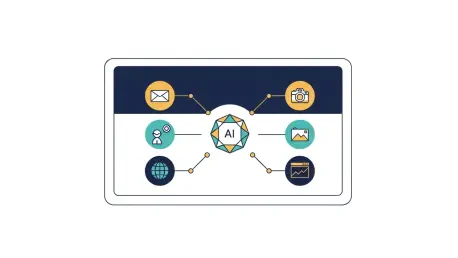
The emergence of Pomelli AI signals a shift toward the total automation of digital outreach for entities that lack the capital for full-scale agency representation. At its core, the platform operates on the principle of accessibility, providing a suite of tools that synthesize complex market data into actionable advertising content. It functions as a centralized hub where business objectives are translated into digital assets through a streamlined interface, effectively acting as an automated marketing department that bridges the gap between raw data and creative execution.
This technology arrived at a critical juncture in the broader technological landscape, serving as a primary vehicle for the “democratization of AI.” While enterprise-level firms have long utilized proprietary algorithms to optimize ad spend, small and medium-sized businesses remained tethered to manual, time-consuming processes. Pomelli changes this dynamic by offering sophisticated generative capabilities that were previously inaccessible, allowing local retailers and service providers to compete on a global scale of professional visibility.
Core Technical Components and Performance Capabilities
Generative Content Engine
The heart of the platform lies in its utilization of Large Language Models to automate the production of marketing copy and visual elements. Rather than merely offering templates, the generative engine analyzes specific product features and target audience demographics to craft bespoke messaging. This process significantly reduces the time business owners spend on brainstorming and drafting, as the AI can produce dozens of high-quality variations for social media, email campaigns, and search ads in a matter of seconds.
Beyond mere text generation, the system integrates visual synthesis tools that suggest or create imagery aligned with the drafted copy. This holistic approach ensures that the narrative and visual components of a campaign are synchronized, reducing the friction typically associated with coordinating different creative assets. By automating these repetitive and labor-intensive tasks, the technology allows entrepreneurs to focus on strategic growth rather than the minutiae of content formatting.
Brand Integrity and Identity Management
One of the most impressive technical feats of Pomelli AI is its ability to ingest and adhere to specific brand guidelines. For a business to remain recognizable, its voice must stay consistent across all platforms, a task that often fails when using generic AI tools. Pomelli addresses this by allowing users to upload existing brand books, logos, and color palettes, which the AI then uses as a foundational constraint for all future output.
This identity management ensures that every piece of content—whether it is a short-form video script or a formal promotional email—maintains a professional and unified style. The technology continuously monitors campaign performance and user feedback to refine its understanding of the brand’s unique “personality.” This deep integration of brand logic prevents the common pitfall of AI-generated content feeling disconnected or overly mechanical, fostering a more authentic connection with the customer base.
Current Industry Trends and the Google Labs Strategy
The current trajectory of the industry points toward a future defined by “marketing departments in a box,” where human oversight shifts from creation to curation. Pomelli is at the forefront of this trend, reflecting a broader movement where AI agents handle the logistics of media buying and creative iteration. This evolution mirrors the rise of experimental AI deployment, where tools are increasingly judged on their ability to provide end-to-end solutions rather than isolated features.
Google’s decision to launch the platform under the Google Labs banner is a strategic maneuver designed to facilitate rapid iteration. This designation allows the development team to test experimental features with a live user base while managing the high expectations typically associated with flagship Google products. It creates a feedback loop where real-world usage data directly informs the next generation of marketing algorithms, ensuring that the tool remains agile in a competitive market populated by both established tech giants and AI-native startups.
Real-World Applications in the European Market
The practical impact of Pomelli is most visible within the diverse markets of the European Economic Area, the United Kingdom, and Switzerland. Service-oriented businesses, such as independent dental clinics or boutique law firms, have utilized the platform to scale their digital presence without hiring dedicated marketing staff. By inputting their localized service offerings, these businesses can launch multi-channel campaigns that feel culturally and linguistically relevant to their specific regions.
In the retail sector, local shop owners have leveraged the technology to react instantly to market changes or seasonal trends. For example, a retailer in Zurich might use the tool to rapidly generate a campaign for a weekend sale, a task that would traditionally take days to coordinate with an external agency. This speed to market is a game-changer for smaller enterprises, allowing them to remain relevant in a digital economy that moves at the speed of social media trends.
Technical Hurdles and Regulatory Obstacles
Despite its impressive capabilities, the technology faces significant challenges regarding the strict regulatory environment of Europe. Compliance with the European AI Act and the General Data Protection Regulation (GDPR) is non-negotiable, requiring Google to implement high levels of algorithmic transparency. Ensuring that data used for training and personalization does not infringe on individual privacy rights remains a complex technical and legal hurdle that shapes how the AI processes information.
Furthermore, the initial English-only rollout poses a substantial barrier to widespread adoption in major non-English speaking markets like France, Germany, and Italy. While the AI is adept at generating English copy, the nuances of local dialects and cultural idioms are essential for effective marketing in those regions. Ongoing development efforts must focus on overcoming these linguistic barriers to ensure that the democratization of marketing truly reaches every corner of the European business sector.
Future Trajectory and Competitive Evolution
The future of Pomelli AI likely involves a deeper integration with the broader Google Ads ecosystem, moving toward a seamless experience where the AI not only creates the content but also manages the budget and placement. This potential synergy would allow for real-time creative optimization, where the AI adjusts visual elements or headlines based on which versions are performing best in live auctions. Such a development would further distance Pomelli from competitors who offer content generation without integrated distribution.
As the platform moves out of the experimental phase, the implementation of localized language support will be the primary catalyst for growth. Additionally, the introduction of varied pricing models will determine how effectively the tool can permeate different levels of the SMB market. Whether through a subscription-based model or a pay-per-campaign structure, the goal will be to maintain a low barrier to entry while providing value that justifies the shift away from traditional manual workflows.
Conclusion and Final Assessment
The deployment of Pomelli AI represented a pivotal moment for small business owners who previously lacked the resources to maintain a sophisticated digital presence. By centralizing generative tools and brand management within a single interface, the technology successfully simplified the complexities of multi-channel marketing. It offered a glimpse into a future where professional-grade advertising is a standard utility rather than a luxury reserved for the elite.
The platform effectively addressed the primary pain points of speed and consistency, though it faced legitimate scrutiny regarding data privacy and linguistic limitations. These challenges served as a reminder that the integration of AI into the business world required a careful balance between innovation and regulation. Ultimately, the tool set a high bar for automated marketing solutions, forcing competitors to rethink how they served the burgeoning SMB sector.
Moving forward, businesses were encouraged to view such AI tools as collaborative partners rather than simple replacements for human insight. The successful adoption of Pomelli depended on the user’s ability to provide clear strategic direction while allowing the machine to handle the heavy lifting of execution. This shift in workflow suggested that the next era of digital advertising would be defined by those who mastered the art of AI orchestration, ensuring a more vibrant and competitive European marketplace.