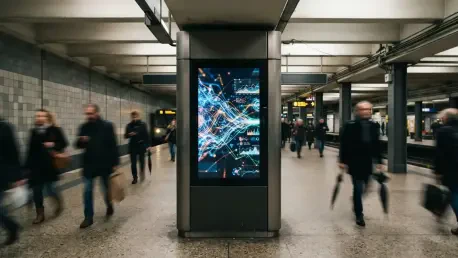

The collaborative effort between Stellar Ace and Adzymic to integrate agentic artificial intelligence into Singapore’s transit network marks a new era of autonomous marketing that moves beyond static displays. This transition represents a fundamental shift in how brands communicate with consumers in the physical world, moving from preprogrammed loops to systems where machines make high-level decisions based on immediate environmental feedback. As the industry moves further into 2026, the reliance on human-led scheduling is diminishing in favor of software agents that can interpret market volatility and commuter density within milliseconds. This evolution is particularly visible in high-density urban environments like Singapore, where the intersection of high-speed digital connectivity and massive foot traffic provides the perfect environment for experimentation with AI agents.
The primary driver of this transformation is the realization that digital out-of-home advertising must match the agility of online programmatic channels to remain relevant in a fragmented media landscape. While traditional digital signage allowed for rotating graphics, the new agentic model introduces a layer of cognitive processing that allows the advertisement to change its own creative strategy without manual intervention. This level of autonomy is not merely about changing a background color or a price point; it involves the agent analyzing external datasets, such as global stock market fluctuations or local weather patterns, to decide which value proposition will resonate most effectively at a specific moment. This capability effectively bridges the gap between the precision of personalized digital ads and the broad reach of traditional outdoor media.
The Evolution of Autonomous Advertising in Asian Markets
The historical progression of the Asian advertising sector has seen a rapid leapfrog effect, where many markets moved directly from legacy static billboards to sophisticated digital out-of-home environments. This shift from static billboards to dynamic agentic AI environments is characterized by the implementation of smart logic that resides within the media player itself rather than on a remote central server. In the current 2026 landscape, the regional industry has moved past the novelty of basic digital screens and is now focusing on the deployment of autonomous systems that can manage complex creative variations across thousands of screens simultaneously. This technological maturity allows media owners to offer higher value to brands that require immediate relevance and high-frequency updates.
The landmark collaboration between Stellar Ace, Adzymic, and Tiger Brokers serves as a definitive case study for this new era of autonomous delivery. Stellar Ace provides the extensive physical infrastructure, specifically the digital screen network embedded within Singapore’s public transportation system, while Adzymic supplies the creative technology platform that powers the agentic logic. Tiger Brokers, as the advertiser, utilizes these capabilities to synchronize their financial services marketing with real-time market movements, ensuring that potential investors see the most relevant data as they commute through the city. This partnership demonstrates how media owners, technology providers, and brands must work in a tightly integrated ecosystem to unlock the full potential of agentic AI in the public sphere.
Understanding the scope of digital-out-of-home assets in Singapore requires an analysis of the city-state’s highly integrated transit-oriented development. The network encompasses thousands of screens across MRT stations, bus terminals, and retail hubs, creating a pervasive digital layer that follows the consumer’s daily journey. This infrastructure is no longer viewed as a collection of isolated displays but as a unified, intelligent canvas that AI agents can orchestrate to deliver cohesive narratives across various touchpoints. The density of these assets ensures that agentic campaigns can achieve both massive reach and high frequency, which are essential for driving brand recall in a fast-paced urban economy.
Key technological pillars supporting this revolution include real-time decision-making and autonomous optimization at the edge of the network. Rather than relying on a human operator to upload new creative files when market conditions change, the AI agent monitors data feeds and reassembles creative assets on the fly. This optimization process involves selecting the most effective headlines, images, and calls to action based on the specific audience profile expected at a given time of day. By moving the decision-making process to the edge, the system reduces latency and ensures that the message is always perfectly aligned with the immediate context of the viewer.
The significance of high-traffic transit networks in modern ad delivery cannot be overstated, as these environments offer a captive audience with predictable movement patterns. Commuters often spend significant amounts of time waiting on platforms or traveling between stations, providing a unique window of opportunity for deeper engagement through AI-driven content. Because the technology can adjust the complexity and length of the creative work based on the average dwell time of a specific location, the advertising becomes more of a utility and less of an intrusion. This strategic alignment with the consumer’s physical journey marks the pinnacle of modern out-of-home strategy, where technology and environment converge to create meaningful interactions.
Key Shifts and Market Growth in Digital Signage
Emerging Trends in Hyper-Contextualized Creative Delivery
The transition from basic automation to autonomous agentic logic represents a paradigm shift in the creative production process for digital signage. In previous years, automation was limited to simple triggers, such as displaying an umbrella advertisement when sensors detected rain, but agentic logic allows for a much more nuanced interpretation of context. Today, an agent might analyze the sentiment of financial news or the specific demographic makeup of a transit hub to generate a message that addresses the particular anxieties or aspirations of the crowd. This hyper-contextualization ensures that the creative delivery is not only timely but also emotionally and intellectually relevant to the viewer in that exact moment.
The integration of fintech market data with real-time advertising has become a primary use case for agentic systems, particularly for brands like Tiger Brokers that operate in high-volatility sectors. As global markets fluctuate, these AI agents can pivot advertising messages to reflect bullish or bearish trends, offering specific investment insights synchronized with the latest exchange data. This level of integration transforms a standard billboard into a real-time information terminal, providing value to consumers while simultaneously positioning the brand as a leader in market intelligence. This trend is expected to expand beyond fintech into other sectors like e-commerce and sports betting, where live data is a critical component of the consumer’s decision-making process.
The rise of transit-oriented infrastructure for captive audience engagement has transformed the very nature of public spaces in major Asian hubs. Digital signage is no longer an afterthought in architectural design; it is integrated into the structural fabric of stations and malls, often serving multiple functions from wayfinding to emergency alerts. Agentic AI takes this integration a step further by allowing the signage to respond to the flow of people, adjusting the brightness, content density, and even the language of the ads based on real-time sensor data. This creates a more harmonious relationship between the digital display and the physical environment, reducing visual clutter while increasing the impact of each individual impression.
How generative AI and agentic AI work together for brands is a central theme in the current evolution of creative technology. While generative AI is responsible for creating a vast library of assets, including images, copy, and videos, agentic AI acts as the strategist that decides how to deploy these assets. This division of labor allows for an unprecedented scale of creative variation, where thousands of unique ad versions can be generated and tested autonomously. Brands are no longer restricted by the costs and timelines of traditional creative production, enabling them to run highly complex campaigns that evolve daily based on performance data and environmental triggers.
Growth Projections and Data-Driven Performance Metrics
Analyzing the performance impact of real-time message optimization reveals a significant increase in consumer engagement and conversion rates compared to static digital loops. Data from 2026 indicates that agentic campaigns often see a double-digit percentage increase in brand salience and a measurable lift in downstream digital actions, such as app downloads or website visits. This performance boost is attributed to the AI’s ability to eliminate creative fatigue by constantly refreshing the message and ensuring that it always feels relevant to the viewer’s immediate situation. Consequently, advertisers are shifting larger portions of their budgets toward platforms that support these autonomous optimization capabilities.
Projected adoption rates of AI agents across Asian urban hubs suggest that this technology will become the standard for digital out-of-home advertising by the end of 2028. Major cities like Tokyo, Seoul, and Shanghai are already upgrading their digital signage networks to support the high-performance computing requirements of agentic AI. This widespread adoption is being driven by both the demand from global brands for more sophisticated targeting and the desire of media owners to maximize the yield of their digital assets. As the cost of implementing these systems continues to fall, even smaller markets are beginning to explore how agentic logic can improve the efficiency of their local advertising ecosystems.
Measuring success through geospatial data and audience density metrics has become the cornerstone of modern out-of-home analytics. Advertisers are no longer satisfied with broad estimates of traffic; they require precise data on how many people were in the vicinity of a screen, their average dwell time, and their likely demographic profile. Agentic systems use this data in real time to adjust their delivery strategy, but the same data is also used post-campaign to provide a granular view of performance. This rigorous approach to measurement is bringing a level of accountability to out-of-home advertising that was previously only available in the digital realm, further attracting investment from data-driven marketers.
Forecasts for programmatic out-of-home investment in Asia indicate a period of sustained growth as more inventory becomes accessible through automated platforms. The integration of agentic AI into the programmatic workflow allows for even greater efficiency, as these agents can manage bidding, creative selection, and optimization in a fully autonomous loop. This reduction in friction makes it easier for small and medium-sized enterprises to access high-quality out-of-home inventory while providing large-scale advertisers with the tools they need to execute complex, multi-market campaigns. The move toward a more liquid and intelligent marketplace is expected to redefine the economic structure of the outdoor advertising industry over the coming years.
Overcoming Complexity in the Agentic Ecosystem
Addressing the technical hurdles of real-time creative assembly requires a sophisticated infrastructure capable of handling high volumes of data with minimal latency. The challenge lies in the fact that every ad served by an agentic system is essentially a unique construction, built on the fly from a library of modular components. Ensuring that these components come together seamlessly and are displayed without glitches requires robust edge computing capabilities and high-bandwidth connections. Engineers must also develop fallback mechanisms to ensure that the screen never goes dark or displays an error message if the agentic logic fails to produce a result in time, maintaining the aesthetic integrity of the public space.
Solving data fragmentation across diverse ad-tech vendor networks is another significant hurdle that the industry must overcome to achieve true scale. An agentic campaign often relies on data from multiple sources, including weather services, financial exchanges, traffic reports, and audience measurement sensors, all of which may use different formats and protocols. Creating a unified data layer that allows the AI agent to ingest and interpret this information in real time is a complex undertaking that requires industry-wide collaboration on standards. Without this interoperability, the potential of agentic AI remains limited to isolated silos, preventing brands from running cohesive campaigns across different media owners and platforms.
Managing the hardware-software handshake in physical environments involves coordinating software-based AI agents with the physical constraints of digital displays. Different screens may have varying resolutions, aspect ratios, and color profiles, all of which must be accounted for by the creative assembly engine. Furthermore, the physical location of a screen can influence its performance, with factors like ambient light and temperature affecting the visibility and longevity of the hardware. The agentic system must be aware of these physical variables to ensure that the creative content it produces is always optimized for the specific screen on which it will be shown, a task that requires deep integration between the CMS and the AI logic.
Mitigating the risks of automated errors in high-stakes public displays is a critical concern for both brands and media owners. Because agentic AI operates with a high degree of autonomy, there is a theoretical risk that it could produce inappropriate or nonsensical creative combinations that could damage a brand’s reputation or cause public offense. To prevent this, developers are implementing sophisticated guardrails and brand-safety filters that scan the agent’s output before it is sent to the screen. These systems use natural language processing and image recognition to ensure that the final advertisement adheres to brand guidelines and local regulations, providing a layer of human-defined oversight in an otherwise autonomous process.
The complexity of these systems also extends to the maintenance and monitoring of the agentic network, which requires a new set of skills for the workforce. Technicians must not only understand the physical hardware but also be capable of troubleshooting the underlying AI models and data pipelines that power the content. This shift is leading to the emergence of specialized roles within the advertising industry, focusing on AI ethics, data engineering, and real-time operations management. As the ecosystem becomes more complex, the ability to maintain a stable and secure infrastructure will be a key differentiator for media owners and technology providers.
Navigating the Regulatory Landscape and Data Privacy
The critical role of IAB TCF 2.2 in modern out-of-home advertising reflects the industry’s commitment to transparency and consumer choice in an increasingly data-driven world. This framework provides a standardized way for media owners and tech vendors to communicate their data processing activities and manage user consent across a vast network of partners. In the context of Singapore and the wider Asian market, adhering to such global standards is essential for maintaining the trust of both regulators and the public. As agentic AI relies on increasingly granular data to drive its decision-making, the ability to demonstrate compliance with rigorous privacy standards is becoming a prerequisite for any brand looking to use these advanced technologies.
Ensuring privacy by design in data-dependent AI campaigns is no longer an optional feature but a fundamental architectural requirement. This approach involves integrating privacy protections into every stage of the technology development process, from initial data collection to final creative delivery. For agentic OOH, this means using anonymized and aggregated audience data rather than tracking individual movements and ensuring that any sensor data collected at the screen level is processed locally and discarded immediately. By prioritizing privacy at the structural level, the industry can harness the power of AI without compromising the fundamental rights of the citizens who interact with its displays every day.
Managing consent across hundreds of third-party ad-tech vendors is a logistical challenge that requires a high degree of automation and coordination. The IAB TCF 1037 framework, for example, involves a massive list of vendors who may be involved in different parts of the advertising supply chain, from measurement and analytics to fraud detection and creative optimization. Agentic systems must be able to verify the consent status of every vendor in the chain before any data is shared or any ad is served. This real-time compliance check ensures that the entire ecosystem operates within the boundaries set by the consumer, reducing the risk of legal liability and building a more sustainable foundation for the future of digital advertising.
Compliance standards for geospatial tracking and audience measurement are particularly important in the out-of-home sector, where the physical location of the viewer is a primary data point. Regulators in many Asian jurisdictions are increasingly focused on how this location data is collected and used, with a particular emphasis on preventing the creation of detailed movement profiles for individual citizens. In response, the industry is moving toward more sophisticated measurement techniques that rely on environmental sensors and statistical modeling rather than mobile device tracking. These methods provide the high-quality insights needed for agentic optimization while ensuring that the identity and privacy of the audience are fully protected.
The intersection of local data protection laws, such as Singapore’s PDPA, with international standards like the GDPR, creates a complex regulatory environment that brands must navigate with care. While the core principles of transparency and accountability are common across these frameworks, there are often subtle differences in how they are applied to emerging technologies like AI. For an agentic OOH campaign to be successful, it must be designed with these global and local nuances in mind, requiring close collaboration between legal, technical, and marketing teams. This rigorous approach to compliance is not just about avoiding fines; it is about building a brand that is respected and trusted by the community it serves.
The Future of Physical-Digital Advertising Integration
As a global sandbox for autonomous marketing innovation, Singapore provides a glimpse into a future where the physical and digital worlds are seamlessly interconnected. The city-state’s commitment to building a “Smart Nation” has created an environment where new technologies can be tested and refined in a real-world setting, with the support of both the government and the private sector. This ecosystem allows for a level of experimentation that is difficult to achieve in larger, more fragmented markets, making Singapore an essential hub for any brand or technology provider looking to lead the next wave of advertising innovation. The lessons learned in this sandbox are already being exported to other global cities, shaping the future of the industry on a worldwide scale.
Potential disruptors, such as wearable tech and OOH interactivity, are set to further blur the lines between personal devices and public displays. As consumers become more accustomed to wearing smart glasses or other connected devices, the opportunity for agentic AI to deliver personalized experiences that move from the big screen to the small screen increases. Imagine an OOH display that recognizes a consumer’s interest through their wearable device and then provides tailored information or offers that they can take with them as they continue their journey. This level of interactivity would transform out-of-home advertising from a broadcast medium into a two-way communication channel, offering unprecedented levels of engagement and utility.
The evolution of smart cities into interconnected advertising canvases is leading to a future where every surface in the urban environment has the potential to be a dynamic, intelligent display. This vision goes beyond traditional billboards to include everything from building facades and street fixtures to the windows of autonomous vehicles. In this hyper-connected city, agentic AI would act as a global orchestrator, ensuring that the visual environment is constantly optimized for the needs and interests of the population. This would not only provide a more effective platform for brands but also enhance the urban experience by providing residents with relevant information and beautiful, reactive art in public spaces.
How global economic shifts influence high-tech OOH spending is a critical factor in the long-term viability of agentic systems. In times of economic uncertainty, brands often seek greater efficiency and measurable results, which are precisely the benefits offered by autonomous optimization and real-time data integration. Conversely, periods of rapid growth can lead to increased investment in brand-building and experiential marketing, both of which are enhanced by the creative possibilities of agentic AI. As the global economy continues to evolve, the flexibility and intelligence of these systems will make them an increasingly attractive option for marketers across all sectors, ensuring their continued growth and development.
The integration of sustainable technology into the agentic ecosystem is becoming a major priority as brands and media owners look to reduce their environmental impact. This involves using more energy-efficient displays, such as E-ink or low-power LEDs, and optimizing AI models to run with less computational overhead. Agentic systems can even play a role in sustainability by adjusting screen brightness based on ambient light or powering down displays in low-traffic areas to save energy. By aligning technological innovation with environmental responsibility, the out-of-home industry can ensure its future is both high-tech and sustainable, meeting the expectations of a more conscious consumer base.
Summary of Findings and Strategic Recommendations
The successful deployment of Asia’s first agentic out-of-home campaign demonstrated that autonomous marketing is no longer a theoretical concept but a functional reality in the Singaporean transit network. This project proved that AI agents could effectively manage the complexities of real-time market data integration while delivering creative content that remained highly relevant to a moving audience. The partnership between Tiger Brokers, Adzymic, and Stellar Ace established a new benchmark for what is possible when media ownership, creative technology, and brand vision are aligned toward a common goal. This achievement signaled a clear departure from the era of static scheduling, proving that machines could handle the dynamic requirements of high-stakes financial marketing in a public setting.
Interoperability between media owners and technology platforms was identified as a vital requirement for the continued expansion of the agentic ecosystem across the Asian region. The technical challenges encountered during the campaign highlighted the need for standardized data protocols and a more unified approach to hardware-software integration. It was found that the success of such initiatives depended heavily on the ability of different systems to communicate seamlessly, ensuring that the AI agent had access to the data it needed to make informed decisions. Moving forward, the industry must prioritize the development of open standards to allow for greater collaboration and to prevent the fragmentation that could hinder the growth of autonomous media.
The transition from scheduled to autonomous media represented a fundamental shift in the strategic mindset of both advertisers and media owners. It was established that the value of a digital screen was no longer just about its physical location or the number of people who walked past it, but about its intelligence and its ability to respond to the environment. Brands that embraced this shift found that they could achieve much higher levels of engagement and brand recall, as their messages felt more like timely information than traditional advertisements. This transformation required a new approach to creative production, where the focus shifted from creating a single perfect asset to designing a flexible system of components that the AI could assemble as needed.
Investment recommendations for brands entering the Asian out-of-home market emphasized the importance of choosing partners who were committed to technological innovation and data transparency. It was suggested that advertisers prioritize media networks that offer robust programmatic capabilities and support the integration of third-party agentic logic. Furthermore, brands were advised to invest in the development of modular creative assets specifically designed for autonomous assembly, ensuring that their visual identity remains consistent even as AI optimizes the message. By focusing on these strategic areas, brands can position themselves at the forefront of the agentic revolution, gaining a competitive advantage in some of the world’s most dynamic urban markets.
The analysis of the regulatory landscape confirmed that a commitment to privacy by design was essential for the long-term sustainability of data-driven outdoor advertising. The implementation of frameworks like the IAB TCF 2.2 was seen as a positive step toward building consumer trust and ensuring that the industry remained compliant with evolving data protection laws. Brands and media owners were encouraged to view these regulations not as a constraint on innovation, but as a framework for building more ethical and responsible marketing practices. Ultimately, the future of out-of-home advertising in Asia was seen as a collaborative journey where technology, creativity, and regulation converged to create a smarter and more engaging urban environment.