
The global professional beauty sector has historically relied on the gatekeeping of salon professionals to dictate consumer habits, yet independent powerhouses are now rewriting this narrative through accessibility and unwavering autonomy. This shift is most visible in the transition from exclusive professional distribution to a hybrid model where brands maintain their prestige status while appearing on the shelves of major retailers like Target and Ulta. By bridging this gap, companies have tapped into a broader consumer base that demands high-performance formulations without the barrier of salon-only availability.
The influence of agile, self-funded brands has created a significant challenge for multi-billion-dollar giants like L’Oréal and Estée Lauder. These independent players often move with a speed that corporate structures cannot match, allowing them to pivot toward emerging trends and consumer needs in real-time. Moreover, the rise of the prestige segment has justified premium pricing in the consumer packaged goods sector, driven by technological integration and ingredients that once belonged strictly to clinical environments.
Maintaining quality across 140 countries requires a sophisticated global distribution network and an airtight supply chain. Scaling an independent brand to this magnitude involves more than just marketing; it requires a deep understanding of international logistics and the ability to maintain consistency across disparate markets. This structural backbone allows a brand to achieve global recognition while keeping its core identity intact.
Analyzing Market Drivers and Projections for Independent Beauty Brands
Emerging Trends in Consumer Loyalty and Strategic Brand Reinvention
Digital dominance has replaced traditional advertising as the primary vehicle for lower age demographic penetration. By leveraging social media icons like Khloé Kardashian, legacy brands are successfully modernizing their image and capturing the attention of Gen Z and Millennial shoppers. This transition is not merely about celebrity endorsement but involves a complete digital immersion that prioritizes authenticity and direct engagement over polished, distant marketing.
The multi-brand portfolio strategy is another critical driver, as seen in the launch of specialized sub-brands like Cloud Haircare and Rewind It 10. This approach allows a parent company to capture niche markets—such as men’s grooming or youth-focused solutions—without diluting the primary brand’s value. It reflects a shift toward creating a beauty ecosystem rather than relying on a single product line.
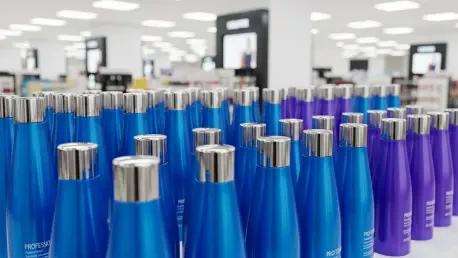
Visual aesthetics have also evolved, moving away from functional matte designs toward high-shine, shelf-worthy packaging that appeals to a social-media-driven culture. This emphasis on sustainability and modern design meets the rising expectations of consumers who view their beauty products as lifestyle accessories.
Performance Metrics and Growth Projections for the $500 Million Empire
The economics of organic growth are exemplified by the success of a single hero product selling over 10 million units annually. This level of market penetration creates a stable financial foundation that allows for bold reinvestment without the pressure of outside shareholders. High-performance metrics in core products provide the necessary capital to explore new categories like scalp health and gender-neutral grooming.
Future projections indicate a continued trajectory of expansion as brands diversify their offerings to address global hair concerns. Statistical outlooks suggest that independent brands are increasingly capable of claiming market share from established conglomerates by focusing on personalized solutions. This growth is further bolstered by the high valuation of self-funded independence, which allows for total operational control.
Navigating the Structural Challenges of Scaling Without Outside Capital
Total creative and operational autonomy often requires high-stakes financial maneuvers, such as the strategic buyout of co-founders to secure 100 percent ownership. This level of consolidation carries significant risk but allows for a unified vision that is unencumbered by conflicting interests. Such moves are essential for founders who wish to maintain a specific brand trajectory over decades.
Marketing risks are equally substantial when operating without venture capital, requiring a go big or go home philosophy. High-visibility activations, ranging from Super Bowl commercials to festival presence, demand massive upfront investments that must yield immediate brand equity. These bold moves serve as a signal of strength in a crowded marketplace.
Maintaining relevance without rapid cash injections requires a strategy that balances brand agility with long-term stability. While VC-backed startups might prioritize quick exits, independent brands often favor a slower, more deliberate growth pattern that fosters genuine consumer loyalty. This patience allows for a more resilient brand structure that can withstand market volatility.
The Regulatory Landscape and Standards for Global Beauty Operations
Navigating the disparate regulations of the FDA and the EU requires a rigorous approach to ingredient safety and international compliance. Brands operating in over 140 countries must constantly update their formulations to meet evolving standards while ensuring product efficacy remains consistent. This regulatory maze is a significant barrier to entry that only well-established independent players can master.
Intellectual property protection is paramount in a market currently dominated by dupe culture. Patenting hero formulations and trademarking unique brand elements are the only defenses against rapid imitation by lower-priced competitors. These legal protections ensure that the research and development investments made by the brand are not easily co-opted by others.
Consumer pressure for transparent sourcing has also turned supply chain ethics into a legal mandate in many jurisdictions. Eco-friendly manufacturing and sustainable packaging are no longer optional but are required for long-term survival. This shift forces brands to audit their entire production process to ensure every link in the chain meets modern environmental standards.
The Future Frontier for Independent Beauty Conglomerates
The vision of becoming a self-sustained enterprise that acquires and scales diverse beauty brands represents the next phase of industry evolution. This model creates a mini-conglomerate that retains the agility of a startup while possessing the resources of a major corporation. Such a structure allows for rapid diversification into skincare, fragrance, and wellness.
Data-driven consumer insights and AI-assisted marketing are expected to revolutionize product launches and personalized haircare. By analyzing consumer behavior in real-time, independent brands can tailor their offerings to specific demographics with unprecedented precision. This technological edge will be a defining factor in who maintains market dominance.
Global ambassador models are also evolving toward integrated digital partnerships that prioritize direct-to-consumer sales. Moving beyond simple endorsements, these partnerships involve deep collaborations on product development and content creation. This evolution ensures that the brand remains at the center of the cultural conversation.
Summarizing the Strategic Blueprint for Long-term Brand Longevity
The success of the self-funded model demonstrated that maintaining 100 percent equity provided the freedom to make unconventional moves that ultimately drove half-billion-dollar revenues. This independence allowed for a start-over mentality where the brand could visually and operationally reinvent itself to stay relevant over two decades. By reinvesting profits back into the core infrastructure, the leadership ensured that the company remained a dominant force without ever needing to answer to external boards or investors.
Future entrepreneurs looked to this blueprint as evidence that organic growth could compete with the aggressive scaling of venture-backed competitors. The strategy of focusing on a hero product while slowly building a diversified portfolio proved to be a resilient defense against economic shifts. This approach shifted the industry perspective on what it meant to be a successful independent entity in a global market.
The move toward acquiring legacy brands and integrating advanced AI technology signaled a new era for independent beauty conglomerates. It was clear that the ability to adapt to regulatory changes and supply chain demands was just as important as marketing prowess. These insights provided a new template for how independent brands could redefine the sector and achieve lasting global influence.