
By focusing on the Angus Maximus and other premium products, Carl’s Jr. hopes to leverage its new marketing partnership to capture a larger share of the QSR market. This strategic pivot arrives at a defining moment for the fast-food giant, which has recently struggled with shifting consumer preferences and intensified competition from rivals. The appointment of David&Goliath as the brand’s agency of record signals a departure from fragmented, project-based campaigns toward a unified narrative. The goal is to harmonize culinary innovation with a marketing identity that once defined the brand as a bold industry provocateur. As the chain initiates its systemwide transition to a cooked-to-order service model, the pressure is on to ensure that public perception of quality matches the reality of the kitchen. This overhaul, internally dubbed the Burger Revolution, represents a fundamental reconfiguration of the brand’s position in the premium fast-food tier.
Integrating Creative Vision and Operational Reality
David&Goliath, a prominent creative shop under the Innocean Worldwide umbrella, faces the daunting task of revitalizing a brand that has seen its influence fluctuate in recent years. By moving away from sporadic marketing efforts, the agency is now responsible for a comprehensive mandate encompassing brand strategy, creative development, and experiential storytelling. The priority is to build a cohesive bridge between the chain’s legacy of boundary-pushing content and the contemporary expectations of a younger, more discerning audience. This involves not only flashy television spots but also a deep dive into how the brand lives in digital and social spaces where authenticity and edginess are valued. The agency’s reputation for brave work aligns with the brand’s historical DNA, suggesting a return to the high-voltage energy that once made the franchise a household name. This partnership serves as a central pillar in the effort to regain cultural relevance.
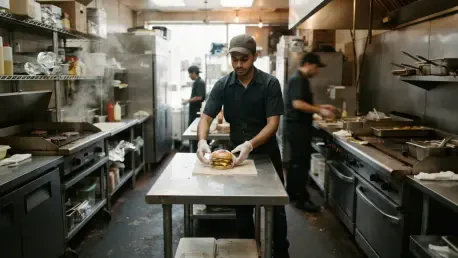
The true engine behind this marketing push is the technical transformation occurring within the restaurant walls, specifically the move toward a cooked-to-order model. Unlike the traditional pre-staged approach common in many high-volume establishments, this shift ensures that every burger, including the flagship Angus Maximus, is prepared only when a customer places an order. This operational adjustment is designed to significantly enhance food quality, flavor, and temperature consistency, providing a tangible basis for marketing claims of superiority. However, such a transition is not without its risks, as it requires rigorous training for kitchen staff and potential adjustments to service times during peak hours. By anchoring the creative campaign in these concrete improvements, the brand avoids the pitfall of empty advertising where the promise exceeds the actual product. This alignment between the agency and the operational leadership is crucial for convincing consumers to return.
Navigating Economic Challenges and Consumer Trends
Reclaiming market share is an urgent necessity given the recent economic turbulence that has affected several large-scale franchisees within the system. High inflation and rising labor costs led to a significant bankruptcy filing by a major operator earlier in 2026, highlighting the precarious financial state of some parts of the network. The current strategy aims to stabilize the ship by driving higher traffic through premium offerings that justify a slightly higher price point. This approach mirrors wider industry trends where consumers, while price-sensitive, are often willing to spend more on perceived quality and craveable experiences. To succeed, the marketing must effectively communicate that the value proposition lies in the product’s quality rather than just a low price tag. Successfully navigating these financial pressures requires more than just clever slogans; it demands a measurable increase in restaurant profitability and unit-level performance across the chain.
The appointment of David&Goliath reflected a broader commitment to long-term brand equity over short-term promotional cycles. Management realized that the previous model of project-based work hindered the ability to tell a consistent story, which was vital for the success of the new kitchen operations. By integrating creative development with real-world product innovation, the company established a framework that prioritized the consumer’s sensory experience. Moving ahead, the brand should focus on the scalability of the cooked-to-order initiative while exploring plant-based alternatives to diversify the menu further. For future growth, leveraging localized data to customize digital offers could enhance customer retention significantly. Executives were tasked with ensuring that the edginess of the advertising did not overshadow the core message of quality. The path forward required a balance between provocative storytelling and the meticulous execution of a dining experience.