
In the heart of Dubai’s bustling commercial district, a decade-long journey of grit and innovation has reached a pinnacle. SQUATWOLF, a brand that once operated out of a single apartment room, has matured into a global powerhouse in the performance wear sector. Founded by Wajdan Gul and Anam Khalid, the company represents a rare success story of a Middle Eastern brand conquering international markets through technical excellence and a deep-rooted sense of community. As the brand marks its tenth anniversary, the founders reflect on a decade of building a legacy that challenges the dominance of Western athletic giants. Their story is one of calculated risks, from the initial Dhs250,000 investment of their personal savings to their recent aggressive expansion into the world’s most prestigious retail spaces.
The following discussion explores the early days of balancing corporate stability with entrepreneurial chaos, the strategic pivots that allowed them to scale to approximately 120 countries, and the complex dynamics of leading a multi-million dollar enterprise as a married couple. We delve into the technical innovations like ACTDRY and ACTCOOL that were born out of the necessity to perform in 45-degree heat, and the philosophy behind their “Off Duty” line which is currently seeing record-breaking interest during the Spring/Summer 2027 buyer sell-in.
You both had established corporate careers before launching the brand a decade ago. What first made you consider starting your own business, and why did you focus specifically on performance wear?
Our entry into the apparel world often surprises people because neither of us came from a fashion or fitness background. I started my career in 2010 at a major FMCG multinational, which provided me with an incredible foundation in corporate structure and strategy. However, Waj was always driven by the startup spirit; he had been building tech ventures with friends back in Pakistan long before we moved to the UAE. When I took a corporate offer in Dubai for what was supposed to be a one-year stint, Waj sold his shares and joined me, and like many who come to this city, we never wanted to leave. We were both doing well professionally, but we felt a distinct void in our lives and the market.
Fitness was a pillar of our daily routine, yet we noticed a strange disconnect in the gym culture of the region. Runners, cyclists, and swimmers all had dedicated communities and specialized gear, but the people hitting the weights or doing high-intensity training seemed to be an afterthought. We realized that no premium performance wear brand had truly emerged from the Middle East to speak to this global audience. The name SQUATWOLF was born from that observation: the squat is a foundational movement that engages the most muscles, and the wolf represents the pack, symbolizing the community we wanted to build. From day one, that sense of belonging has been our primary pillar, ensuring that we weren’t just selling clothes, but a membership to something larger.
Starting with personal savings and working out of a home office is a classic startup trope, but the reality is often much grittier. What were the biggest hurdles you faced during those initial years in your Dubai apartment?
The early years were defined by a level of intensity that is hard to describe to those who haven’t lived it; we essentially poured our entire life savings of Dhs250,000 into that first collection, licenses, and the logistics setup. That first year was arguably the most grueling period of our lives, characterized by a constant state of exhaustion where we rarely slept more than four or five hours a night for months on end. We both maintained our demanding day jobs to keep the business afloat, which meant our “second shift” started at 6:00 PM and ran until 3:00 or 4:00 AM. Our apartment was completely transformed—one room became a makeshift warehouse stacked to the ceiling with boxes, while the living room functioned as our office and command center.
We were incredibly hands-on, answering customer support chats over our dinner and personally packing every single order that came through the website. Waj had to teach himself how to build a digital storefront from scratch, eventually launching on WooCommerce because it was the most cost-effective option available to us at the time. The validation we needed finally arrived within the first 24 hours of going live when an order for Dhs800 came through. Waj was actually sitting in a corporate meeting at his day job, obsessively refreshing the sales page, and when that notification popped up, he literally stood up and walked out to call me and his father. To us, that first small sale felt like $800 million because it proved that a complete stranger believed in the vision we had been laboring over for six months.
Looking back at the past ten years, which specific moments do you identify as the most significant turning points for the company’s evolution?
There is one night in particular that changed the trajectory of the company forever, and it happened during the height of the global lockdowns. We were genuinely concerned that the business might not survive the pandemic, but we decided to take a massive gamble by sitting down with the team at Meta to identify every country where people were still allowed to exercise outdoors or in home gyms. We turned on our global advertising spend, went to bed in a state of high anxiety, and woke up to find orders pouring in from over 60 different countries. Today, that momentum has carried us into approximately 120 countries, proving that our brand had true international appeal far beyond the borders of the UAE.
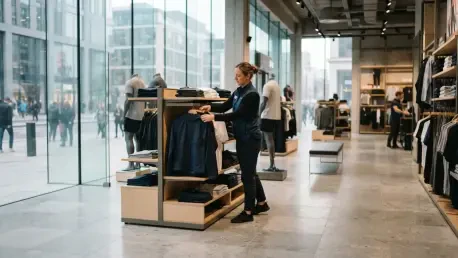
Another massive shift occurred in 2023 when we successfully raised our Series A funding, which was the catalyst for our transition into a true omnichannel business. For years, our customers had been commenting on every social media post asking for a physical location where they could touch the fabrics and test the fits in person. Raising those funds allowed us to finally build a world-class product team and execute an ambitious retail strategy, leading to the 2024 opening of our flagship store in Dubai Mall. We were uncompromising about that location; we waited a long time because we believed our first store had to be in the world’s most visited mall. That flagship was followed by record-breaking openings in Qatar, Kuwait, and our first Saudi Arabian location at Riyadh Park, each of which has exceeded our most optimistic projections.
As a husband-and-wife leadership team, you’ve managed to stay together for 21 years while building a brand. How do you balance your individual strengths and handle the inevitable disagreements that come with running a business?
Our partnership works because our professional backgrounds are polar opposites, which allows us to divide the business with very clear boundaries. I handle the long-term strategic elements—brand identity, culture, supply chain, and our 18-month product development cycle—while Waj focuses on the immediate, high-pressure targets of the day and the quarter. I am essentially building the future of the brand while he ensures we are winning the present. Because we have been together for 21 years, including 11 years of marriage, there is a deep foundational trust, but we still have to be very intentional about how we communicate. I’ve learned that I cannot stay quiet when I feel a decision is wrong for the brand, but we’ve shifted our mindset so that we aren’t arguing to be “right”—we are arguing to find the best path forward for the business.
Waj is a visionary who comes to the office with a new idea every single morning, and my role is often to provide the focus and discipline to ensure we don’t get distracted by the “next big thing” before we’ve finished the task at hand. In the early days, our work arguments would frequently bleed into our personal lives, becoming emotional or being interpreted as personal slights. We’ve had to work hard to strip the ego away from these interactions and move toward a model of “agreeing to disagree” until logic wins out. We never make a major move without consulting each other, and we’ve realized that if you can’t navigate a disagreement with your partner, the underlying issue is usually a lack of trust. Fortunately, seeing Waj’s professional growth over the last decade has only deepened my respect for him as a leader.
In a global market dominated by legacy athletic brands, how have you managed to carve out a distinct identity that resonates with consumers?
Our fundamental rule from the beginning was that if you spend your time chasing a competitor, you are destined to remain in second place. We faced a lot of skepticism early on from people who wondered why a customer would choose us over a global giant with decades of history. Our answer was always rooted in our home ground; we believed that if we could satisfy the demanding fitness community in this region, we would have a foundation to take the brand anywhere. We didn’t have the budget for massive celebrity endorsements, so we turned to the “unsung heroes” of the fitness world—the personal trainers who are in the gyms every single day. We provided them with high-quality gear when we couldn’t afford to pay them, and they became our most authentic advocates.
These trainers were essentially micro-influencers before that term became a marketing buzzword, and our network has now grown to include roughly one thousand athletes and creators worldwide. There was a period after the pandemic where we briefly lost our way by trying to mimic the behavior of those larger global brands, and it was a valuable lesson in brand clarity. We noticed that when we were confused about our identity, our customers felt it too. By returning to our original vision and being unapologetically ourselves, we saw everything click back into place. Authenticity isn’t just a slogan for us; it’s the reason people in a gym in London or New York are now wearing a brand that started in a Dubai apartment.
Living and working in the Middle East clearly informs your design process. How does this specific environment translate into the technical specifications of your products?
The Middle East is a unique laboratory for performance wear because the environmental conditions are so extreme that they expose the flaws in standard athletic gear. Most global brands design for temperate climates, but when our customers are out running or playing padel in 45-degree heat, the fabric has to work much harder to keep them comfortable. This necessity led us to develop proprietary technologies like ACTDRY, which is engineered to dry three times faster than standard moisture-wicking fabrics, and ACTCOOL, which actively helps regulate body temperature during intense exertion. One of the most rewarding pieces of feedback I ever received was from a padel player who said they were the only dry person on the court after a match in the summer heat.
Dubai’s status as a global melting pot also gives us a distinct advantage when it comes to perfecting our fits. We don’t just design for one body type; we test our prototypes on a diverse range of real athletes from Africa, Europe, Asia, and across the Arab world, including Lebanese, Egyptian, and Emirati participants. This rigorous testing ensures that when we ship to our international customers, the products are optimized for a wide variety of physiques. We also make a point to shoot our campaigns with local athletes and models because we want our imagery to reflect the vibrant, diverse community that actually lives and trains here. If a product can survive and perform in the conditions of the UAE, we are confident it can succeed anywhere in the world.
How has the entrepreneurial ecosystem of the UAE facilitated your international growth, and what have you learned about maintaining your “home advantage”?
The UAE, and Dubai in particular, offers a unique springboard for brands with global ambitions because of its position as a world-class logistics and retail hub. From our warehouse here, we are able to ship to roughly 80 different countries in any given month with incredible efficiency. Furthermore, the retail culture here is unlike anywhere else; malls in this region are the equivalent of public parks where families spend their entire day. Dubai Mall alone attracts over 120 million visitors annually, which means that having a storefront there provides more global exposure than almost any other location on earth. Every tourist who visits the city eventually walks past our windows, giving us a level of international visibility that would take years to build elsewhere.
However, we also learned a hard lesson about the importance of our roots during the post-pandemic period. As we saw “mushroom growth” in markets all over the world, we briefly lost our focus on the GCC, which remains our most important and profitable territory. We eventually had to scale back some of our global distractions to ensure our foothold at home remained ironclad. My advice to any entrepreneur in this region is to avoid the temptation to try and conquer the entire world on day one. You have to be authentic to your point of origin first. We still face challenges, such as having to recruit specialized talent from abroad because the apparel industry is still developing here, but the strategic advantages of being a Dubai-born brand far outweigh the hurdles.
Anam, your background is in human resources. How has that experience shaped your leadership style and the corporate culture within the company?
My time in the corporate HR world taught me the invaluable lesson of long-term investment in people, but it also showed me the frustrations of a system where no one wants to take ultimate responsibility. In those large multinationals, you are trained to develop people over years, and the idea of giving up on a team member is a last resort. At SQUATWOLF, I’ve had to adapt that mindset because a high-growth startup simply doesn’t have the luxury of waiting three or four years for someone to find their footing. I start every new professional relationship with 100 percent faith and trust, but I also set extremely clear expectations from the outset. I am likely the “tougher” boss in the office, but I believe that the leaders who push you the hardest are the ones who ultimately contribute the most to your growth.
We now have a team representing about 20 different nationalities, and I am very protective of the culture we’ve built for these 150 families that depend on us. I’ve learned to look for candidates who have a history of being adaptable and who lack the “diva” mentality that can be toxic in a collaborative environment. We have a culture where mistakes are actually celebrated, provided the person takes full ownership and extracts a lesson from the failure. This approach has cost us money at times, but the long-term gain in building a resilient, accountable team is worth every dirham. I give feedback instantly and directly, though never in a public setting, because I want our people to have the backbone to make the right calls without needing constant supervision.
Wajdan, as the business has scaled, how have you had to evolve your personal approach to leadership and commercial strategy?
The transition from a “zero to one” founder to a “one to a hundred” CEO has been one of the most challenging psychological shifts I’ve ever had to make. In the early stages, the business is entirely dependent on your own output and your own decisions, but scaling requires you to step back and trust that others can do the job as well as—or better than—you can. I still struggle with the impulse to micro-manage because I know I can do certain tasks quickly, but I’ve realized that isn’t a scalable model for a global brand. I’ve had to learn the hard way that the most expensive mistake a founder can make is hiring the wrong leader. Today, I look for people who have a proven track record of building things from nothing, and I listen closely to see if they use the word “I” or “we” when describing their successes.
Our move into physical retail was also a very humbling experience for me as a digital-first founder. I thought I understood our customer perfectly through our website analytics, but meeting them face-to-face in our stores revealed insights that no data sheet could ever provide. Seeing how a customer reacts to the feel of a fabric or the cut of a pair of shorts changed how I view our entire commercial strategy. In hindsight, I wish we had entered the retail space even earlier than we did. Retail forces you to confront the human element of the business in a way that an e-commerce dashboard simply cannot, and it has made me a much more well-rounded leader.
How are shifting lifestyle trends and attitudes toward “athleisure” influencing the future direction of your product lines?
The data from our physical stores has been eye-opening regarding how people perceive the brand versus how they shop online. On our website, customers tend to gravitate toward the basics—the black, white, and gray t-shirts with a single logo. However, in our retail stores, people are choosing our most expensive and technically complex pieces because they can finally appreciate the value and craftsmanship in person. This shift in consumer behavior was a major factor in our decision to launch the “Off Duty” line. While SQUATWOLF has always been a performance-first brand, we realized that our customers spend a significant portion of their lives outside of the gym, and they wanted that same athletic aesthetic for their daily activities.
“Off Duty” is designed to bridge the gap between high-intensity training and everyday life, bringing people into the brand who might initially feel intimidated by a pure performance label. It allows us to meet the “everyday person” in the mall and then inspire them to embark on a fitness journey. We were naturally nervous about how our core audience would react to a lifestyle-focused collection, but the response has been overwhelming. During our Spring/Summer 2027 buyer sell-in, “Off Duty” emerged as one of our most successful collections to date. It proves that the modern consumer doesn’t see a hard line between their fitness life and their personal life; they want a wardrobe that can transition seamlessly between the two.
Building a global brand together clearly requires personal sacrifice. How do you manage to maintain a healthy relationship and find time for yourselves outside of work?
The truth is that the concept of “downtime” is somewhat elusive for us; SQUATWOLF is a constant presence at our dinner table and even accompanies us on our holidays. The only time work truly fades into the background is when we are trekking in the mountains where there is no internet connection. I’ve learned to listen to my body, and I usually realize we need a break after about five or six months of non-stop intensity. Waj, on the other hand, tends to just keep going until he actually gets physically ill, so I often have to be the one to step in and insist that we take a week off to recharge. Fitness remains our shared sanctuary, and we make it a point to train together every single day to stay grounded.
Our relationship has definitely evolved from a traditional romance into something much more mature and resilient through the pressure of building this business. We are each other’s most trusted confidants, and while we might be less “romantic” in the conventional sense than we were a decade ago, the bond we’ve forged as co-CEOs and life partners is unbreakable. One rule I am very strict about is family; I will compromise on social events with friends if necessary, but I never miss a significant family gathering because of work. We have both felt the urge to quit during periods of extreme stress—it’s only human—but we always remind each other that we haven’t come this far just to walk away.
What are your ultimate ambitions for the brand as you move into this second decade, and what do you hope to achieve on a personal level?
Our ambition remains as bold as it was when we were packing boxes in our apartment: we want SQUATWOLF to be recognized as a brand that can compete with and beat the world’s biggest names on the global stage. We often use the analogy that we want to be for the fitness apparel industry what Emirates is for this region—a symbol of quality and excellence that the world associates with the UAE. We are waiting for that definitive moment when we can look at each other and say, “We actually did it.” Personally, I’ve come to value the journey of who we are becoming as leaders and individuals more than any specific financial destination. I still don’t feel entirely fulfilled, which is what keeps me coming into the office with the same fire I had ten years ago.
For me, the goal is constant evolution. I look at the entrepreneurs who truly inspire me, and I realize that their greatness didn’t come from their bank accounts; it came from their personal growth and the impact they had on their industries. We feel like we are still only scratching the surface of what this brand can become. Every time we open a new store or launch a new technical fabric, it feels like a new beginning rather than an ending. The person I want to become is someone who has not only built a successful business but has also paved the way for other Middle Eastern brands to believe they can achieve global dominance.
Looking back at the thousands of decisions you’ve made, what would you say is the single most important lesson you’ve gathered about the nature of business?
The most critical lesson, without question, is that business is ultimately about people. You can have the best product in the world and the most sophisticated marketing strategy, but the most expensive and damaging mistakes you will ever make are the people you choose to bring onto your ship. This applies to every level of the organization, from your co-founder to your department heads and entry-level staff. Before you look at someone’s resume or their technical brilliance, you have to ask yourself a very simple but profound question: “Can I trust this person?” If the answer isn’t a definitive yes, then their skills are irrelevant because they will eventually become a liability to the culture and the mission.
What is your forecast for the future of Middle Eastern brands on the global stage?
I believe we are currently at the beginning of a golden era where the “Made in Dubai” or “Designed in the UAE” label will carry the same prestige in the luxury and performance sectors as “Made in Italy” or “Designed in California.” For a long time, this region was seen primarily as a consumer of global brands, but the infrastructure, talent, and ambition currently concentrating here are shifting the balance of power. Over the next few years, you will see a surge of homegrown brands from the GCC that don’t just cater to local tastes but set the global standard for innovation and community building. The world is watching this region now, and the success of brands like ours is proving that the Middle East is no longer just a hub for logistics, but a legitimate powerhouse for original, world-class intellectual property and design.