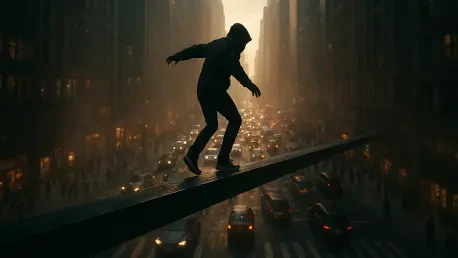

The traditional boundaries defining entertainment promotion have disintegrated as high-stakes physical performances migrate from the controlled environments of soundstages to the crowded sidewalks of major global metropolitan areas. Modern audiences, particularly those accustomed to the rapid-fire consumption of digital content, no longer find static imagery or standardized thirty-second trailers sufficient to warrant their full attention. Consequently, the industry is undergoing a fundamental realignment where the marketing budget is increasingly allocated toward hyper-reality activations that bridge the gap between fictional universes and the tangible world. These campaigns do not merely suggest a narrative; they force the narrative into the public consciousness by disrupting the monotony of daily life with unexpected physical interactions.
This evolution is further catalyzed by the sophistication of out-of-home technology, such as 3D anamorphic displays that allow characters to seemingly leap from building facades. These visual spectacles serve as the foundation for broader experiential strategies that rely on the collective participation of the public to achieve a viral reach. By utilizing social media algorithms to amplify these localized events, studios can transform a single afternoon stunt into a global digital phenomenon that persists long after the physical event has concluded. The focus has shifted from simple awareness to deep immersion, ensuring that every interaction leaves a lasting psychological imprint on the consumer.
The Paradigm Shift in Entertainment Promotion and Physical Engagement
The shift toward experiential marketing represents a departure from the passive consumption models that dominated the previous decade. Today, the most effective campaigns are those that demand physical presence or active engagement, effectively turning the consumer into a character within the story. This strategy relies on the principle of hyper-reality, where the distinction between the filmic world and the physical environment becomes intentionally blurred. For instance, creating an environment where a passerby can interact with a live-action stunt professional removes the barrier of the screen, creating a sense of urgency and authenticity that digital ads cannot replicate.
Moreover, the integration of advanced technology has transformed how these physical stunts are documented and shared. High-resolution 3D displays and augmented reality layers allow a single physical act to be viewed from multiple perspectives, increasing its potential for social currency. As studios compete for the shrinking attention spans of global viewers, the ability to create a moment that feels both impossible and tangibly real has become the primary metric for promotional success. This trend marks the end of the billboard era and the beginning of the performance art era in mass media marketing.
The Transformation of Stunts into Viral Social Currency
Merging Physicality with Digital Narrative Trends
Public spaces are increasingly being treated as immersive sets where stunts are designed specifically for the lens of a smartphone. The campaign for Spider-Noir illustrated this by deploying a team of newsboys and a rappelling stuntman in the heart of Times Square, turning a high-traffic area into a 1930s cinematic landscape. This approach ensures that every person who witnesses the event becomes an unpaid distributor of the film’s brand, uploading high-quality video content to platforms like TikTok and Instagram. The value of the stunt is no longer tied to the number of people who saw it in person, but rather to how many millions see it through the secondary lens of user-generated content.
Similarly, the use of recognizable mascots, such as the orange unicorn Buddy, demonstrates how physical presence can be converted into a digital personality. By placing this character in mundane real-world situations like fitness classes or public parks, the marketing team created a sense of familiarity and mystery that compelled viewers to follow the story online. This method transforms a character from a fictional construct into a social media influencer, leveraging the innate human curiosity toward anomalies in public spaces to drive digital engagement and community growth.
Quantitative Impact and the Longevity of Interactive Campaigns
Data suggests that these physical interventions provide a significant return on investment by extending the lifespan of a project in the public eye. The Buddy campaign, for example, saw unconventional box office growth where revenue actually increased during the second weekend of release. This long-tail effect is a direct result of sustained physical engagement that keeps the conversation alive on social media long after the initial premiere. Studios are reacting to this data by shifting substantial portions of their advertising budgets away from traditional television spots and toward high-impact physical activations that offer measurable social currency.
Projections for out-of-home advertising indicate a steady transition toward live performance art and 3D spectacles that offer genuine novelty. As the cost of digital ad placement rises and its effectiveness wanes due to consumer fatigue, the tangible nature of a live stunt provides a refreshing alternative. This shift is not merely a trend but a strategic response to a market that prioritizes experiences over information. The physical manifestation of a film’s world serves as a powerful differentiator in a crowded content landscape, providing a clear path toward sustained audience interest and brand loyalty.
Overcoming the Friction of Real-World Implementation
The transition from a controlled film set to a public environment introduces significant logistical friction that requires meticulous planning. When Lionsgate introduced immersive screenings for The Long Walk, they had to manage the logistics of placing audiences on treadmills while maintaining a safe and functional theater environment. These stunts require a delicate balance between providing a high-intensity experience and ensuring the absolute safety of participants. Any failure in execution not only poses a physical risk but can also lead to a public relations crisis that undermines the very film it was meant to promote.
Furthermore, maintaining brand consistency across diverse and unpredictable public settings remains a primary hurdle for marketing teams. When a character or stunt is moved into the streets, the team loses the ability to control lighting, sound, and the behavior of the public. Strategies for scaling these one-off events into global digital moments involve using professional-grade recording equipment and pre-planned social media “seeding” to ensure that the best version of the stunt reaches the widest audience. The goal is to create a singular, perfect moment that can be endlessly replicated and analyzed by the digital community.
Navigating the Regulatory and Safety Landscape of Public Spectacle
The creative scope of large-scale stunts is often dictated by the stringent regulatory environments of urban centers like Times Square or Sunset Boulevard. Rappelling stunts and suspended performances require complex permits, specialized insurance, and adherence to strict safety standards to mitigate the risk of injury to performers and bystanders. Legal departments now play a central role in the creative process, vetting every physical activation to ensure compliance with local ordinances and safety protocols. This legal framework serves as a guardrail that defines what is possible in the realm of public spectacle.
Liability waivers and risk management strategies have become standard components of challenge-based marketing experiences. For the promotion of Fall 2: Deadpoint, where participants were required to balance on narrow planks high above the ground, the implementation of safety harnesses and professional supervision was mandatory. As studios push the boundaries of what consumers are asked to do, the necessity for robust safety compliance grows. Navigating these urban regulations requires a sophisticated understanding of local laws, ensuring that the spectacle does not end in a legal or physical disaster.
The Future Frontier of Immersive Storytelling
The next stage of experiential marketing will likely involve the seamless integration of augmented reality with physical levitation and stunt technology. As sensory marketing matures, studios will begin to incorporate elements such as localized temperature changes, physical exertion, and tactile feedback into their promotional events. This holistic approach aims to engage all five senses, making the experience indistinguishable from reality for the duration of the stunt. The integration of technology will allow for stunts that appear to defy the laws of physics while remaining grounded in the physical presence of the actor.
Global economic shifts are also driving a move toward more cost-effective yet high-impact localized stunts. Rather than one massive global event, studios are opting for smaller, hyper-localized activations that can be easily shared and adapted for different cultural contexts. This strategy allows for a wider reach with a more efficient use of resources, ensuring that the brand can maintain a presence in multiple markets simultaneously. The future of the industry lies in the ability to create moments that feel both personal and epic, leveraging the power of human connection to cut through the digital noise.
Synthesizing the Future of Film and Television Marketing
The entertainment industry recognized that traditional advertising methods no longer sufficed to capture the loyalty of a fragmented audience. By shifting the focus toward living advertisements that offered genuine novelty and physical engagement, studios successfully bridged the gap between fiction and reality. This transition proved that the most valuable asset in a digital economy was a real-world moment that felt authentic and unscripted. The most successful campaigns of the recent season prioritized the creation of social currency, transforming passive viewers into active participants who felt a personal connection to the narrative.
Strategic recommendations for the coming years emphasized the necessity of in-world consistency and fan participation to sustain long-term interest. Studios that invested in high-stakes physical stunts and immersive screenings saw a direct correlation between physical engagement and box office longevity. The industry learned that the most effective way to break through the digital noise was to step out of the screen and into the streets. By prioritizing the human experience and the visceral thrill of live action, marketing teams ensured that their films remained relevant in an increasingly crowded and distracted world.