
Listen to the Article
Demand generation often gets reduced to a set of activities: launch a campaign, run ads, host a webinar, send emails, and then celebrate lead volume. That approach breaks down when the buying cycle stretches, more stakeholders join the decision, and sales teams demand higher-quality opportunities. B2B buyers now do separate research before they talk to sales. They compare vendors, ask peers for recommendations, and build shortlists before filling out a form. That reality changes what demand generation is expected to deliver. It cannot rely on interest alone. It needs to create trust, show relevance, and move buying groups toward a decision. This article explains how to design demand generation around buyer behavior, how to build a full-funnel engine that sales trusts, and how to measure impact in ways that leadership will fund.
Demand Generation Starts with Clarity
Demand generation stalls when teams solely focus on scaling content before defining the audience and what they need to influence. This is when a team chooses paid search, social ads, content syndication, or webinars before it can answer a basic question: who is the program designed to influence, and what decision is that audience trying to make? To address this, a practical demand generation strategy should begin with three clarifications.
Audience definition needs to go beyond job title. “IT Director” can mean different responsibilities across industries and company sizes. Demand generation performs better when it targets a role plus context, such as risk posture, growth stage, and operational constraints. That level of clarity improves engagement and increases sales confidence by preventing generic messaging.
Trigger events also matter. Most B2B purchases start when something changes within the buyer’s organization, whether that is expansion, budget pressure, audit findings, operational failures, or technology end-of-life. Demand generation performs best when campaigns map to these triggers and then guide buyers through the decision in plain language.
Buying groups complete the picture. Complex deals rarely close with a single stakeholder. Demand generation must plan to influence multiple stakeholders, including the CEO, operations leader, risk manager, and budget owner. Thought leadership helps here when it gives buying groups decision language they can reuse internally, not just content they can click.
With the audience, trigger, and buying group defined, demand generation can shift from more activity to a full-funnel system that creates demand early, captures it at the right moment, and proves intent before sales engagement.
Full-Funnel Demand Generation: Create, Capture, and Prove Intent
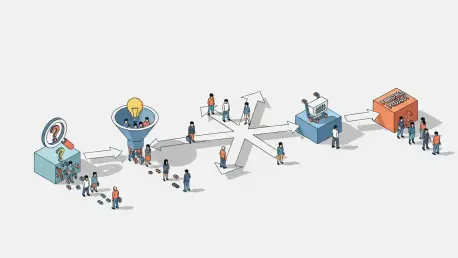
Demand generation works when it runs as a connected system across the funnel. The system needs to do three jobs: create demand among buyers who are not ready to purchase, capture demand, and prove intent so sales can act with confidence.
Creating demand means earning attention before a buyer enters an active purchase cycle. The goal is recognition and credibility, built through useful points of view. Effective demand creation focuses on problem framing that buyers recognize, practical guidance that reduces uncertainty, and evidence that supports claims. Strong thought leadership avoids broad trend commentary. Instead, it provides decision frameworks that outline what to prioritize, what trade-offs to expect, and which failure modes to avoid.
Capturing demand means reducing friction when buyers are interested. The mistake is treating every form fill as sales-ready. High-performing teams match offers to decision stages:
Early-stage buyers respond to checklists, benchmarks, and educational sessions
Mid-stage buyers need comparison guides, implementation considerations, and proof
Late-stage buyers need business case inputs, risk documentation, and rollout plans
This approach increases conversion quality and reduces lead waste. Proving intent keeps the system credible. But engagement alone does not equal buying intent. Instead, useful signals include repeat engagement from the same account, interaction with evaluation-stage assets, and activity from multiple stakeholders within the same account.
When demand-generation routes lead with evidence of buying movement, sales respond faster and close rates improve. Once the funnel logic is clear, the next big focus is execution: choosing channels that match how buyers research and building a lead management process that prevents high-intent demand from stalling after the first conversion.
Channel Mix and Lead Management: Where Demand Generation Becomes Operational
Execution turns a demand generation strategy into revenue-ready opportunities, and two factors determine whether that happens: a channel mix that aligns with how buyers research and a lead management strategy that sustains momentum after engagement.
The channel mix should align with the buying journey, so each channel plays a specific role.
Paid search captures buyers who are already comparing solutions
Social supports early interest by putting a point of view in front of the right audiences
Email sustains engagement after the first click or download
Content syndication extends reach when the priority is net-new coverage in a defined audience
Events create deeper conversations when buyers want peer insight and direct answers
Partners add credibility when buyers look for validation beyond the vendor
The right mix depends on how the audience gathers information and how many stakeholders shape the decision, so channel selection should follow buyer behavior rather than internal preference.
Meanwhile, lead management determines whether captured demand becomes a pipeline. Many programs lose value after conversion because follow-up rules are unclear. Demand generation should define what happens next for each lead type: when sales engages, when marketing nurtures, what content supports the next decision, and how quickly sales responds to high-intent signals. This is where marketing operations and revenue operations protect performance by maintaining system consistency.
A thought leadership stance that holds up in executive reviews is simple: demand generation is not a campaign calendar. It is a revenue workflow. If the workflow breaks after the first conversion, pipeline quality collapses. With channels and lead management running as one system, measurement becomes the proof point. The next step is to track outcomes that show the influence of demand generation on the pipeline, not just activity.
Measurement and Optimization: Prove Demand Generation Impact Without Vanity Metrics
Volume metrics alone do not hold up. Lead volume is easy to generate and easy to misread. Outcome metrics create accountability and improve planning. Better measures include marketing-influenced pipeline, sales-accepted leads, conversion rates by stage, cost per qualified opportunity, and deal velocity for opportunities touched by programs. These indicators reflect quality and movement, aligning with sales and finance expectations.
Optimization should follow buyer behavior signals. The most productive questions are practical: what messages generate qualified engagement in target accounts, which offers move buyers into evaluation, what channels drive multi-stakeholder activity, and which nurture sequences result in sales conversations. The goal is to improve the system each quarter, not to run endless experiments.
Measurement must align with sales and revenue operations, or demand generation loses credibility. Shared definitions, visible follow-up rules, and feedback loops prevent constant debate about lead quality and shift energy toward conversion improvement.
Conclusion: Demand Generation Needs to Earn Its Budget Every Quarter
B2B demand generation cannot survive on activity metrics and disconnected campaigns. Buyers expect relevance and proof. Sales expects fewer, better opportunities. Leadership expects a predictable pipeline contribution.
Teams that outperform treat demand generation as a revenue operating system. They build around buying groups, match offers to decision stages, prove intent through behavior, and run lead management as a disciplined workflow. They measure success through qualified pipeline, conversion, and velocity, not raw lead volume.
The uncomfortable truth is that demand generation programs without clear audience definitions, lead standards, and outcome measurement do not fail loudly. They underperform by producing leads that sales ignores and by consuming budget without compounding impact.
The next step is to audit the system: define buying groups, map offers to stages, confirm handoff rules, and replace vanity metrics with pipeline outcomes. Demand generation that cannot prove movement will keep losing budget to programs that can.