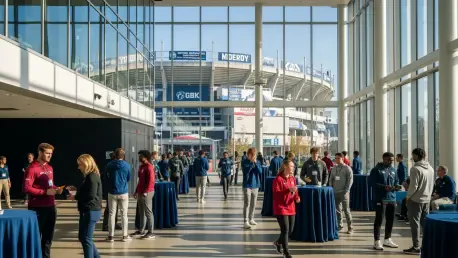

In the rapidly evolving landscape of collegiate athletics, the emergence of Name, Image, and Likeness (NIL) rights has transformed student-athletes into sophisticated brand ambassadors. Leading this charge is Milena Traikovich, a demand generation expert with deep experience in performance optimization and lead generation initiatives. By analyzing the intersection of data-driven marketing and the lived experience of former athletes, we explore how major organizations are restructuring their operations to support this new era. This conversation delves into the strategic integration of university intellectual property, the unprecedented commercial growth of women’s sports, and the shift from transactional deals to transformational career networking.
Many organizations prioritize hiring former student-athletes for NIL-focused roles to lead brand partnerships. How does this specific background bridge the gap between corporate brands and locker room culture, and what unique insights do these professionals bring to campaign development that others might overlook?
Hiring former athletes is the cornerstone of a successful NIL strategy because they possess a dual fluency in corporate expectations and the internal rhythms of a locker room. At Learfield, roughly 70% of the NIL team members are former student-athletes or administrators, which ensures that the people brokering deals understand the actual time constraints and emotional pressures athletes face. A former player, like an outfielder from a top-tier softball program, knows that a local brand ambassador role for a facial bar can be the first step toward securing national partners like Lululemon or T-Mobile. They bring an innate understanding of how to translate a TikTok following of 10,000 or an Instagram audience of 36,000 into a compelling pitch for a corporate sponsor. This shared history allows them to speak the same language as the current roster, ensuring that campaigns feel like a natural extension of the athlete’s life rather than a forced commercial interruption.
On-campus NIL personnel are becoming essential fixtures within athletic departments across the country. What are the day-to-day responsibilities of a dedicated NIL business manager, and how do they balance university priorities with the individual brand aspirations of dozens of different student-athletes simultaneously?
The role of a dedicated NIL business manager is incredibly fast-paced, acting as a high-level liaison between the corporate infrastructure and the specific needs of a university campus. For instance, in just the few months since August 2025, a single manager at a school like Vanderbilt can oversee the signing of 146 NIL deals involving 70 different student-athletes across eight different teams. Their daily tasks involve constant communication between properties to share creative ideas and update the department on the latest legislative shifts. They must deeply engrain themselves in the university culture to understand the school’s specific priorities while helping individual athletes maximize their personal potential through customized brand matches. Currently, there are 75 such on-campus employees working directly with teams, a number that is projected to grow to 100 by next year to meet the surging demand.
Data insights and proprietary platforms are now used to match athletes with brand partners based on fan purchasing behavior. How do these technical tools help a student-athlete identify their personal brand identity, and what specific metrics should they track to prove their value to national corporations?
Proprietary platforms like the NIL Compass app interface provide a centralized hub where athletes can discover brand partners that actually align with their specific personalities and interests. Beyond just finding deals, data insights from tools like Fanbase allow athletes to look at fan purchasing behavior to see which brands resonate most with their specific audience. When an athlete sees that positive brand impression doubles—jumping from 52% to 104%—when they are included in a campaign, it provides them with concrete evidence of their market power. They should focus on tracking metrics like purchase intent, which has been shown to increase to 65% when student-athletes are involved, significantly higher than traditional sponsorships. By using these tools, an athlete can move from guessing what their brand is to having a data-backed narrative that proves their value to national entities like Allstate, NASCAR, or Planet Fitness.
Utilizing university intellectual property, such as official jerseys and stadium access, can boost content engagement by 40%. Why does seeing an athlete in their official team gear resonate so much more with fans than lifestyle content, and what steps are necessary to coordinate these high-impact productions?
The resonance of university intellectual property (IP) stems from the deep emotional connection fans have with the colors, logos, and hallowed grounds of their favorite teams. When a student-athlete is featured in their official jersey within the stadium or the locker room, the content sees a 40% increase in engagement and 39% more views compared to standard lifestyle posts. This is because the IP validates the authenticity of the partnership, anchoring the athlete’s personal brand to the prestigious history of the institution. Coordinating these productions requires exclusive rights to the IP and seamless collaboration between the marketing partners and the athletic department’s facilities managers. By placing the athlete in their competitive environment, brands can tap into the visceral excitement of the game day experience, making the promotional content feel like a legitimate part of the sport’s narrative.
Women’s sports sponsorships are growing rapidly, with fans being significantly more likely to purchase products recommended by female athletes. What makes the connection between female athletes and their followers so commercially potent, and how can brands move beyond temporary campaigns to build long-term, sustainable partnerships?
The commercial potency of female athletes is driven by a uniquely high level of fan loyalty; research shows that fans are nearly three times as likely to purchase a product recommended by a woman athlete than by any other type of influencer. We are seeing women’s sports sponsorships grow by over 40% cumulatively over the last two years, mirrored by a 16% year-over-year increase in overall viewership. Women athletes are often more intentional about building their social media presence, treating their personal brands as a professional investment which leads to more authentic, long-term deals. For brands to move beyond temporary campaigns, they need to follow the lead of companies like Uber Eats, which created “in the clutch” campaigns specifically centered around standout freshmen during high-stakes moments like March Madness. These sustainable partnerships are built on the back of intentionality, where the brand is woven into the athlete’s season-long story rather than a one-off post.
Beyond immediate financial compensation, NIL is often described as a transformational networking opportunity for students. How does navigating these business deals prepare athletes for professional careers after graduation, and what distinguishes a truly authentic brand deal from a simple transactional arrangement?
It is vital to understand that NIL is not “pay for play” but rather a transformational opportunity for student-athletes to maximize their potential and build a professional network while they are still in school. Navigating these business deals forces students to develop skills in contract negotiation, content creation, and brand management that will serve them long after they hang up their jerseys. An authentic deal is distinguished by its origin; for example, a partnership might be conceptualized by graduate students at a university’s business school, specifically for their own student-athletes to promote products like Squishmallows that they actually use. These arrangements allow athletes to monetize their capabilities and enter professional circles that were previously closed to them. This networking component is what turns a simple transaction into a foundation for a post-graduation career, regardless of whether they continue to play sports professionally.
What is your forecast for women’s college athlete brand partnerships?
My forecast for women’s college athlete brand partnerships is one of continued exponential growth fueled by increasingly sophisticated fan engagement and data-backed ROI. We are currently witnessing a “skyrocket” effect where viewership and sponsorship growth are moving in tandem, with positive brand impressions already doubling when student-athletes are integrated into campaigns. As platforms like NIL Compass become more advanced and more on-campus managers are hired, the bridge between female athletes and national corporations will become even sturdier. I expect to see women athletes leading the way in “clutch” marketing campaigns that leverage university IP to achieve that 40% higher engagement rate consistently. Ultimately, the future involves a shift where female athletes aren’t just participants in the NIL market, but are the primary drivers of innovation and authentic storytelling in the sports marketing industry.