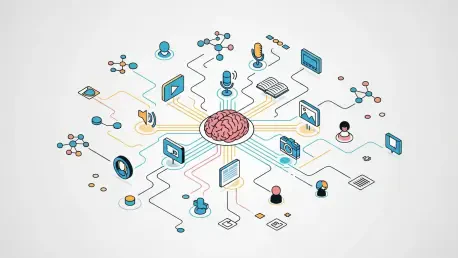

The relentless expansion of digital networking platforms has fundamentally altered the biological mechanisms that manage human attention and the storage of vital information. As these platforms evolve from simple communication tools into the primary architecture of human interaction, the brain has begun to undergo a profound cognitive adaptation. This shift is characterized by a transition in mental priority where the actual substance of shared information is sacrificed in favor of tracking social structures. This phenomenon represents a significant departure from traditional learning models, as the digital landscape increasingly functions as an external cognitive extension for the modern user.
Central to this transformation is the digital memory paradox, a concept that describes how the brain processes data differently when it perceives that information is being stored within a network. In the current state of social networking, algorithmic feeds do not merely suggest content; they dictate the rhythm of relational tracking. This technological influence has redirected the human brain from a focus on gathering independent knowledge toward a more strategic navigation of professional and casual digital communities. Consequently, the act of scrolling through a feed becomes less about learning and more about updating a mental map of social connectivity.
The Rise of Social Mapping and the Decline of Knowledge Acquisition
Trends in Social Cognition and the Shift Toward Relational Tracking
Current behavioral trends indicate a clear transition within online ecosystems where users are moving away from traditional knowledge gathering. This shift toward social mapping implies that the brain is prioritizing the relational context of information over the information itself. In a environment saturated with data, the mind has adapted by asking who knows whom rather than who knows what. This behavioral pivot suggests that social networks are no longer just places to consume media but have become intricate maps that the brain uses to navigate the complexities of modern social life.
Opportunities exist for platforms to leverage this social connectivity, yet the challenge remains in maintaining meaningful user engagement with shared data. When the brain prioritizes the messenger over the message, the educational value of content often disappears. This dynamic creates a landscape where influence is measured by connectivity rather than the depth of the information being circulated. Consequently, the transition to relational tracking has forced a rethink of how digital communities are built, moving the focus toward the strength of ties rather than the accuracy of the shared information.
Statistical Insights into the Content-Social Trade-Off
Research data from institutions like the University of Bristol and the University at Buffalo provide a stark look at the performance indicators of this cognitive shift. Performance metrics reveal that as engagement with online communities grows, there is a correlated 40% decline in the recall of content. This suggests that the mental effort required to maintain a presence within a digital social circle directly competes with the ability to retain factual information. For digital marketers and educators, this data indicates a significant hurdle in ensuring that important messages are actually internalized by the audience.
Forward-looking perspectives on this data suggest a 65% boost in social connection memory, highlighting the brain’s strategic reallocation of resources. While factual recall suffers, the ability to remember group affiliations and social hierarchies within a digital network has never been stronger. This trade-off significantly impacts future digital literacy, as the ability to navigate a network may soon be considered more valuable than the possession of specialized knowledge. The investment in social mapping appears to be a biological response to the overwhelming volume of data currently available in the digital sphere.
The Paradox of Efficiency: Navigating the Complexity of the Sharpness Trap
The obstacle of cognitive outsourcing has become particularly prevalent among high-capacity individuals who prioritize network structure over specific data. This phenomenon, often referred to as the sharpness trap, suggests that those with the highest working memory are paradoxically the most likely to offload information to their social networks. These users rely on the network as a vast external hard drive, assuming that as long as they know who holds the information, they do not need to store it themselves. This strategy is efficient for navigating complex environments but can lead to a hollowing out of individual expertise.
Managing the complexities of this external hard drive effect is essential in professional and educational environments where deep learning is still a requirement. Strategies for overcoming the sharpness trap must focus on ensuring that even high-functioning users remain engaged with substantive material. This involves creating digital environments that discourage the instinct to rely solely on transactive memory. Technological solutions are being explored to encourage internal knowledge retention, ensuring that the human mind does not become entirely dependent on private digital networks for its basic functional memory.
Information Governance and Regulatory Standards in Transactive Networks
The regulatory landscape is beginning to address how digital platforms facilitate the storage and retrieval of collective information. As users increasingly outsource their social maps to these platforms, the role of compliance and security measures in protecting this data becomes critical. Information governance must now account for the fact that a user’s social connections are part of their cognitive infrastructure. Protecting these maps is not just a matter of privacy; it is a matter of protecting the way individuals store and access their distributed knowledge.
Potential impacts of transparency laws could change the way algorithms prioritize social connections over factual content. If regulations force a clearer distinction between social engagement and information delivery, platforms may be required to adjust their delivery mechanisms. Industry standards for data integrity are also evolving to ensure that the transactive memory systems built within these networks are reliable and ethical. The implications of outsourcing personal memory to private entities raise significant questions about the ownership of the mental indexes that individuals rely on for daily functioning.
Future Horizons: From Passive Consumption to Active Cognitive Engagement
Emerging technologies are currently being developed to shift users from passive consumption toward active cognitive engagement. AI-driven interactive content is one such innovation, designed to force the brain into active mental processing rather than allowing it to default to social mapping. These tools require users to manipulate data in real-time, making it more difficult to simply file the information away for later retrieval. This shift represents a move toward participation-based models that prioritize deep understanding over simple connectivity.
Market disruptors are also looking at time-sensitive and urgency-based content delivery to bypass cognitive muting. By making information temporary or requiring immediate action, these platforms can force the brain to internalize content. As global economic conditions evolve, there is an increasing need for specialized network navigators who can bridge the gap between general knowledge repositories and social connectivity. This evolution suggests that the future of digital interaction will be defined by a more conscious effort to balance the ease of networking with the necessity of maintaining individual cognitive depth.
Synthesizing the Digital Memory Paradox for Future Growth and Investment
The findings regarding the strategic shift of the brain toward social landscape navigation provided a new framework for understanding digital behavior. It was observed that the paradox of efficiency led high-capacity individuals to prioritize the structure of their networks over the internalization of specific facts. This transition suggested that while connectivity flourished, the depth of individual expertise faced a significant threat. The research highlighted that the digital environment effectively functioned as an external cognitive reservoir, altering the fundamental nature of human learning and memory retention.
Educators and marketers were encouraged to implement active processing strategies to ensure that information was not simply bypassed by the social mapping instinct. The focus shifted toward creating urgency and interaction to anchor knowledge within the individual mind. Proposals for future investment centered on tools that could bridge the gap between social connectivity and independent learning, aiming to restore a balance that favored both breadth and depth. Ultimately, the industry moved toward a model that recognized the value of the hyper-connected network while reinforcing the necessity of deep, independent cognitive engagement.