
Most customer journeys leak revenue not because offers are weak but because handoffs, follow-ups, and measurement break the moment people shift devices or channels, which is exactly the fracture that modern sales funnel software set out to seal with integrated builders, orchestration, and analytics. Over the last few years, these platforms grew from simple landing page tools into consolidated hubs that plan, launch, and optimize the entire path from first touch to checkout. This review examines how those hubs work under the hood, why they matter for small and midsize businesses, and which options deliver the clearest edge right now.
The Context: Why Funnels Became Operating Systems
Marketers once assembled stacks from a dozen point tools—one for pages, another for email, another for checkout—and then wrestled with brittle integrations. Funnel software reframed that sprawl as a single system. The promise is not just convenience; it is data fidelity. When capture, nurture, payment, and reporting live in one place, the platform can observe the journey end to end and surface where friction steals conversions.
That consolidation shifted the benchmarks for performance. Time to first campaign fell because drag‑and‑drop builders and templates make layout decisions fast. Follow‑ups improved because automation engines trigger on behavior rather than static schedules. Measurement matured because attribution and cohort tracking connect impressions, clicks, and revenue with fewer blind spots.
What the Category Is and How It Works
At its core, sales funnel software is an integrated toolkit that captures leads, nurtures them with behavior-aware messaging, and converts them through checkouts or bookings. The mechanism is simple in outline and intricate in execution. Structured stages define intent (visit, sign‑up, engage, buy), and each stage is tied to assets (pages, forms, emails, SMS) and rules that react to events in real time.
This architecture matters because it enables data-driven iteration. With unified reporting, teams compare variants across the same journey, not across disparate tools with mismatched timestamps and IDs. Moreover, centralized consent and identity management reinforce deliverability and compliance while preserving personalization, a balance hard to achieve with patchwork stacks.
Core Architecture and Capabilities
Visual Builders for Pages and Funnels
The front end of these systems revolves around visual editors that assemble pages and entire funnels from modular steps. Templates compress best practices—hierarchy, calls to action, trust elements—so non-technical teams can ship quickly without breaking conversion heuristics. Countdown timers, exit-intent pop-ups, and one-click upsells are not gimmicks here; they are interfaces for precise offers that create urgency or increase average order value.
What separates mature builders is their coupling to data. Components map to events by default, so clicks, form completions, and scroll depth feed analytics without custom tagging. That linkage shortens the loop between design changes and performance readouts, which is where most marginal gains hide.
Automation Engine and Workflow Orchestration
Under the surface, automation drives scale. Behavior-triggered sequences enroll leads into different paths when they visit a pricing page, skip an email, or view a webinar replay. Branching logic inserts delays to preserve timing, gates content behind goals, and moves contacts forward when they meet criteria. The outcome is consistent follow‑up that feels personal because it responds to signals, not assumptions.
Critically, these engines function as policy layers. They standardize rules for eligibility, throttling, and fallback actions, which reduces manual exceptions and keeps campaigns predictable under load. In a sales setting, that predictability translates into steadier pipeline flow and clearer forecasting.
Multi-Channel Engagement
Email remains the backbone, but SMS, chatbots, and webinars extend reach into moments when inboxes sit idle. Cross‑channel sequencing enforces order—text only after consent and only when email shows low engagement—so outreach stays compliant and additive rather than noisy. When done well, channels reinforce one another: a webinar drives high intent, SMS nudges attendance, and email deepens education afterward.
The operational nuance is consent management. Strong platforms attach granular preferences to identities and propagate those choices through every workflow, which shields deliverability and preserves reputational capital with carriers and mailbox providers.
Analytics, A/B Testing, and Segmentation
Funnel analytics compress outcomes to stage-by-stage drop‑off, cohort views compare performance over time, and attribution assigns revenue to channels and creatives. A/B and multivariate testing lift results when they sit close to decision points—headlines, offers, send times—while dynamic segmentation ensures each test hits the right audience slice.
Segmentation is not mere grouping. It is a query layer that translates user behavior and commerce events into actionable audiences, and the tighter that loop, the faster teams can pivot from insight to execution.
CRM and Pipeline Management
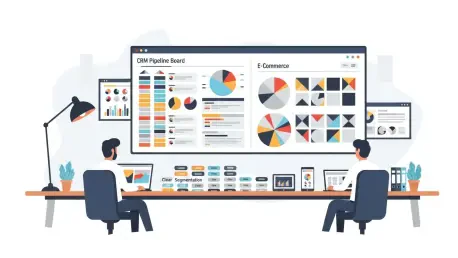
When funnels meet sales, contact timelines, lead scoring, and deal stages frame conversations. Scoring systems reward high-intent behavior—demo requests, pricing visits—and suppress noise from passive browsing. As reps log activities, the system learns cadence patterns that correlate with wins, which improves forecasting models and surfaces at-risk deals before quarter-end surprises.
This CRM layer is the difference between great marketing and great revenue. Without it, teams celebrate opens while deals stall. With it, leaders can allocate attention where time compounds.
Ecommerce, Payments, and Checkout
Native checkouts, subscriptions, and order bumps remove redirect friction that often kills momentum. Cart recovery automations spin up when an intent signal drops off, with messages tailored to the last viewed product or the discount that tested best for that cohort. Revenue tracking closes the loop by tying orders to acquisition sources, ad spend, and even the creative that initiated the session.
Gateways and storefront integrations matter not just for acceptance rates but also for reconciliation. Clean financial data strengthens optimization decisions because lifetime value and refund rates inform which campaigns truly scale.
Integrations and Data Ecosystems
All‑in‑one does not mean all‑exclusive. Mature platforms ship with connectors for CRMs, ad platforms, and ecommerce tools, but webhooks and APIs provide the real escape hatch. Those interfaces let teams push events to warehouses, pull custom fields into segmentation, and stitch funnels into existing stacks without brittle workarounds.
The practical test is failure handling. Reliable retries, dead‑letter queues, and schema versioning separate hobby‑grade connectors from enterprise‑ready integrations, even for SMBs that need resilience more than flash.
Platform Landscape and Differentiators
ClickFunnels, Kartra, and Systeme.io sit on the “page‑and‑funnel first” side. ClickFunnels wins on speed, with a template arsenal and straightforward integrations to ActiveCampaign, Mailchimp, Salesforce, Stripe, and Twilio, which suits campaign-led teams that value velocity over granular CRM depth. Kartra leans into breadth—pages, memberships, video hosting, and helpdesk—so operations can live in one console, trading some best‑of‑breed sharpness for cohesion. Systeme.io undercuts on cost with a generous free tier and fast setup, making it a pragmatic on‑ramp when budgets are tight and complexity must remain low.
SendPulse and Wishpond orient around multi‑channel lead capture and nurturing. SendPulse’s mix of email, SMS, and chatbots shines in early to mid‑funnel engagement, reducing list decay by meeting prospects where they converse. Wishpond simplifies acquisition with landing pages, pop-ups, and social contests, and its approachable A/B testing makes iterative gains accessible to small teams without data scientists.
Pipedrive and Keap are CRM‑centric. Pipedrive excels at visualizing pipeline health and forecasting, complementing marketing‑led stacks by bringing discipline to deal flow rather than trying to be a landing page guru. Keap blends SMB‑friendly CRM with marketing automation and lead scoring, valuable for owner‑operator businesses that need personalized follow‑ups without stitching together multiple vendors.
GetResponse differentiates with email strength and integrated webinars. That pairing matters for education-heavy funnels where live sessions convert; automated post‑webinar sequences then harvest momentum. Ecommerce features like abandoned cart recovery and Shopify/WooCommerce integrations close the loop for stores that rely on email as a primary revenue channel.
Market Developments and Performance Signals
The market has converged toward unified hubs because consolidation reduces setup time and error rates. As these systems matured, accessibility rose: no‑code builders, guided workflows, and embedded templates enabled non‑technical teams to launch in days rather than weeks. That speed is not trivial; it compresses testing cycles, which, by compounding small wins, lifts conversion curves noticeably over a quarter.
Optimization moved from optional to expected. Continuous A/B testing, audience segmentation, and forecasting are now table stakes, reflecting a consensus that intuition loses to evidence at scale. Meanwhile, SMB‑first design persists even as vendors layer advanced features and marketplaces, a nod to customers who want to start simple yet avoid replatforming when growth arrives.
Use Cases and Mechanics of ROI
Ecommerce teams deploy product launch funnels, recover abandoned carts, and lift order values with one‑click add‑ons and subscription offers. B2B services and SaaS favor lead magnets, consult booking flows, and webinar-to‑demo sequences that turn attention into scheduled conversations. Local businesses lean on fast appointment funnels and SMS reminders to reduce no‑shows, while agencies bank on template libraries and multi‑client workspaces to standardize delivery and roll up reporting.
Results rarely hinge on a single feature. They come from orchestration: behavior‑triggered nurtures, cross‑sell journeys keyed to purchase history, and consistent testing that inches metrics up. The platforms lower the operational bar so those compounding practices become routine.
Limitations, Trade‑Offs, and What to Watch
Learning curves emerge as automations branch and data models grow. Without documentation and phased rollout, teams can build brittle logic that is hard to debug. All‑in‑one suites risk lock‑in; mitigate by favoring export paths, APIs, and modular designs. Deliverability and consent compliance require active stewardship—list hygiene, preference centers, and sending discipline—not just vendor promises.
Attribution and data quality still present gaps, especially across paid channels and multi‑device flows. UTM rigor, server‑side tracking where possible, and CRM synchronization remain necessary craft. Finally, depth integrations matter when stakes are high; test critical connectors under real load, and define fallbacks for outages.
How to Choose: A Practical Framework
Match platform center of gravity to team motion. Campaign‑led marketers benefit from ClickFunnels, Kartra, or Systeme.io for rapid builds and broad marketing features. Sales‑led teams gain more from Pipedrive’s pipeline clarity paired with lighter funnel tools. Email‑ and webinar‑driven strategies align with GetResponse’s strengths. Owners who need unified contact management and personalized automation without a Franken‑stack will find Keap effective.
Then validate execution details: automation depth, analytics, ecommerce, deliverability, and support quality. Run time‑boxed pilots with real offers and traffic, not demo data. Budget beyond sticker price—account for contact tiers, user seats, add‑ons, and any external tools needed to patch gaps. Success still depends on craft: clear funnel architecture, behavior‑triggered sequences, ongoing tests, and clean data flows.
Verdict and Next Steps
This review concluded that modern funnel platforms turned scattered marketing motions into a single operating layer where pages, automation, CRM, payments, and analytics reinforced one another. The strongest choices differed less in checkbox features and more in native strengths: ClickFunnels, Kartra, and Systeme.io for speed and scope; SendPulse and Wishpond for accessible multi‑channel nurturing; Pipedrive for pipeline rigor; Keap for SMB‑friendly CRM plus automation; GetResponse for email and webinars that convert. Buyers who anchored selection to team motion and verified integrations, deliverability, and analytics under pilot conditions tended to outperform peers locked into tool‑first decisions. The recommended path had been to start with focused funnels, wire behavior‑based follow‑ups, integrate commerce and CRM cleanly, and institutionalize testing; with that discipline in place, the software magnified good process rather than compensating for its absence.